
There are two ways to do the Nile.
The first is the standard cruise ship — 150 to 300 passengers, a busy schedule, shore excursions in large groups, and the feeling that you're seeing Egypt through a window rather than actually inside it.
The second is a Dahabiya.
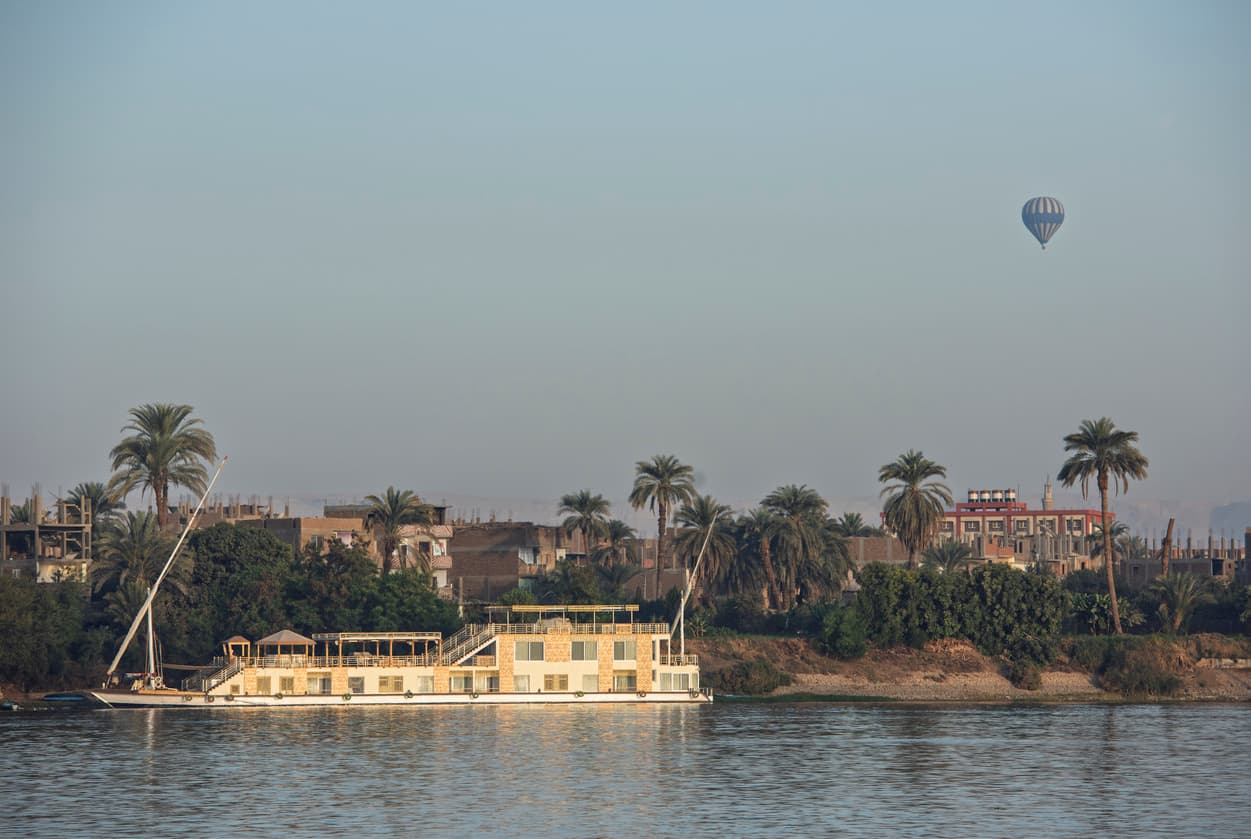
A traditional wooden sailboat carrying 8 to 24 guests maximum. No engine noise. No crowds. Just the sound of the wind in the sail, the Nile sliding past, and temples appearing on the riverbank the way they must have appeared to travelers a hundred years ago.
If you're researching Nile cruises and wondering whether a Dahabiya is worth the step up, it is. Here's everything you need to know before you book.
The word Dahabiya comes from the Arabic word for gold — dhahab — a reference to the gilded decorations that once adorned these boats when Egyptian royalty used them for leisure travel along the Nile.
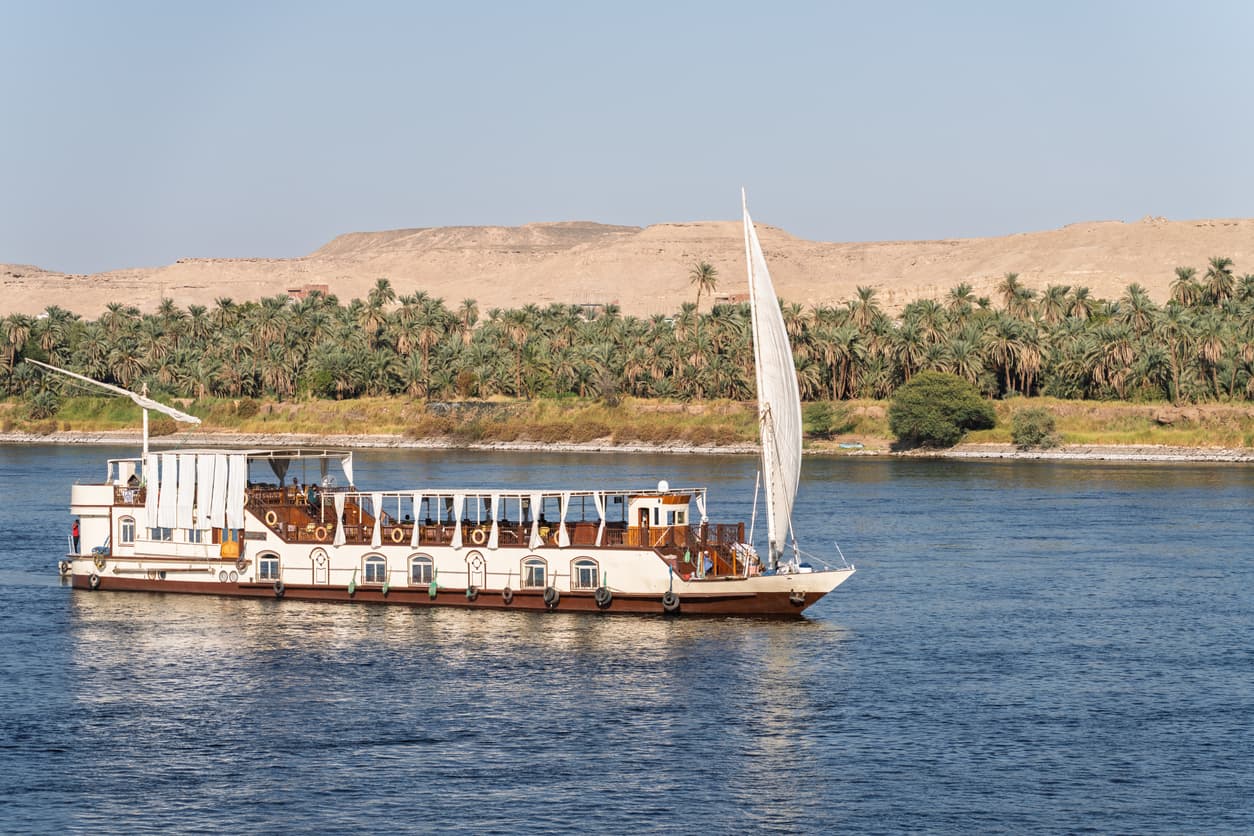
Today a Dahabiya is a traditional wooden sailing boat — typically between 25 and 40 meters long — designed for small groups of travelers who want an intimate, unhurried experience on the river. Unlike the large cruise ships that dominate the Luxor to Aswan route, a Dahabiya carries a maximum of 8 to 24 guests, depending on the vessel. Some carry fewer.
The hull is wooden. The sails are white and large. The sun deck is where you spend most of your time — reading, watching the riverbank, having lunch in the open air while egrets fish in the shallows.
Most modern Dahabiyas combine the traditional aesthetic with contemporary comfort — en-suite cabins, air conditioning, onboard chefs preparing fresh Egyptian cuisine, and Egyptologist guides who travel with the group for the entire journey.
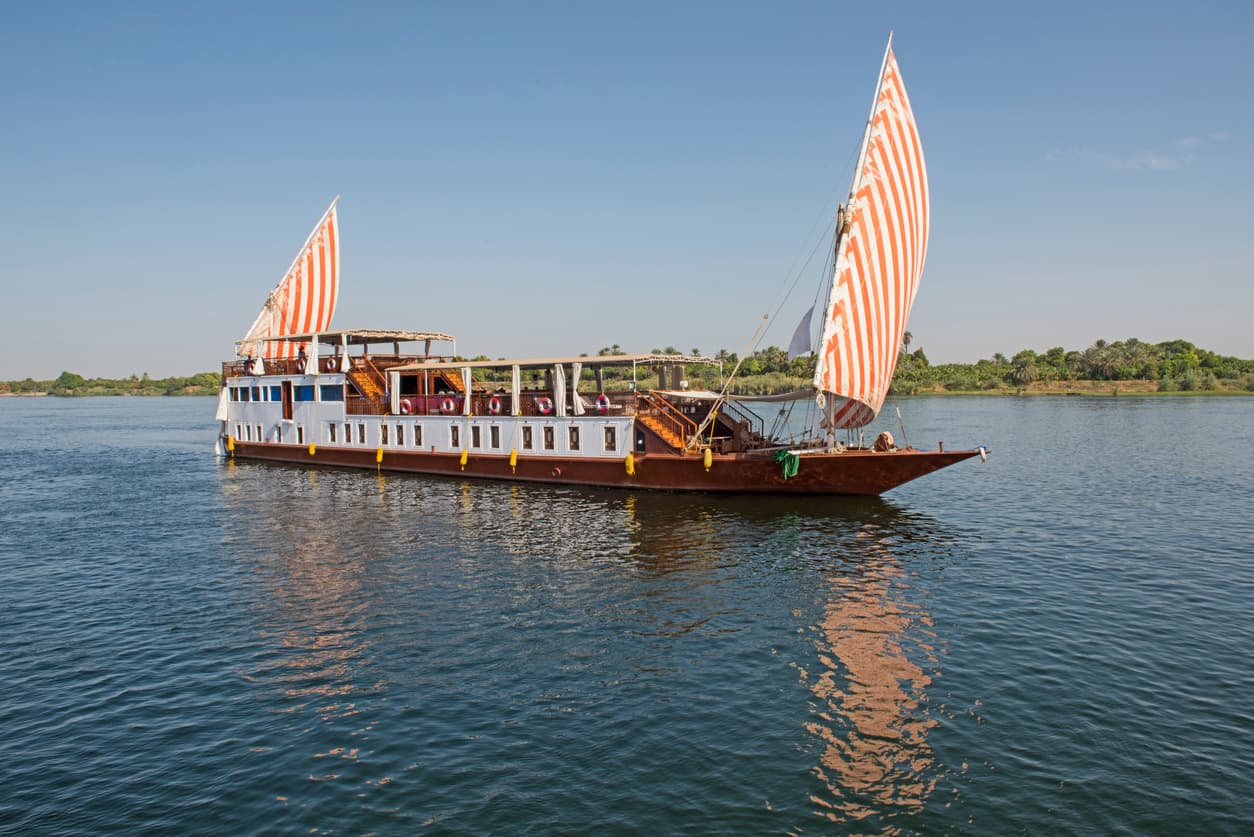
What they don't have is an engine running constantly beneath your feet. The Dahabiya moves with the wind. When the wind drops, a small motor may be used to keep schedule — but the experience remains fundamentally quiet, slow, and connected to the river in a way that no cruise ship can replicate.
Dahabiya Nile cruises start from approximately $1,115 per person for a 5-day sailing — making them competitive with standard cruise ships when you factor in the level of personalization and exclusivity included.

Dahabiyas have been on the Nile for centuries — but their golden age came in the 19th and early 20th centuries when Egyptian royalty, European aristocrats, and wealthy travelers used them for extended leisure voyages up the river.
Florence Nightingale sailed a Dahabiya in 1849 and wrote about it in her travel journals. Mark Twain's contemporaries described the same boats in their accounts of Egypt. The early archaeologists who excavated the Valley of the Kings often traveled between sites by Dahabiya.
These boats were symbols of prestige — fitted with elegant cabins, attended by large crews, and adorned with carved wood and silk furnishings that announced the wealth and status of their passengers.
The arrival of motorized cruise ships in the mid-20th century pushed Dahabiyas into decline. But in the last two decades, they have made a remarkable comeback — driven by travelers who want something slower, more intimate, and more connected to the history of Nile travel itself.
A Dahabiya today is not just a way to get from Luxor to Aswan. It is a way to travel the Nile the way that Florence Nightingale traveled it — at the river's pace, on the river's terms.

This is the question most people are asking when they land on this article. So here is the honest, direct answer.
Passenger numbers: Standard Nile cruise ships carry between 100 and 300 passengers. A Dahabiya carries 8 to 24. The difference this makes to every aspect of the experience — service, noise levels, excursion groups, onboard atmosphere — cannot be overstated.
Itinerary flexibility: Large cruise ships operate fixed schedules with set departure and arrival times at each site. A Dahabiya can adjust its pace — spending longer at a site that interests the group, stopping at smaller temples and villages that larger ships can't access, and anchoring in quieter stretches of the river that standard cruises pass without stopping.
The temple experience: At peak times, the Temple of Horus at Edfu receives hundreds of visitors simultaneously. Dahabiya groups — typically 8 to 24 people — arrive with a private Egyptologist guide and move through sites at their own pace, often ahead of or after the large cruise groups. The experience of standing in the inner sanctuary of a 2,000-year-old temple without a crowd pressing around you is worth the difference in price alone.
Noise and atmosphere: A standard cruise ship runs its engines continuously. Air conditioning units, generators, and passenger activity create a constant ambient noise. On a Dahabiya under sail, the dominant sound is the Nile — the water against the hull, the wind in the rigging, birds along the banks. It is a genuinely different sensory experience.
Price Dahabiyas cost more than budget standard cruises but are comparable to mid-range cruise ships — and significantly less than luxury cruise liners. The additional cost buys personalization, exclusivity, and an experience that is qualitatively different rather than just more comfortable.
Who should choose a Dahabiya: Couples, honeymooners, small groups of friends, and travelers who want depth over breadth — who would rather spend two hours at one temple with an expert guide than rush through five sites in a day.
Who should choose a standard cruise: First-time visitors to Egypt on a tight budget, families with young children who need more space and activity options, and travelers who prefer the social atmosphere of a larger vessel.

A felucca is the smaller, simpler traditional Nile sailboat — open-aired, basic, and typically used for shorter journeys of one to three days. Here's how they compare:
Comfort: A Dahabiya has enclosed, air-conditioned cabins with en-suite bathrooms. A felucca has open sleeping areas — mattresses on the deck, a tarpaulin for shade, and shared toilet facilities onshore or a basic onboard option. The Dahabiya is not a rougher version of the same experience — it's an entirely different level of comfort.
Duration: Feluccas are suited for 1 to 3-day trips, typically between Aswan and Kom Ombo. Dahabiyas are designed for 5 to 7-day voyages covering the full Luxor to Aswan route with guided excursions.
Guided experience: Felucca trips typically include a captain and crew but no Egyptologist guide — you're sailing, not being taken through history. Dahabiya voyages include expert Egyptologist guides as part of the package.
Who should choose a felucca: Budget travelers, backpackers, and those who want a rough-and-ready adventure experience on the river.
Who should choose a Dahabiya: Travelers who want the sailing experience combined with genuine comfort, expert guidance, and access to Egypt's major temple sites.

Most Dahabiya itineraries run between Luxor and Aswan — a stretch of approximately 200 kilometers that contains the highest concentration of ancient monuments anywhere on earth. Here's what you'll see:
The starting point for most northbound journeys and the endpoint for southbound ones. Luxor is built directly on top of ancient Thebes — the capital of the New Kingdom pharaohs — and the concentration of monuments here is extraordinary.
The Valley of the Kings, on the west bank, contains the tombs of 63 pharaohs, including Tutankhamun and Ramesses II. The Karnak Temple Complex — the largest religious building ever constructed — took 2,000 years and 30 pharaohs to complete. Luxor Temple sits right in the center of the modern city, illuminated at night in a way that makes the 3,300-year-old columns look genuinely alive.
A Dahabiya arriving in Luxor moors on the Nile's east bank — a short walk from the temple. The contrast between the ancient columns and the river is one of Egypt's great views.
The Temple of Horus at Edfu is one of the best-preserved ancient temples in Egypt — largely because it was buried under sand and silt for centuries, which protected it from both human interference and weather damage.
The falcon-headed god Horus stares down from enormous carved walls. The inner sanctuary, where the sacred statue of the god was kept, is still intact. The scale of the place — built during the Ptolemaic period between 237 and 57 BCE — is extraordinary.
Dahabiya groups typically arrive at Edfu before the large cruise ships and leave after them — meaning you often have extended quiet time in the outer courtyards.
The double temple at Kom Ombo is genuinely unusual — two parallel temples built side by side, one dedicated to Sobek, the crocodile god, one to Horus, the falcon god. The reason for the double design reflects the competing religious traditions of the region.
The Nile-side setting is particularly dramatic. Dahabiyas moor directly below the temple — you walk up from the boat to the entrance. At sunset, the limestone walls turn orange, and the river reflects the light. It's one of the most beautiful moments on the cruise.
The temple also houses a mummified crocodile museum — ancient Egyptians kept sacred crocodiles in pools beside the temple and mummified them after death.
The final stop on most Dahabiya itineraries — and one of the most atmospheric cities in Egypt.
Aswan sits at the First Cataract of the Nile, where granite boulders break the river's surface, and the water runs fast between islands. The light here is different from Luxor — warmer, softer, more golden — and the landscape more dramatic.
The Philae Temple — dedicated to the goddess Isis — sits on an island in the middle of the Nile. It was relocated stone by stone in the 1960s and 70s when the Aswan High Dam flooded its original location. The boat ride to reach it across the lake is part of the experience.
The Unfinished Obelisk, carved directly in the granite quarry and abandoned when it cracked, gives the most vivid possible sense of how the ancient Egyptians worked stone. The Aswan High Dam and the Nubian villages on the islands are also worth visiting.
Day trip from Aswan: Abu Simbel — the colossal rock temples of Ramesses II, relocated in one of the greatest engineering feats of the 20th century — is a 3-hour drive south of Aswan. Most Dahabiya itineraries include an optional day trip here before or after the cruise.
Dahabiya cabins are typically compact but well-appointed — wooden interiors, double or twin beds, en-suite bathrooms, air conditioning, and windows or portholes opening onto the river. The best cabins have beds positioned so you can watch the Nile from where you sleep.
Meals are usually served on the sun deck — breakfast as the boat moves, lunch at anchor near a temple, dinner as the stars appear. Onboard chefs prepare fresh Egyptian cuisine — grilled fish, mezze, slow-cooked stews, fresh bread, and fruit. Dietary requirements are accommodated with advance notice.
Where do you spend most of your time? Cushioned seating, shade sails, and a 360-degree view of the river and its banks. Egrets and kingfishers are constant companions. Fellahin farmers work the fields on the riverbank. Villages appear and disappear. The landscape is so unchanged from ancient depictions that the experience of watching it feels genuinely historical.
All Egypt Tours' Dahabiya voyages include licensed Egyptologist guides who travel with the group throughout the journey. These are not tour leaders — they are specialists who can answer questions, provide context, and adjust explanations for your level of knowledge and interest.
5 days / 4 nights — the minimum recommended. Covers the core Luxor-to-Aswan route with guided visits to Edfu, Kom Ombo, and Aswan. Enough time to feel the rhythm of the river without rushing.
7 days / 6 nights — the ideal. Allows for a more leisurely pace, additional stops at smaller sites, more time at each temple, and a day trip to Abu Simbel. This is the duration most guests say they wish they had booked.
Most itineraries run southbound — Luxor to Aswan — with the Nile's current and the prevailing wind. Northbound sailings (Aswan to Luxor) are also available and offer a different perspective on the same sites.
Peak season (October to April): The best weather — daytime temperatures of 20–28°C, cool evenings, and excellent visibility. Book 3–6 months in advance during peak season, as the best Dahabiya cabins sell out early.
Off-peak season (May to September): Temperatures reach 40°C or above in Upper Egypt in summer. The Dahabiya experience is still possible, but the heat is significant — excursions are limited to early morning and late afternoon. Lower prices and more availability.
Pack light for the boat, bring layers for the temples. Cabin storage is limited on a Dahabiya. A soft duffel bag is easier than a rigid suitcase. Temples are cool in the morning and hot by midday — layers allow you to adjust.
Reef-safe and skin-safe sun protection is essential. The Egyptian sun at this latitude is intense. Apply sunscreen before going on deck every morning. A wide-brimmed hat and UV-protective clothing for temple visits are strongly recommended.
Bring cash in Egyptian Pounds for tips and small purchases. Tipping guides, crew members, and temple site workers is customary and appreciated. Prepare small denominations. ATMs are available in Luxor and Aswan, but less so at stops between.
Keep your camera charged. The light on the Nile changes dramatically throughout the day — golden at dawn, flat and bright at midday, extraordinary at sunset when the temple stones turn orange. The best photographs happen at times when you may not expect them.
Go offline. Mobile signal along stretches of the Nile between cities can be patchy. Rather than fighting it, treat the disconnection as part of the experience. The Nile does not need a filter.
1. What is the difference between a Dahabiya and a standard Nile cruise?
The most significant difference is size. Standard Nile cruise ships carry 100–300 passengers; a Dahabiya carries 8–24 maximum. This affects every aspect of the experience — the noise level, the service quality, the size of excursion groups, and the flexibility of the itinerary. A Dahabiya also travels under sail rather than engine power, making the journey quieter and more connected to the river. Standard cruises are more affordable; a Dahabiya offers a significantly more intimate and personalized experience at a comparable price to mid-range cruise ships.
2. Is a Dahabiya Nile cruise worth the extra cost?
For travelers who prioritize quality of experience over quantity of sights — yes. The combination of small group sizes, private Egyptologist guides, sailing rather than motoring, and the ability to stop at lesser-visited sites makes the Dahabiya a fundamentally different experience from a standard cruise. Guests who have done both consistently describe the Dahabiya as the more memorable journey.
3. How many passengers does a Dahabiya typically hold?
Most Dahabiyas accommodate between 8 and 24 guests, depending on the vessel. Some private charter Dahabiyas carry as few as 4–8 guests. All Egypt Tours' Dahabiya fleet includes boats in the 12–20 guest range — large enough for a sociable atmosphere, small enough to feel genuinely exclusive.
4. What is included in a Dahabiya Nile cruise?
Most Dahabiya packages include: all meals onboard, a licensed Egyptologist guide throughout the journey, entrance tickets to all sites visited per the itinerary, transfers between the boat and temple sites, and onboard accommodation. International flights, personal expenses, tips, and optional excursions (such as the Abu Simbel day trip from Aswan) are typically not included. Always confirm inclusions when booking.
5. What is the best time of year for a Dahabiya Nile cruise?
October to April is the ideal period — temperatures are comfortable for both sailing and temple visits (20–28°C daytime), the light on the Nile is exceptional, and the river is at its most photogenic. December and January are the most popular months — book well in advance. May to September is possible, but the heat (35–45°C) makes midday excursions challenging.
6. Can families with children do a Dahabiya Nile cruise?
Yes — the experience is educational and genuinely engaging for children with an interest in ancient history. The intimate scale of the boat and the guided nature of excursions work well for families. The main consideration is the heat — if traveling with young children, October to April is strongly recommended, and early morning temple visits are advisable to avoid the midday sun.
7. What is the difference between a Dahabiya and a felucca?
A felucca is a smaller, simpler traditional sailboat used for shorter journeys of 1–3 days, typically from Aswan to Kom Ombo. It has open sleeping areas on deck, basic bathroom facilities, and no onboard chef or Egyptologist guide. A Dahabiya has enclosed air-conditioned cabins with en-suite bathrooms, onboard dining, and expert guides. The felucca is an adventure experience; the Dahabiya is a luxury sailing experience.
8. How do I book a Dahabiya Nile cruise with All Egypt Tours?
Contact the All Egypt Tours team directly through the website — a destination specialist will confirm availability, discuss your preferred dates and duration, and build a complete itinerary. A 25% deposit secures the booking, with the balance payable before departure. Early booking is strongly recommended for October to April travel, as Dahabiya capacity is limited and the best cabins sell quickly.
All Egypt Tours Magazine


Hurghada beyond the resorts offers local markets, family-run restaurants, desert adventures, shore diving, and authentic Red Sea culture.

A complete family travel guide to Egypt with kids, covering pyramids, temples, Nile cruises, Red Sea adventures, and practical tips for a safe, fun, and memorable trip.

Egypt in November offers warm days, cool nights, and ideal travel conditions for sightseeing, Nile cruises, deserts, and Red Sea adventures.
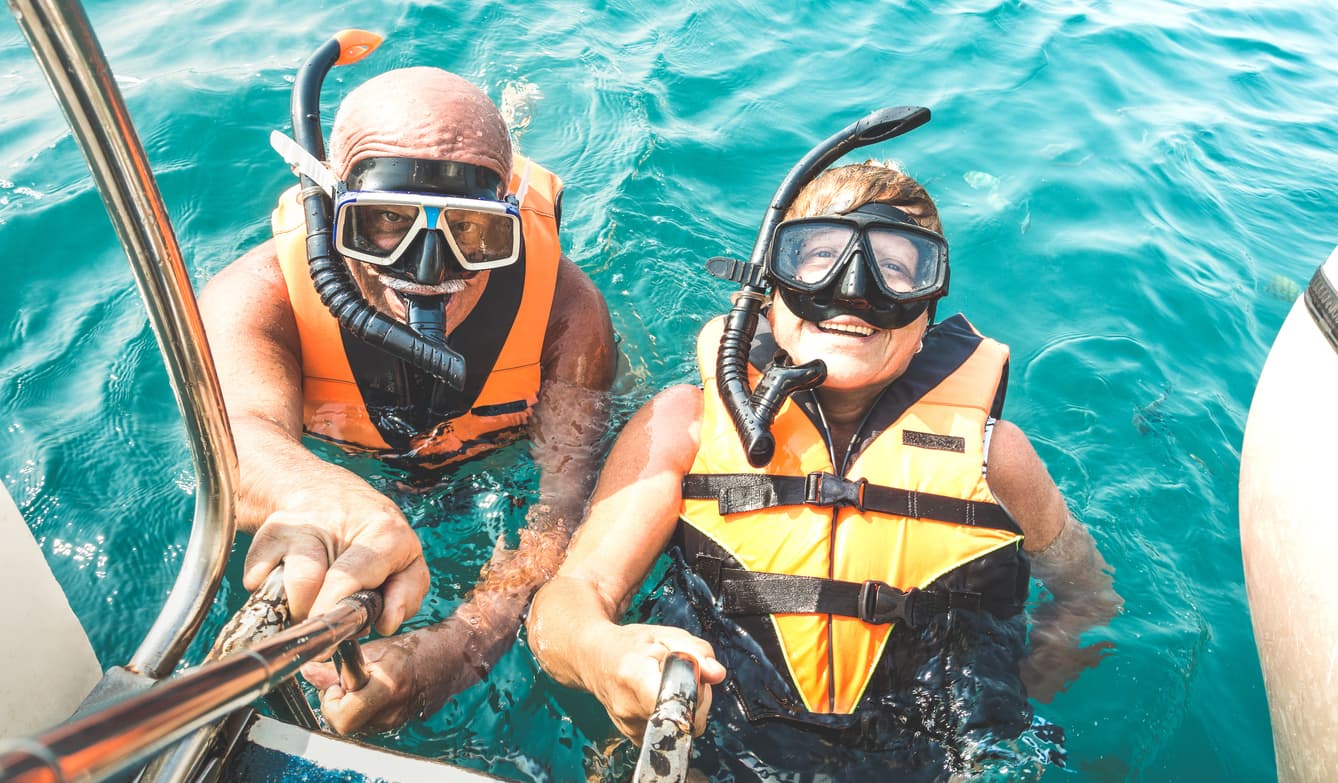
Explore the world's most spectacular coral reefs and discover why the Red Sea offers the planet's best snorkeling experiences
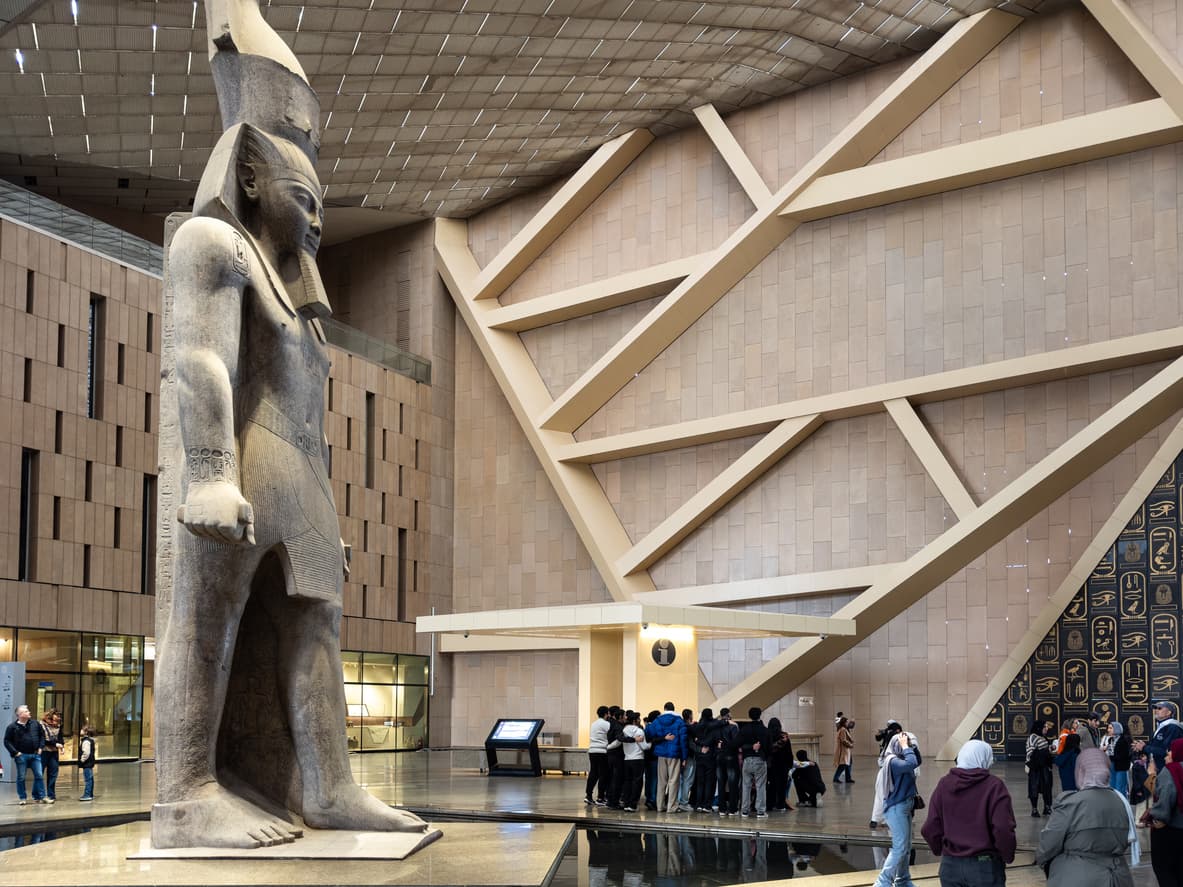
Your ultimate Grand Egyptian Museum Guide: explore highlights, practical advice, and insider tips to make the most of your museum adventure.

From the White Desert to Siwa Oasis, discover the best Egypt desert adventures, including stargazing, and unforgettable safari experiences.
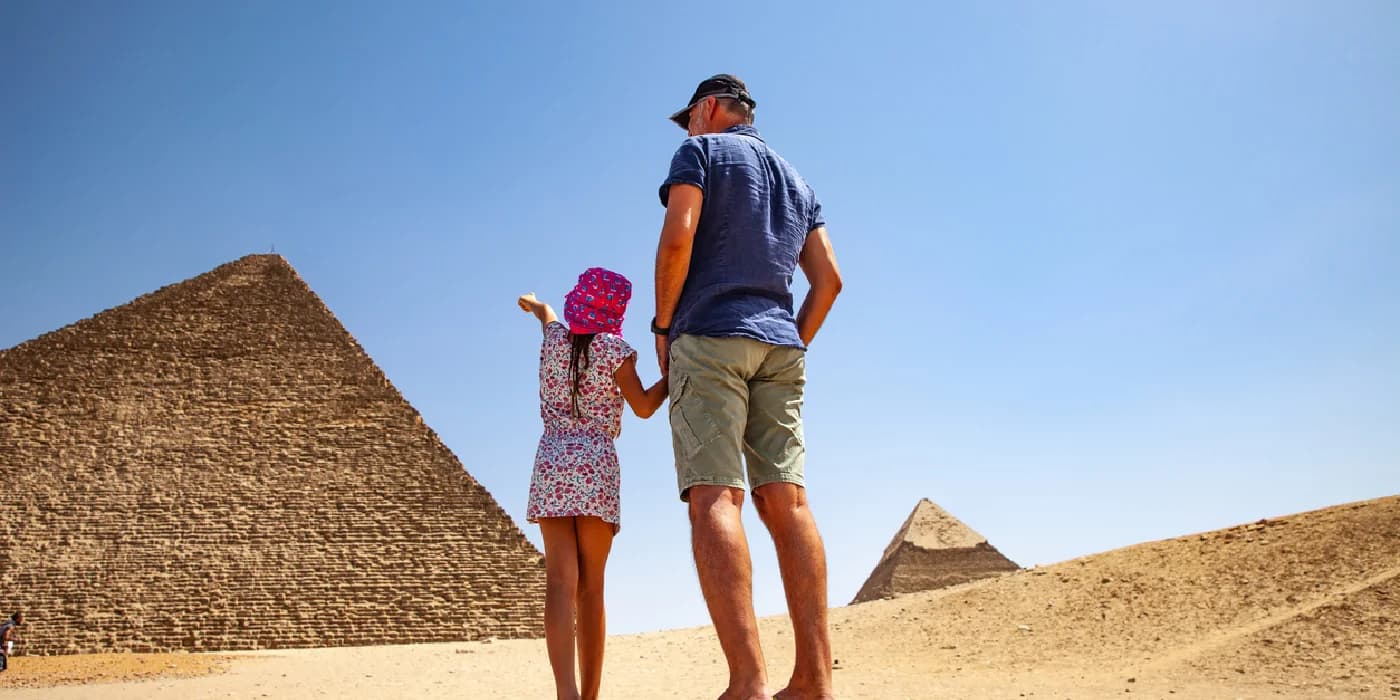
Discover the best places and activities for kids in Egypt, from the pyramids and Nile cruises to Red Sea beaches, and family-friendly experiences.


© Copyright 2026 Go All Egypt Tours. All Rights Reserved.