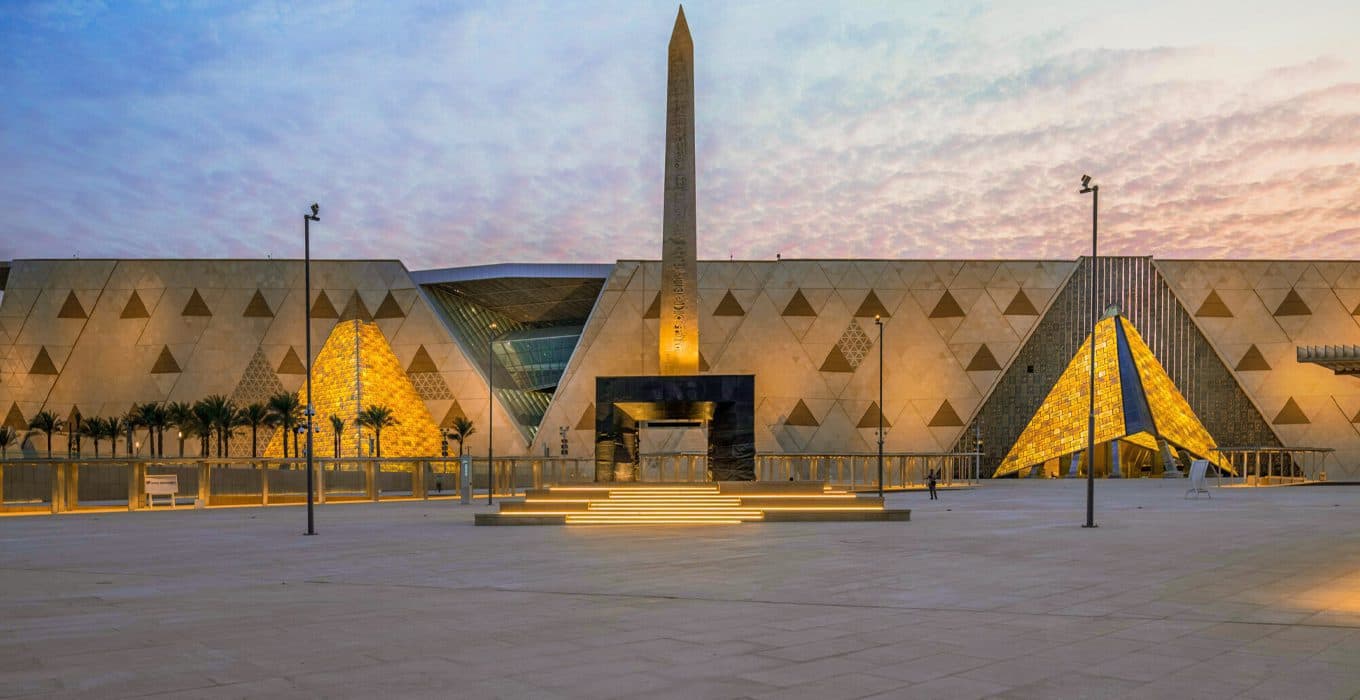
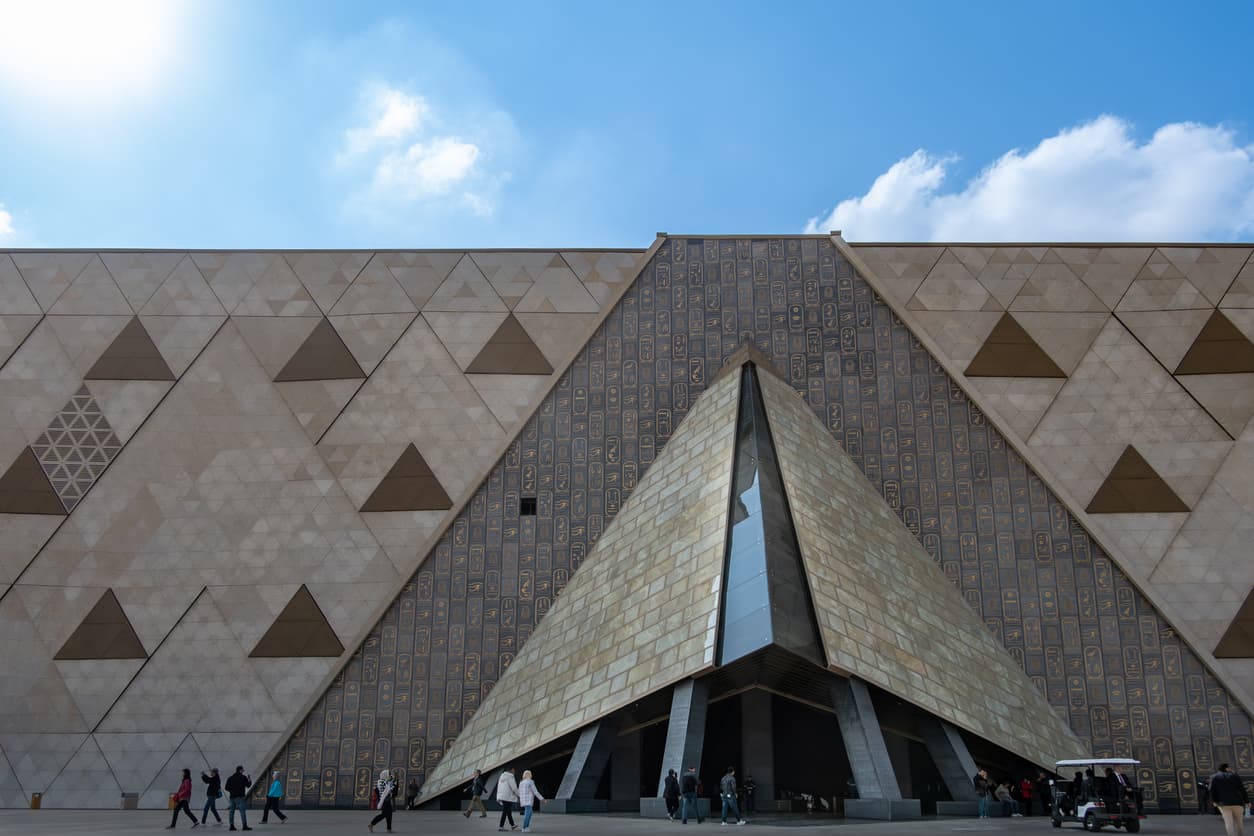
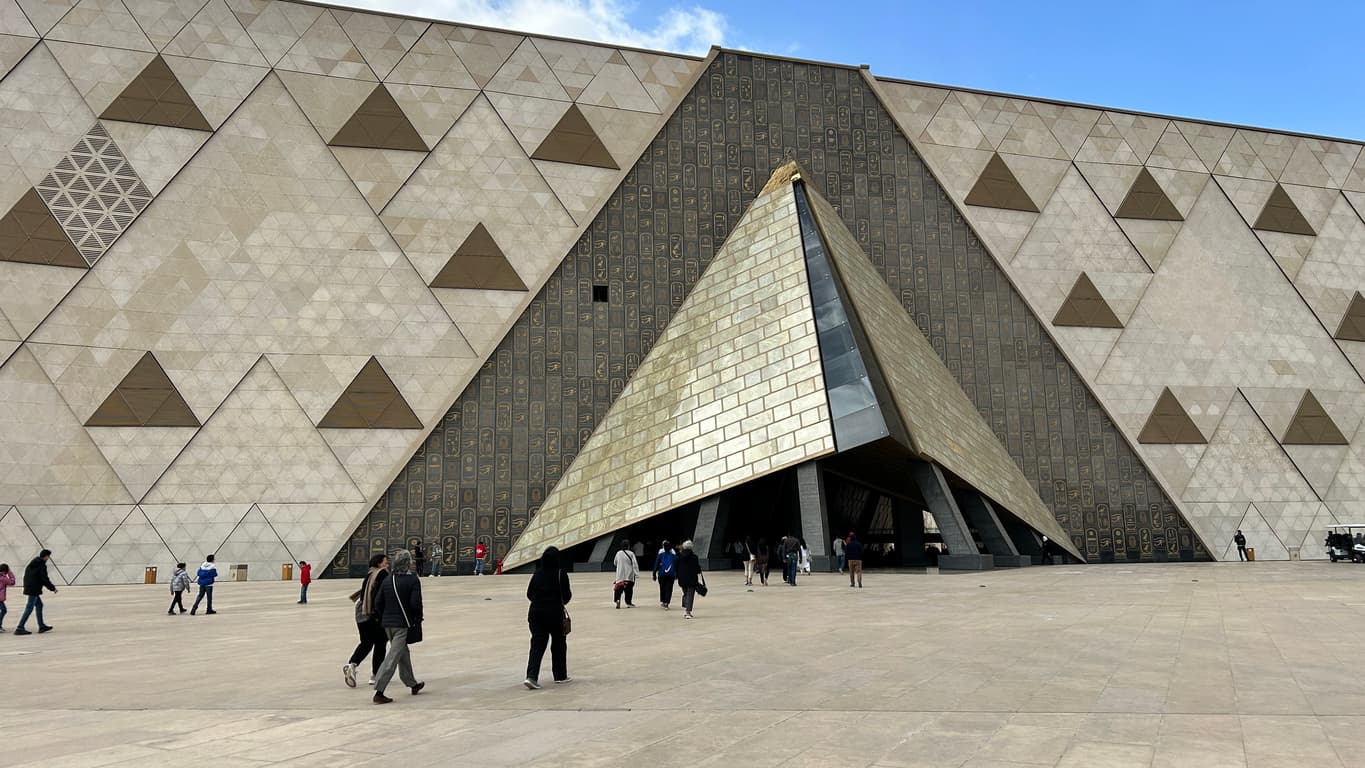
The Grand Egyptian Museum (GEM), located near the Giza Pyramids in Cairo, stands as the world's largest archaeological museum dedicated to a single civilization. This comprehensive Grand Egyptian Museum guide reveals the must-see exhibits, practical visitor information, and insider tips for experiencing Egypt's most spectacular collection of pharaonic treasures.
Opening as the crown jewel of Egyptian tourism, the Grand Egyptian Museum houses over 100,000 artifacts spanning 7,000 years of Egyptian history. For travelers planning Egypt tours, understanding what makes this Cairo museum extraordinary ensures an unforgettable cultural experience.
The most anticipated exhibit in any Grand Egyptian Museum guide is the complete King Tutankhamun collection—all 5,398 artifacts displayed together for the first time in history. Previously scattered between Cairo's Egyptian Museum and storage facilities, the treasures now occupy dedicated Tutankhamun Galleries spanning over 7,000 square meters.
King Tut's Essential Artifacts:
The Golden Mask: The iconic solid gold death mask weighing 10.23 kg, inlaid with lapis lazuli, obsidian, and semi-precious stones, represents ancient Egyptian artistry at its pinnacle. This centerpiece artifact draws millions to the Grand Egyptian Museum.
Golden Coffins: Three nested coffins that housed Tutankhamun's mummy, including the innermost solid gold coffin weighing 110 kg—one of ancient Egypt's most valuable objects.
Chariots and Weapons: Six complete ceremonial chariots, bows, arrows, and weapons revealing the young pharaoh's military equipment.
Golden Throne: The elaborately decorated throne showing Tutankhamun and his wife Ankhesenamun in intimate domestic scenes, featuring exquisite craftsmanship with gold leaf and semi-precious stone inlays.
Canopic Shrine: The gilded shrine that held Tutankhamun's mummified internal organs, guarded by four protective goddesses.
Jewelry Collection: Hundreds of pieces including pectorals, rings, bracelets, earrings, and amulets demonstrating ancient Egyptian goldsmithing mastery.
This Grand Egyptian Museum guide emphasizes that the Tutankhamun Galleries alone justify visiting Cairo's premier museum—the complete collection tells the story of the boy-king's life, death, and journey to the afterlife like never before.
Among the most significant things to see in Grand Egyptian Museum is the reconstructed Khufu Boat—a 43.6-meter-long cedar wood vessel buried beside the Great Pyramid 4,500 years ago. This extraordinary artifact represents ancient Egyptian boat-building technology and beliefs about the pharaoh's solar journey through the afterlife.
Why the Khufu Boat Matters:
Discovered in 1954 in a sealed pit beside the Great Pyramid of Khufu at Giza, the boat was dismantled into 1,224 pieces. Decades of painstaking reconstruction revealed a fully functional royal vessel that may have transported Khufu's body to his pyramid or served as his solar boat for celestial journeys.
The Grand Egyptian Museum displays the Khufu Boat in a climate-controlled gallery with the Giza Pyramids visible through massive windows—a breathtaking juxtaposition of ancient artifact and pyramid backdrop that makes this Cairo museum experience uniquely powerful.
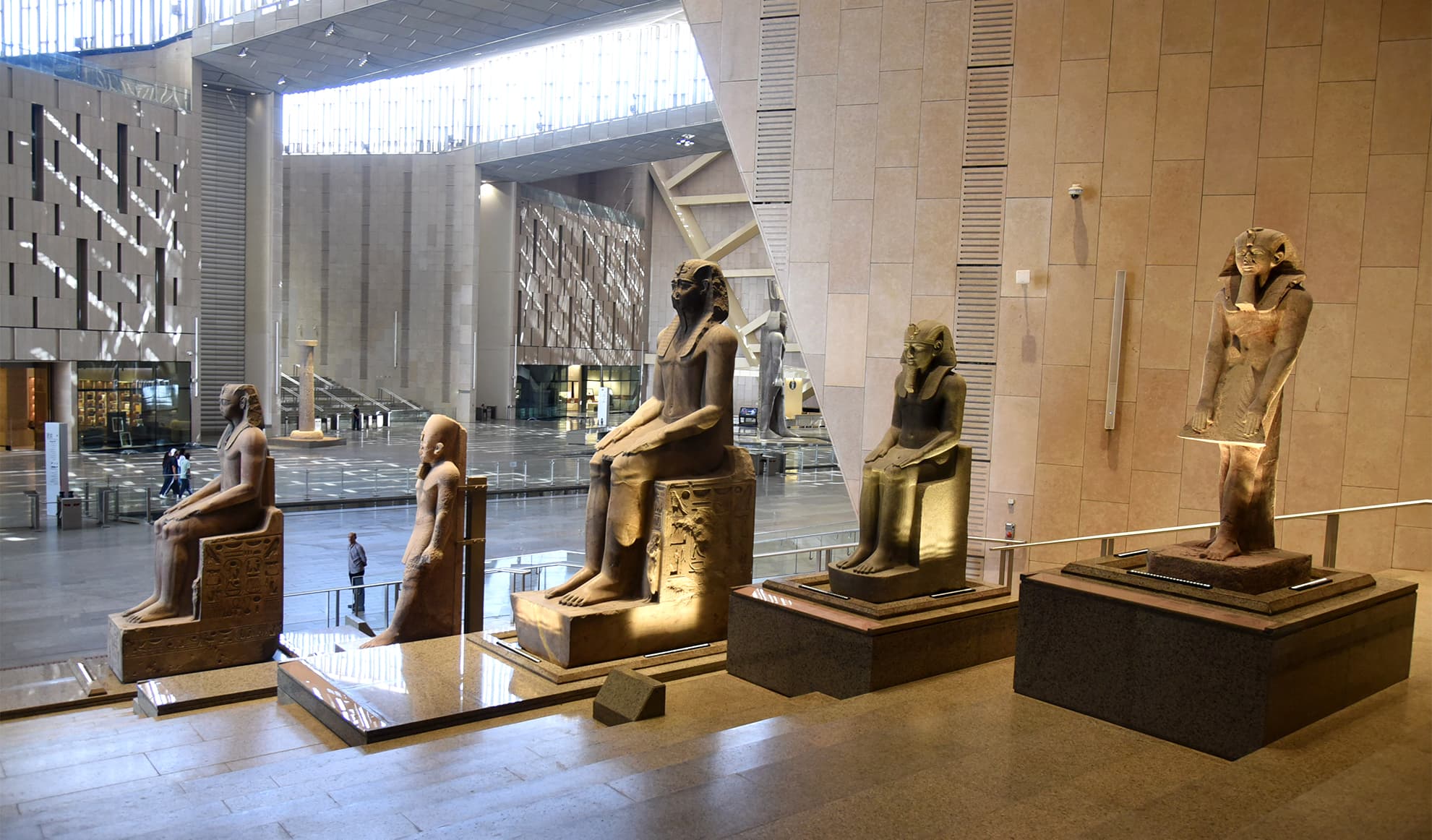
The Grand Egyptian Museum's architectural approach to displaying artifacts begins at the entrance with the spectacular Grand Staircase. This Grand Egyptian Museum guide highlights the Grand Staircase as an exhibit itself, featuring 87 colossal statues and artifacts arranged chronologically ascending toward the galleries.
Grand Staircase Highlights:
Colossal Ramses II Statues: Multiple massive statues of Egypt's greatest pharaoh, including the 11-meter-tall red granite colossus from Memphis, greet visitors with awe-inspiring scale.
Royal Sculptures: Colossal statues of Amenhotep III, Hatshepsut, and other New Kingdom pharaohs line the staircase, creating an imposing royal procession.
Sphinx Pairs: Several sphinx statues representing different pharaohs guard the ascent.
The Grand Staircase offers stunning views of the Giza Pyramids through floor-to-ceiling windows—an architectural feature making the Grand Egyptian Museum a modern marvel complementing ancient wonders. This integration of ancient artifacts with Giza Plateau views creates photography opportunities found nowhere else in Cairo.
The Grand Atrium features a suspended obelisk—a remarkable engineering achievement where a massive stone obelisk appears to float within the museum's central space. This architectural centerpiece demonstrates how the Grand Egyptian Museum blends cutting-edge museum design with respect for ancient Egyptian monuments.
Surrounding the Hanging Obelisk, the atrium displays royal statues, sphinxes, and architectural elements creating an indoor archaeological landscape visible from multiple gallery levels.
A comprehensive Grand Egyptian Museum guide must cover the chronological galleries showcasing Egypt's development from prehistoric settlements through pyramid-building civilizations.
Predynastic Egypt (5500-3100 BCE):
Old Kingdom (2686-2181 BCE):
These galleries provide context for understanding how ancient Egyptian civilization developed the skills to create the Giza Pyramids visible from the Grand Egyptian Museum's windows.
Middle and New Kingdom Collections
Middle Kingdom (2055-1650 BCE):
The Grand Egyptian Museum's Middle Kingdom galleries display:
New Kingdom (1550-1077 BCE):
Egypt's imperial age receives extensive coverage with artifacts from:
These galleries complement the Tutankhamun collection, placing the boy-king within his New Kingdom context.
Things to see in Grand Egyptian Museum include Late Period through Roman Egypt (664 BCE - 395 CE) when Egypt experienced Persian, Greek, and
Roman rule:
Late Period Bronzes: Exquisite bronze statues of gods and sacred animals Ptolemaic Artifacts: Objects blending Egyptian and Greek artistic traditions Cleopatra's Era: Artifacts from the Ptolemaic dynasty's final queen Roman Mummy Portraits: Fayoum portraits showing Greco-Roman Egyptian funerary art
While not initially displayed, the Grand Egyptian Museum will eventually house the royal mummies currently at the National Museum of Egyptian Civilization in Cairo. When transferred, visitors will see pharaohs including Ramses II, Seti I, Hatshepsut, and Thutmose III in state-of-the-art climate-controlled galleries.
The Grand Egyptian Museum sits 2 kilometers from the Giza Pyramids on the Cairo-Alexandria Desert Road. Location advantages make this museum essential in any Cairo itinerary:
From Downtown Cairo: 30-40 minutes by taxi or Uber (15-20 km) From Cairo Airport: 45-60 minutes (40 km) From Giza Pyramids: 10 minutes (2 km) - walking possible via new pedestrian bridge
Most Cairo hotels and tour operators include Grand Egyptian Museum transportation in Egypt tour packages. The museum's proximity to Giza Pyramids allows visitors to combine both experiences in one day.
The Grand Egyptian Museum operates daily with extended hours to accommodate international visitors:
Opening Hours: 9:00 AM - 6:00 PM (daily, subject to change) Best Visiting Times:
Time Needed: This Grand Egyptian Museum guide recommends:
Most travelers spend 4-5 hours at the Grand Egyptian Museum as part of Cairo day tours.
The Grand Egyptian Museum offers various ticket tiers (prices subject to change):
Standard Ticket: Access to main galleries Premium Ticket: Includes Tutankhamun Galleries VIP Experience: Private tours and special access
Children, students with valid IDs, and Egyptian residents receive discounted rates. Online booking recommended to avoid queues.
The Grand Egyptian Museum provides world-class facilities:
Restaurants and Cafés: Multiple dining options with Giza Pyramids views Gift Shops: Extensive Egyptian souvenirs, replicas, books Conservation Labs: Visible restoration work (selected areas) Children's Museum: Interactive exhibits for young visitors Accessibility: Wheelchair access, elevators, accessible restrooms throughout Storage: Lockers for bags and belongings Audio Guides: Available in multiple languages Rest Areas: Comfortable seating throughout galleries
Photography policies at the Grand Egyptian Museum:
Always check current photography rules, as policies may change.
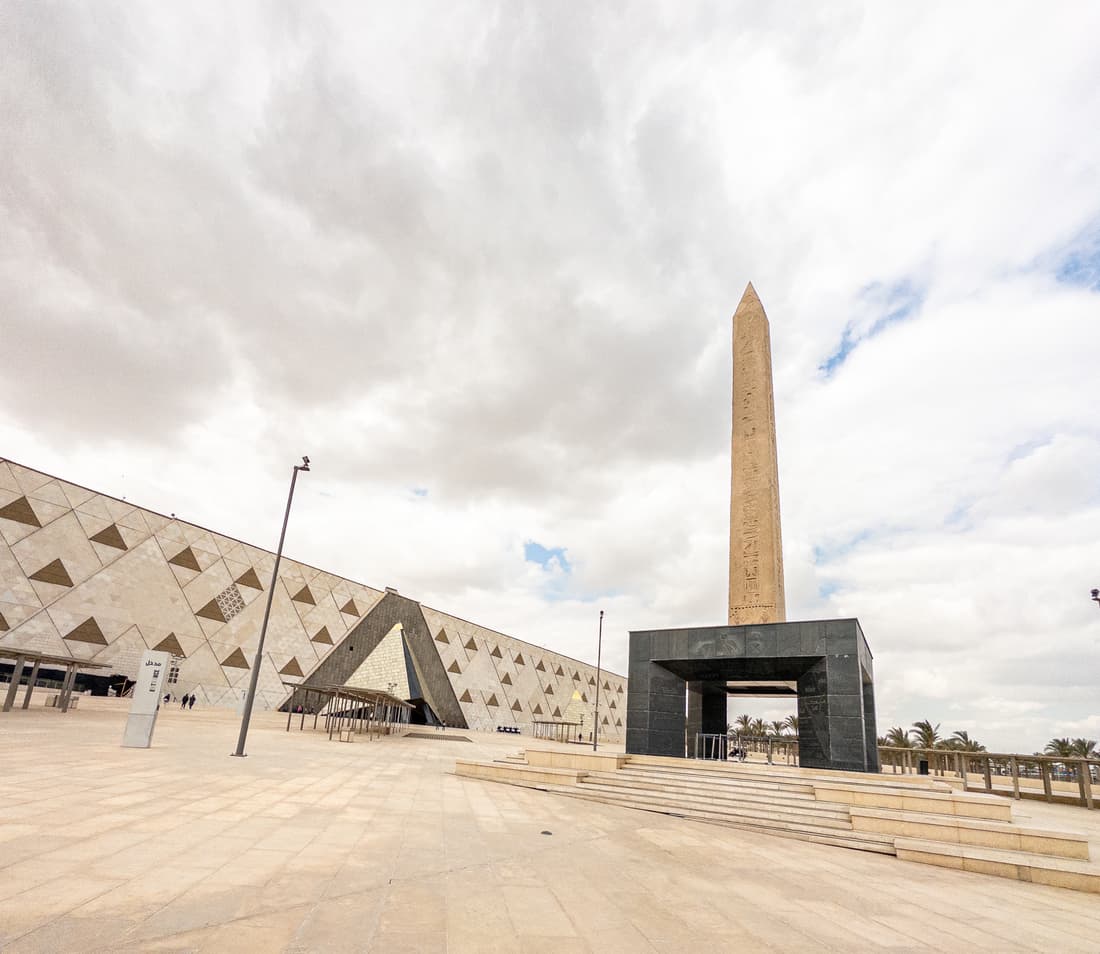
Combine with Giza Pyramids: Most Cairo tours combine the Grand Egyptian Museum with Giza Pyramids exploration. The new pedestrian bridge connecting both sites makes this pairing logical.
Start Early: Arrive when doors open to experience major exhibits before crowds.
Download Museum App: The Grand Egyptian Museum's mobile app provides navigation, audio guides, and artifact information.
Wear Comfortable Shoes: Expect extensive walking across multiple levels and galleries.
Bring Water: Although cafés exist, staying hydrated during long visits is essential.
Guided Tours Advantages:
Independent Exploration Benefits:
This Grand Egyptian Museum guide suggests guided tours for first-time visitors, independent exploration for return visits.
What to Bring
Essential items for Grand Egyptian Museum visits:
The Grand Egyptian Museum's location near Giza makes combining attractions convenient:
Giza Pyramids (2 km): The Great Pyramid, Sphinx, and pyramid complex Saqqara (25 km): Step Pyramid and ancient necropolis Memphis (30 km): Ancient capital ruins and Ramses II colossus Cairo Egyptian Museum (20 km): Tahrir Square's historic collection Islamic Cairo (25 km): Khan El Khalili, mosques, medieval architecture
Many Egypt tours combine the Grand Egyptian Museum with these Cairo and Giza attractions for comprehensive Egyptian heritage experiences.
This Grand Egyptian Museum guide emphasizes why this institution represents a milestone in Egyptology and cultural heritage:
Preservation: State-of-the-art climate control and conservation protect artifacts for future generations.
Education: Interactive displays and comprehensive labeling make ancient Egypt accessible to all visitors.
Research: On-site conservation laboratories advance Egyptological scholarship.
Tourism: The museum positions Giza as a multi-day destination beyond pyramid visits.
Egyptian Pride: A modern museum showcasing Egypt's heritage to international standards reinforces national cultural identity.
The Grand Egyptian Museum transforms how the world experiences ancient Egypt, moving from crowded, aging facilities to a purpose-built showcase worthy of humanity's greatest archaeological treasures.
The Grand Egyptian Museum is Cairo’s largest cultural project, displaying extraordinary treasures of ancient Egypt, including Tutankhamun’s collection and the Khufu Solar Boat. Located near the Giza Pyramids, it is a must-visit destination where travelers can explore thousands of years of history through remarkable artifacts and monuments.
Q1: What are the top things I should see in the Grand Egyptian Museum?
You should focus on Tutankhamun’s complete collection, including his golden mask and coffins, the Khufu Boat, the Grand Staircase with colossal statues, and the Hanging Obelisk. Plan at least 4–5 hours to see the main highlights.
Q2: Where is the Grand Egyptian Museum located and how do I get there?
The Grand Egyptian Museum is located 2 km from the Giza Pyramids on the Cairo-Alexandria Desert Road. You can reach it in 30–40 minutes from Downtown Cairo or 10 minutes from the pyramids by taxi or Uber.
Q3: How long should I plan to spend at the Grand Egyptian Museum?
You should plan 3–4 hours for highlights or 6–8 hours for a full visit. Most visitors spend around 4–5 hours exploring the museum.
Q4: Can I visit the Grand Egyptian Museum and Giza Pyramids in one day?
Yes, you can easily visit both in one day since they are only 2 km apart. Spend the morning at the pyramids and the afternoon at the museum.
Q5: What’s the best time for me to visit the Grand Egyptian Museum?
You should visit early morning for fewer crowds and more time. Weekdays and the cooler months (October–April) offer the best experience.
Q6: How much will I pay for Grand Egyptian Museum tickets?
Ticket prices vary by type, with standard, premium, and VIP options available. You should book online in advance, and many tour packages include entry fees.
All Egypt Tours Magazine


Explore the world's most spectacular coral reefs and discover why the Red Sea offers the planet's best snorkeling experiences
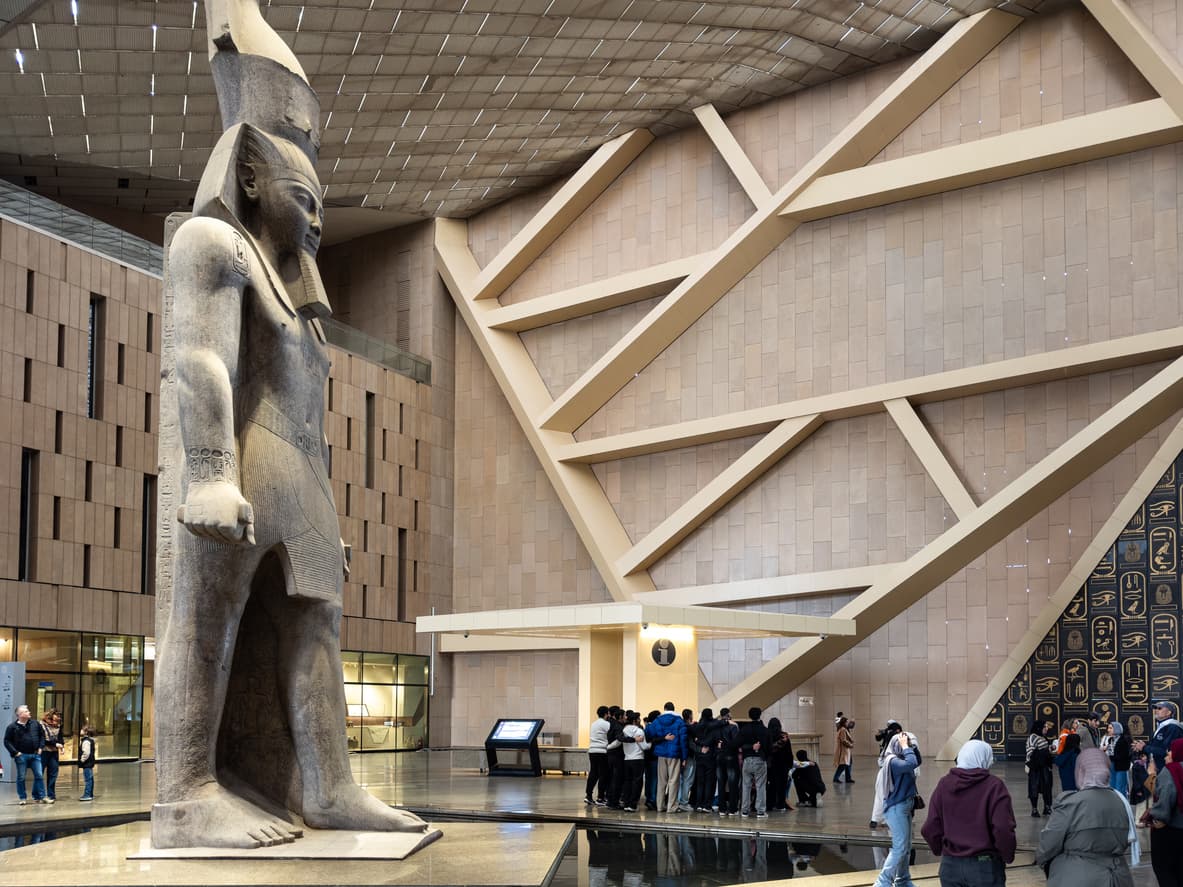
Your ultimate Grand Egyptian Museum Guide: explore highlights, practical advice, and insider tips to make the most of your museum adventure.

From the White Desert to Siwa Oasis, discover the best Egypt desert adventures, including stargazing, and unforgettable safari experiences.
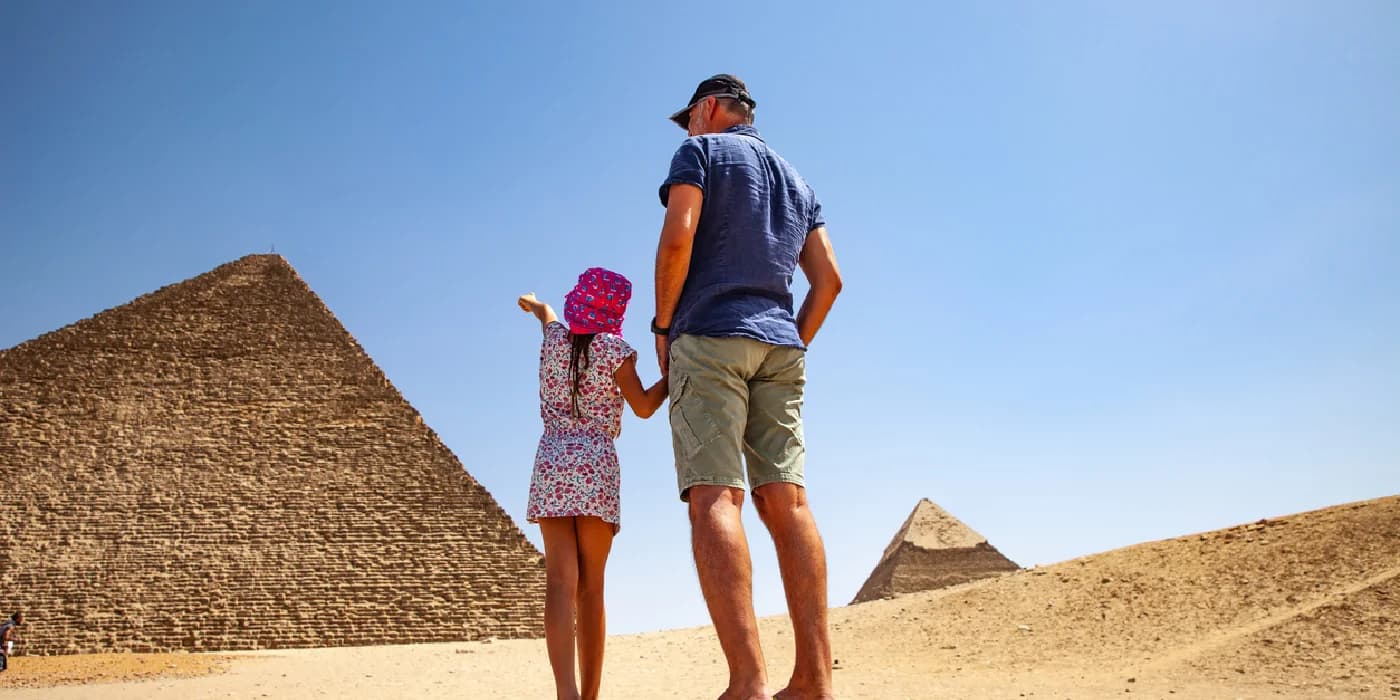
Discover the best places and activities for kids in Egypt, from the pyramids and Nile cruises to Red Sea beaches, and family-friendly experiences.

Explore traditional Egyptian desserts with this complete guide. Discover basbousa, kunafa, om ali & more sweet treats that make Egypt's cuisine amazing!
Master the Egypt-Jordan border crossing at Taba-Aqaba. Complete guide with visa info, costs, transport options & pro tips for hassle-free travel.
Discover Luxor's top 10 must-visit attractions including ancient temples, royal tombs & stunning monuments. Your ultimate guide to Egypt's greatest city!


© Copyright 2026 Go All Egypt Tours. All Rights Reserved.