What is Queens Valley?

Valley of the Queens is an important royal burial site from ancient Egypt’s New Kingdom, where queens, royal children, and nobles were laid to rest. Located near Valley of the Kings, it contains around 90 tombs, many adorned with stunning wall paintings and detailed carvings.
Though less crowded, the valley offers an intimate and rewarding experience—especially in the tomb of Queen Nefertari, one of the most beautifully decorated tombs in Egypt. Its serene desert setting and artistic richness provide deep insight into ancient Egyptian beliefs about the afterlife and the role of royal women.
What is Queens Valley?
Queens Valley is an ancient cemetery located in the Theban Necropolis on the west bank of the Nile River near modern Luxor (ancient Thebes). Unlike the Valley of the Kings, which served as the burial place for New Kingdom pharaohs, Queens Valley was dedicated primarily to royal wives, princes, princesses, and occasionally high-ranking nobles during the 18th, 19th, and 20th Dynasties (approximately 1550-1070 BCE).
Location and Setting
Queens Valley sits approximately 1.5 kilometers southwest of the Valley of the Kings, nestled in a smaller, more intimate wadi (dry valley) in the Theban hills. The valley's limestone cliffs provided ideal material for carving tombs while offering natural protection from the desert's harsh elements. The site's relative remoteness and challenging terrain helped preserve many tombs from ancient looting, though not all escaped plunderers.
Historical Timeline
The valley of the queens came into use during the 18th Dynasty (around 1550 BCE) and continued serving as a royal necropolis through the 20th Dynasty (ending around 1070 BCE). The most famous tombs date to the 19th Dynasty Ramesside period (1292-1186 BCE), including the masterpiece tomb of Queen Nefertari, wife of Ramesses II.
After the New Kingdom period ended, Queens Valley fell into disuse. Over subsequent millennia, many tombs were looted, damaged by floods, or lost entirely beneath sand and rockfall. Serious archaeological work began in the 19th century, with major excavations by Italian archaeologist Ernesto Schiaparelli (who discovered Nefertari's tomb in 1904) and continuing through modern times.
Why Visit Queens Valley?

Why Visit Queens Valley?
Exceptional Artistic Quality
The decorated tombs in Queens Valley showcase some of ancient Egypt's finest artistic achievements. While smaller than royal pharaonic tombs in the Valley of the Kings, queens' tombs often feature more delicate, refined artwork with exceptional color preservation. The tomb paintings employ brilliant pigments—bright blues, vivid yellows, deep reds, and luminous greens—that remain remarkably fresh despite their age.
Intimate Scale and Accessibility
Queens Valley's smaller size and lower visitor numbers create more intimate, contemplative experiences than the often-crowded Valley of the Kings. You can study tomb decorations closely without navigating through tour groups, photograph freely (where permitted), and take time to appreciate artistic details at your own pace.
Nefertari's Tomb: Egypt's Sistine Chapel
The tomb of Queen Nefertari (QV66) ranks among the world's most beautiful ancient monuments. Called the "Sistine Chapel of Ancient Egypt," Nefertari's burial chamber features wall paintings of such exceptional quality, color preservation, and artistic refinement that many consider them the pinnacle of ancient Egyptian funerary art. While visiting requires a separate, expensive ticket, seeing this masterpiece justifies the cost for serious ancient art enthusiasts.
Insights into Royal Women's Status
Queens Valley reveals the honored position of royal women in ancient Egypt. The elaborate tombs, rich decorations, and religious texts inscribed on walls demonstrate that queens and royal children received burial preparations nearly equal to pharaohs themselves—reflecting women's relatively high status in Egyptian society compared to many ancient cultures.
History of Queens Valley

History of Queens Valley
Origins and Early Use
The valley of the queens began as a royal necropolis during Egypt's 18th Dynasty, though early tombs were simpler than later elaborations. As the New Kingdom progressed and Egypt's wealth increased through military conquests and trade, tomb construction became more ambitious, with deeper corridors, multiple chambers, and increasingly sophisticated decorative programs.
The Ramesside Golden Age
Queens Valley reached its artistic zenith during the 19th Dynasty Ramesside period, particularly under Ramesses II (ruled 1279-1213 BCE), one of Egypt's longest-reigning and most prolific builders. His beloved wife Nefertari received perhaps the finest tomb ever created in Egypt, while other family members also received elaborate burial chambers.
The 20th Dynasty continued using Queens Valley, though tombs from this later period generally show declining artistic quality as Egypt's power and wealth diminished. The last tombs in the valley date to the end of the New Kingdom around 1070 BCE, after which the site was abandoned as Egypt's political center shifted away from Thebes.
Rediscovery and Conservation
After millennia of neglect, European explorers rediscovered Queens Valley in the 19th century. The most significant discovery came in 1904 when Italian archaeologist Ernesto Schiaparelli found Nefertari's tomb—miraculously, though it had been looted in antiquity, the wall paintings survived largely intact.
Conservation efforts have been ongoing, with major restoration projects undertaken on Nefertari's tomb in the 1980s-1990s by the Getty Conservation Institute, which stabilized deteriorating plaster and restored faded colors using cutting-edge techniques. Similar work continues on other tombs to preserve these irreplaceable artworks for future generations.
The Most Important Tombs in Queens Valley
Approximately 90 tombs exist in Queens Valley, though most remain undecorated or are closed to visitors. Several accessible tombs showcase the site's artistic and historical importance.
QV66: Tomb of Queen Nefertari
Queen Nefertari's tomb stands as Queens Valley's crown jewel and one of ancient Egypt's supreme artistic achievements. Nefertari ("Beautiful Companion") was the beloved wife of Ramesses II, appearing beside him in monuments throughout Egypt including at Abu Simbel where she received unprecedented honor with her own temple.
What makes it special:
The tomb features exquisite wall paintings covering nearly every surface with scenes from the Book of the Dead, showing Nefertari's journey through the afterlife. The paintings combine brilliant colors—lapis lazuli blues, golden yellows, vibrant reds—with exceptional artistic skill depicting the queen in elegant white linen gowns, elaborate jewelry, and delicate facial features.
Religious scenes show Nefertari meeting various gods including Osiris, Anubis, and Hathor, playing senet (a board game symbolizing passage to the afterlife), and receiving divine blessing for her eternal journey. The burial chamber's ceiling depicts stars on deep blue background representing the night sky, while the pillars feature djed symbols (representing stability) and protective deities.
Visiting limitations:
Due to the tomb's fragility and need for preservation, visiting Nefertari's tomb requires a separate ticket costing 1,400 Egyptian pounds (approximately $45 USD, subject to change)—the most expensive single monument ticket in Egypt. Only 150 visitors per day are admitted in small groups for maximum 10 minutes. Despite the cost and time limit, seeing this masterpiece is unforgettable for those who can afford it.
QV44: Tomb of Khaemwaset
Prince Khaemwaset, son of Ramesses III, received an elaborately decorated tomb in Queens Valley. Though he died young (around age 15), his tomb features well-preserved paintings showing the prince being led by his father through the afterlife, meeting gods, and participating in religious rituals.
The tomb's artistic style reflects the 20th Dynasty period with slightly less refined execution than earlier masterpieces but still impressive color preservation and religious iconography. The scenes provide insight into royal burial practices for children and the emotional connections between pharaohs and their offspring.
QV52: Tomb of Queen Tyti
Queen Tyti, wife of Ramesses III, was buried in a relatively small but beautifully decorated tomb featuring scenes from funerary texts and the queen making offerings to gods. The paintings show Tyti in traditional queenly regalia with vulture headdress, emphasizing her royal status and divine connections.
QV55: Tomb of Prince Amunherkhepeshef
Another son of Ramesses III, Prince Amunherkhepeshef received a tomb decorated with vivid scenes showing Ramesses III introducing his young son to afterlife deities. The paintings depict touching father-son interactions as the pharaoh guides his child through the dangerous journey to eternal life.
The tomb features excellent color preservation with bright blues, yellows, and reds still vibrant after 3,000+ years. Scenes include the prince meeting Ptah, Imset, and other protective gods who would safeguard his afterlife journey.
QV43: Tomb of Prince Sethherkhepeshef
Yet another son of Ramesses III buried in Queens Valley, Sethherkhepeshef's tomb follows similar decorative patterns with the pharaoh leading his son through the underworld. The paintings showcase the artistic conventions used for depicting royal children—smaller scale than adults, side-lock hairstyle indicating youth, and protective gestures from deities.
Understanding Queens Valley Tomb Decorations
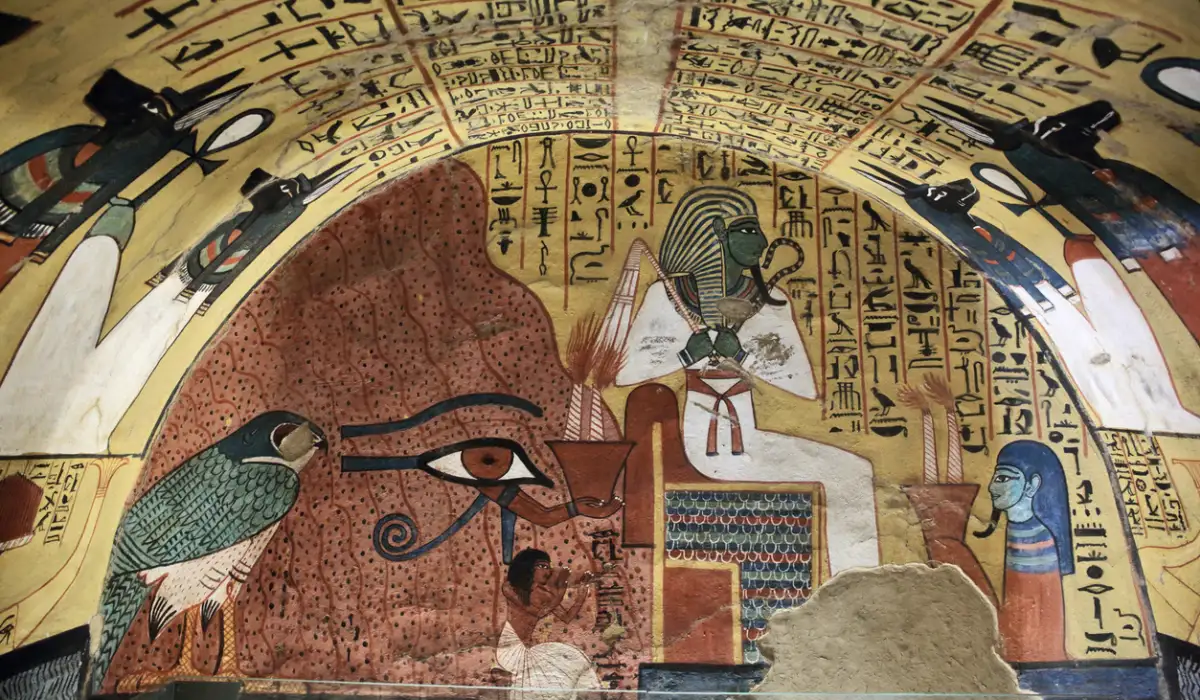
Understanding Queens Valley Tomb Decorations
Religious Themes
The valley of the queens tomb decorations focus heavily on funerary religious texts, particularly the Book of the Dead—a collection of spells, hymns, and instructions guiding the deceased through the afterlife's challenges. Scenes show the deceased meeting gods, passing judgment, and achieving eternal life among the blessed dead.
Common motifs include:
- Meeting Osiris: The god of the underworld who judges the dead
- Anubis: Jackal-headed god who guides souls and protects tombs
- Hathor: Cow goddess associated with the west (death's direction) who welcomes the dead
- Ra: Sun god whose daily journey mirrors the soul's rebirth
- Ma'at: Goddess of truth and justice, essential for passing judgment
- Protective deities: Various gods offering protection during the dangerous afterlife journey
Artistic Techniques
Queens Valley tomb artists prepared limestone walls with plaster ground, then painted directly onto the smooth surface using mineral pigments mixed with binding agents. Colors came from natural materials:
- Blues: Lapis lazuli or Egyptian blue (synthetic copper-based pigment)
- Yellows: Ochre or orpiment (arsenic sulfide)
- Reds: Iron oxide ochre
- Greens: Malachite or chrysocolla
- Whites: Chalk or gypsum
- Blacks: Carbon soot
The dry desert climate helped preserve these colors remarkably well, though some tombs suffered damage from humidity, mineral salts, or bacterial growth requiring modern conservation interventions.
Visiting Queens Valley: Practical Information
Location and Access
Queens Valley is located on Luxor's west bank, approximately 2 kilometers from the main west bank ticket office. Most visitors reach the site by:
Taxi or private car: From Luxor hotels, negotiate round-trip fares including waiting time (expect 300-500 Egyptian pounds)
Bicycle: Adventurous travelers can rent bicycles in Luxor and cycle across the Nile, then to the west bank sites (approximately 10-12 km one way)
Tour groups: Most Luxor tour companies include Queens Valley in west bank itineraries
Local ferry + transport: Cross the Nile by local ferry (a few pounds), then arrange taxi or microbus to sites
Opening Hours and Tickets
Queens Valley opens daily from 6:00 AM to 5:00 PM (hours vary seasonally). The standard ticket (purchased at the west bank ticket office, not at the site itself) costs 100 Egyptian pounds for foreign tourists and typically includes entry to three tombs selected by site management (tombs rotate to allow conservation).
Nefertari's tomb requires a separate ticket costing 1,400 Egyptian pounds, purchased at the same ticket office. Only 150 visitors daily are admitted, so arrive early or book in advance through tour operators to secure entry.
Student discounts apply with valid international student cards. Photography is generally prohibited inside tombs to prevent flash damage to ancient pigments, though rules may vary.
Best Time to Visit
Early morning (6:00-8:00 AM): Coolest temperatures, best light, fewest crowds. Essential for photography enthusiasts and those seeking contemplative experiences.
Late afternoon (3:00-5:00 PM): Good for photography as shadows become more interesting, though warmer than morning.
Avoid midday (10:00 AM-2:00 PM): Intense heat, harsh overhead light, and peak tour group congestion.
Seasonal considerations: October through April offers comfortable temperatures (20-30°C/68-86°F). May through September brings extreme heat (35-45°C/95-113°F) making outdoor exploration difficult, though you'll encounter fewer tourists.
What to Bring
- Water: Essential; no facilities inside the valley
- Sun protection: Hat, sunscreen, sunglasses
- Comfortable walking shoes: Uneven terrain and sandy paths
- Modest clothing: Shoulders and knees covered (cultural respect)
- Small flashlight: Helpful for examining dark tomb areas (where permitted)
- Cash: For tickets, tips, and any purchases
- Camera: For exterior photography (interior photography prohibited in most tombs)
Physical Requirements
Queens Valley involves moderate walking on uneven, sandy terrain with some inclines. Tombs require descending stairs into underground chambers—potentially challenging for those with mobility limitations. The dry heat and sun exposure can be exhausting, so pace yourself and rest frequently.
Combining Queens Valley with Other West Bank Sites

Combining Queens Valley with Other West Bank Sites
Valley of the Kings
Most visitors combine Queens Valley with the nearby Valley of the Kings (approximately 1.5 km away). The standard west bank tour includes both valleys plus other monuments. Allow 5-6 hours minimum for a comprehensive west bank visit including both valleys.
Deir el-Medina
The workers' village of Deir el-Medina sits very close to Queens Valley. This ancient settlement housed the artisans and craftsmen who built and decorated tombs in both the Valley of the Kings and Queens Valley. The site includes remarkably preserved village remains and beautifully decorated workers' tombs demonstrating the skills these craftsmen possessed.
Medinet Habu
The mortuary temple of Ramesses III at Medinet Habu offers excellent relief carvings and is also relatively close to Queens Valley. This massive temple complex showcases well-preserved religious and military scenes covering temple walls.
Hatshepsut's Temple
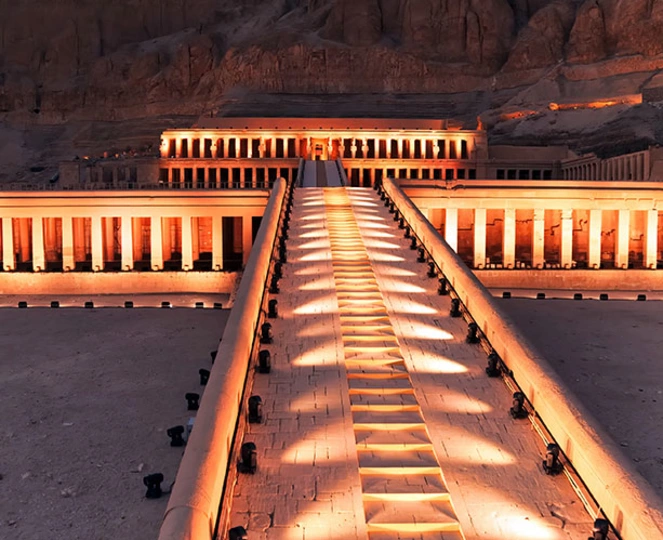
The dramatic terraced temple of Queen Hatshepsut at Deir el-Bahari sits on the west bank's eastern edge, easily combined with Queens Valley in comprehensive west bank itineraries.
Queens Valley Conservation Challenges
Preserving the valley of the queens tombs presents ongoing challenges. Ancient pigments deteriorate from light exposure, humidity fluctuations, bacterial growth, and mineral salt crystallization damaging plaster. Tourist breath and body heat create moisture threatening fragile paintings—explaining limited visitor numbers and time restrictions in sensitive tombs like Nefertari's.
International organizations including the Getty Conservation Institute, Egyptian authorities, and various archaeological missions work continuously on conservation projects, employing cutting-edge techniques to stabilize deteriorating artwork while maintaining scientific integrity. Supporting these efforts through respectful tourism—following photography rules, not touching walls, limiting time in sensitive tombs—helps preserve these treasures for future generations.
FAQs

FAQs
Q1: Where is Queens Valley located in Egypt?
Queens Valley (Valley of the Queens) is located on Luxor's west bank in the Theban Necropolis, approximately 1.5 kilometers southwest of the Valley of the Kings. The site sits in limestone hills along the Nile's west bank, about 2 kilometers from the main west bank ticket office, and is easily accessible from Luxor by taxi, tour, or bicycle.
Q2: What can I see in Queens Valley?
In Queens Valley, you'll see elaborately decorated tombs of ancient Egyptian queens, princes, and princesses from the New Kingdom period (1550-1070 BCE). The standard ticket includes three tombs with vivid wall paintings showing afterlife journeys. Queen Nefertari's tomb (separate expensive ticket) features Egypt's finest funerary art with exceptional color preservation and artistic refinement.
Q3: How much does it cost to visit Queens Valley?
The standard Queens Valley ticket costs 100 Egyptian pounds (approximately $3 USD) for foreign tourists, including entry to three tombs. Queen Nefertari's tomb requires a separate ticket costing 1,400 Egyptian pounds (approximately $45 USD), with only 150 visitors admitted daily for 10-minute visits. Student discounts available with valid international student cards.
Q4: Is Queens Valley worth visiting compared to the Valley of the Kings?
Yes, Queens Valley is worth visiting for its exceptional artistic quality, intimate atmosphere, and lower crowds. While smaller than the Valley of the Kings, queens' tombs often feature more refined, delicate artwork with better color preservation. Nefertari's tomb ranks among Egypt's supreme artistic achievements. Most comprehensive Luxor west bank tours include both valleys.
Q5: How long does it take to visit Queens Valley?
A thorough Queens Valley visit takes 1.5-2.5 hours depending on whether you visit Nefertari's tomb. Standard ticket tombs require 45-90 minutes for three tombs. Nefertari's tomb adds 10 minutes viewing time plus potential waiting time. Allow extra time for walking between tombs in desert heat and rest breaks. Combine with Valley of the Kings for 5-6 hour west bank tour.
Q6: Can I take photos inside Queens Valley tombs?
Photography is generally prohibited inside Queens Valley tombs to protect ancient pigments from camera flash and light exposure. However, rules vary by specific tomb and may change, so check current regulations at the site. Exterior photography is permitted. Nefertari's tomb strictly prohibits all photography to preserve the exceptional paintings. Violation risks hefty fines or ejection from the site.