Kom Ombo Temple in Aswan, Egypt: History, Architecture & Visitor Guide
Kom Ombo Temple is a unique double temple on the east bank of the Nile in Upper Egypt, dedicated jointly to Sobek, the crocodile god, and Haroeris (Horus the Elder), the falcon god. Built during the Ptolemaic period between roughly 180 and 47 BC, beginning under Ptolemy VI Philometor and added to by later Ptolemaic and Roman rulers, it is the only major Egyptian temple built on a perfectly symmetrical plan — twin entrances, twin hypostyle halls and twin sanctuaries, one set for each god. The temple stands about 45 km (28 miles) north of Aswan and roughly 165 km south of Luxor, directly on the riverbank between Aswan and Edfu. Its best-known features are a wall relief depicting ancient surgical instruments, a Nilometer well used to measure the Nile's flood levels, and the adjoining Crocodile Museum, which displays mummified crocodiles recovered from the surrounding cemeteries. Because it sits at the water's edge, Kom Ombo is a standard stop on Nile cruises between Luxor and Aswan and an easy day trip from Aswan.
Where Is Kom Ombo Temple Located?
Kom Ombo Temple is located in the town of Kom Ombo, approximately 45 kilometers north of Aswan and about 65 kilometers south of Edfu in Upper Egypt. The temple sits directly on a bend in the Nile River, offering breathtaking panoramic views — especially at sunset.
Its strategic location made it an important religious and trade center during the Ptolemaic and Roman periods. Because of its riverside position, the temple was also closely connected to the Nile’s seasonal flooding, agriculture, and the protection of nearby communities from crocodiles that once populated the riverbanks.
The History of Kom Ombo Temple
The History of Kom Ombo Temple
Origins During the Ptolemaic Period
Kom Ombo Temple was primarily constructed during the Ptolemaic Dynasty (180–47 BCE), although evidence suggests that earlier structures may have existed on the same site during the New Kingdom.
The temple was built under the reign of Ptolemy VI Philometor and later expanded by subsequent Ptolemaic rulers. Roman emperors later added decorative reliefs and structural elements, blending Egyptian religious traditions with Greco-Roman artistic influences.
Unlike older temples in Luxor and Karnak, Kom Ombo reflects a later period in Egyptian history when foreign rulers adopted and supported traditional Egyptian religious practices to legitimize their authority.
Why Kom Ombo Temple Is Unique
A Temple Dedicated to Two Gods
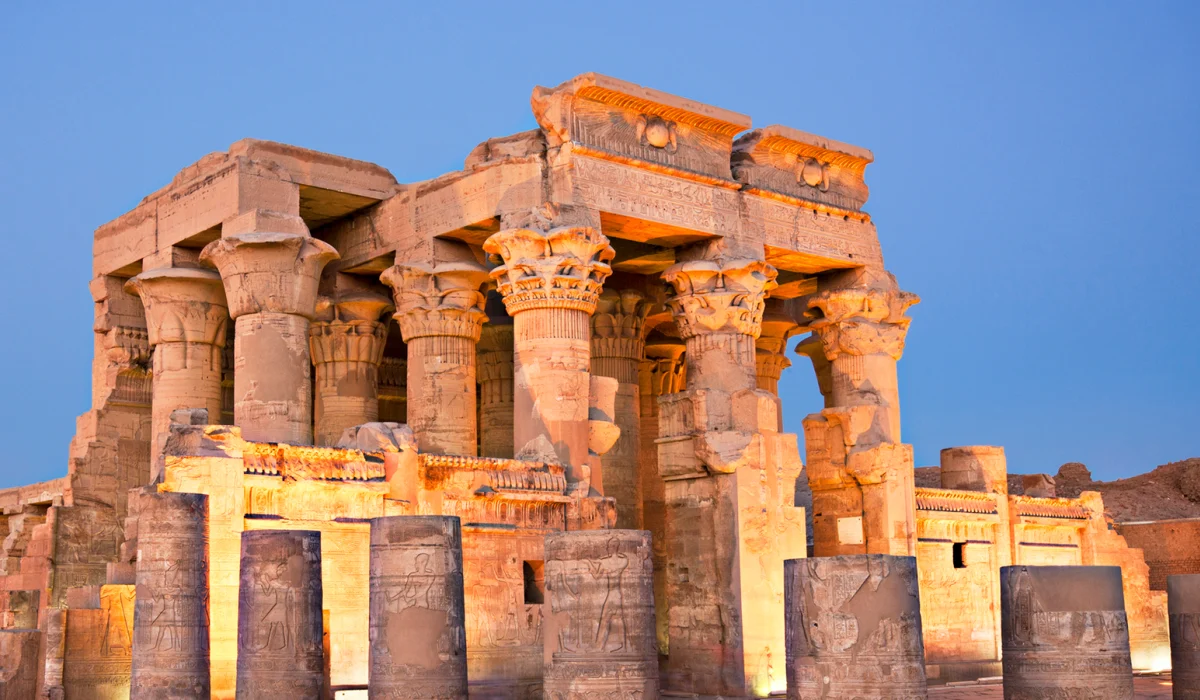
What truly sets Kom Ombo Temple apart is its symmetrical double design. The structure is divided into two identical halves:
- The northern side is dedicated to Sobek, the crocodile god associated with fertility, strength, and protection.
- The southern side honors Haroeris (Horus the Elder), the falcon-headed god representing kingship, the sky, and divine authority.
Each side features its own entrance, hypostyle hall, and sanctuary. This mirrored layout symbolizes balance — a key concept in ancient Egyptian cosmology.
Walking through Kom Ombo feels like entering two temples at once, seamlessly merged into one harmonious architectural masterpiece.
Exploring the Temple Complex
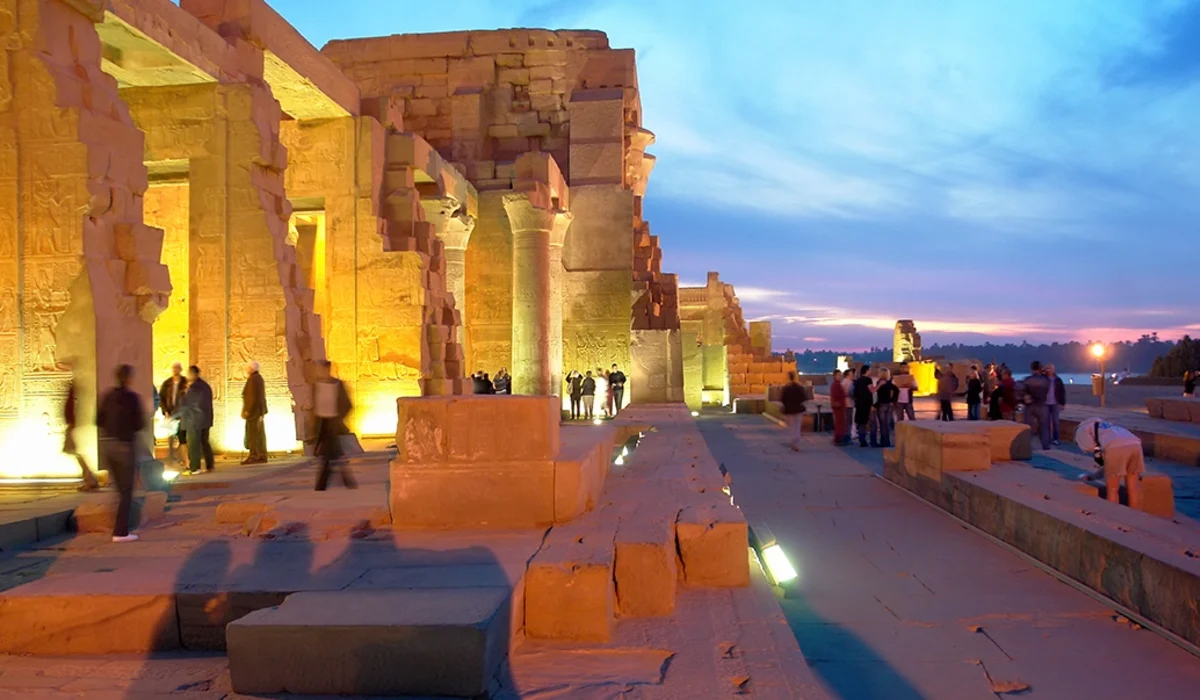
Exploring the Temple Complex
The First Pylon and Courtyard
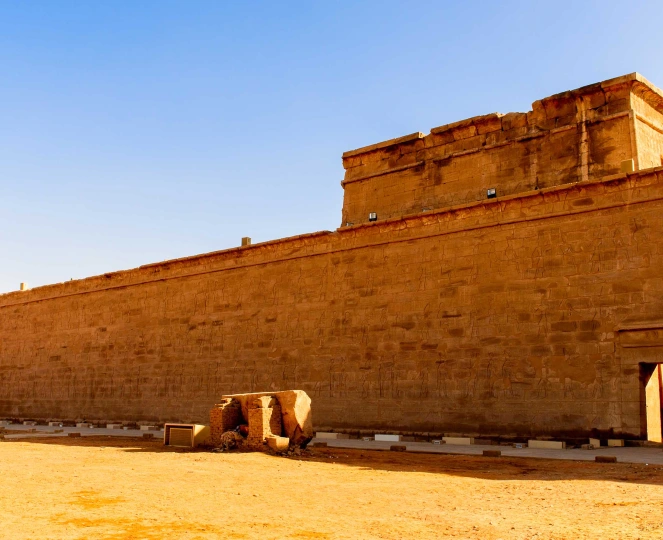
Your visit begins at the impressive First Pylon, though much of it has been damaged over time by Nile floods and earthquakes. Passing through, you enter a spacious open courtyard lined with columns decorated with intricate carvings.
These reliefs depict Ptolemaic kings offering sacrifices to Sobek and Haroeris, reinforcing their divine connection and political legitimacy.
The Hypostyle Hall
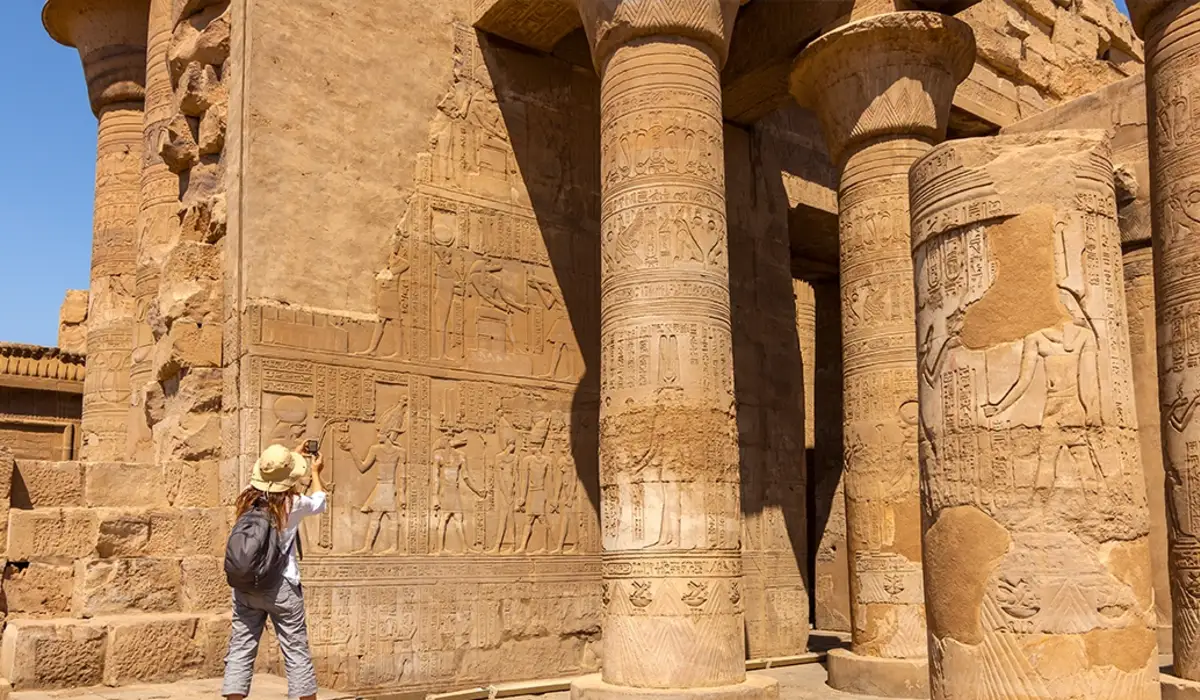
The hypostyle hall is one of the temple’s most captivating features. Massive stone columns rise toward the sky, once supporting a beautifully decorated roof.
The walls are covered in detailed reliefs showing:
- Religious ceremonies
- Offerings to the gods
- Surgical instruments and medical tools
- Scenes of divine healing
The medical reliefs are particularly fascinating, offering rare insight into ancient Egyptian knowledge of medicine and surgery.
The Sanctuaries of Sobek and Haroeris
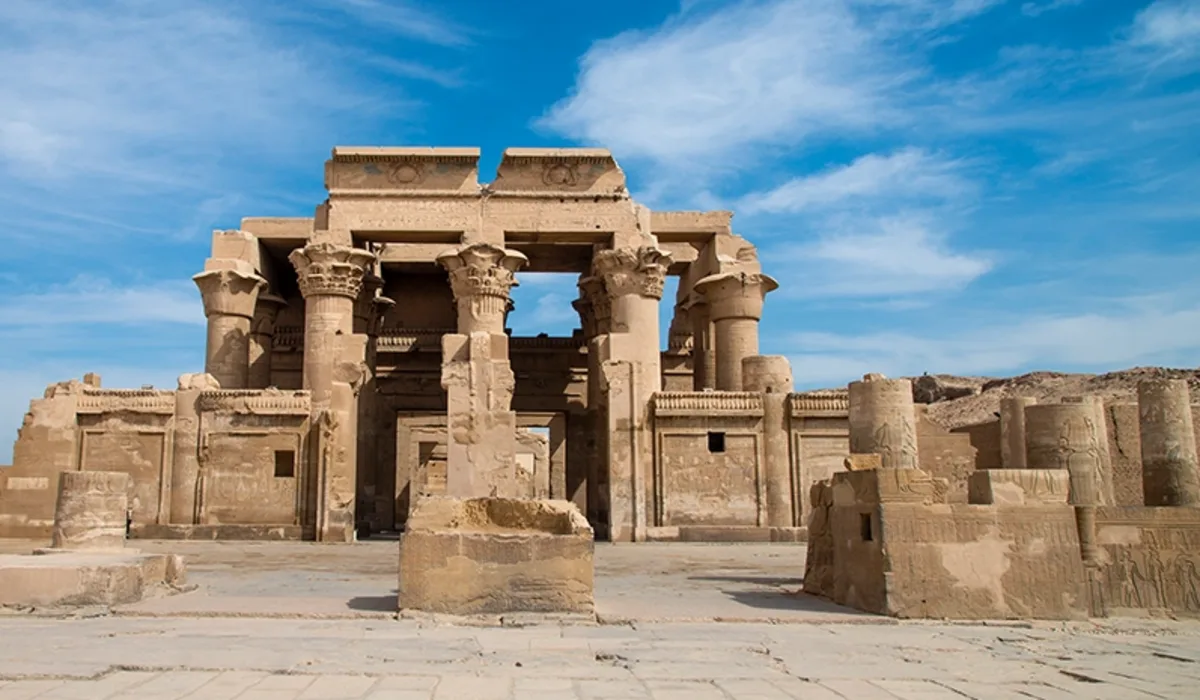
The Sanctuaries of Sobek and Haroeris
At the rear of the temple lie the twin sanctuaries, where sacred statues of the gods once stood.
Sobek’s Sanctuary
The northern sanctuary is dedicated to Sobek. Nearby, you’ll find the famous Crocodile Museum, which displays dozens of mummified crocodiles discovered in the area. These sacred animals were worshipped as earthly manifestations of Sobek.
Haroeris’ Sanctuary
The southern sanctuary honors Haroeris, often depicted as a falcon-headed figure. The carvings in this section emphasize royal power and celestial symbolism.
Beyond the Main Structure
The Nilometer
Kom Ombo features a well-preserved nilometer, used in ancient times to measure the Nile’s water levels. This measurement was crucial for predicting floods and determining agricultural taxes.
The Sacred Lake
Although partially ruined, the remains of a sacred lake can still be identified. Priests used these waters for ritual purification before performing temple ceremonies.
The Mammisi (Birth House)
The temple complex also includes a mammisi, or birth house, dedicated to celebrating the divine birth of Horus. These structures symbolized renewal and divine continuity.
Religious and Cultural Significance
Kom Ombo was more than a temple — it was a spiritual center deeply connected to daily life in ancient Egypt.
Sobek protected people from Nile crocodiles and ensured fertility of the land. Haroeris symbolized divine kingship and cosmic order. Together, they represented harmony between opposing forces.
The temple also functioned as a healing center. Inscriptions indicate that pilgrims sought cures for illnesses, praying to the gods for protection and restoration.
Visiting Kom Ombo Temple Today

Visiting Kom Ombo Temple Today
Best Time to Visit
The ideal time to visit Kom Ombo Temple in Aswan is between October and April, when temperatures are cooler. Late afternoon visits are particularly magical, as golden sunlight illuminates the sandstone walls.
How Long to Spend at Kom Ombo
Most visitors spend 1 to 2 hours exploring the site. This allows enough time to see the hypostyle hall, sanctuaries, crocodile museum, and surrounding ruins comfortably.
What to Wear
- Comfortable walking shoes
- Light, breathable clothing
- Hat and sunglasses
- Sunscreen
Nearby Attractions in Upper Egypt
Kom Ombo’s location makes it easy to combine with other major attractions:
- Edfu Temple (Temple of Horus) – 65 km north
- Philae Temple in Aswan – 45 km south
- Karnak Temple in Luxor – further north
Many travelers visit Kom Ombo as part of a journey between Luxor and Aswan.
Why Kom Ombo Temple Is Worth Visiting
Kom Ombo Temple offers:
- A rare double temple design
- Stunning Nile River views
- Fascinating crocodile mummies
- Detailed medical carvings
- A peaceful, less crowded atmosphere compared to Luxor
It is a remarkable blend of architecture, religion, science, and symbolism.
FAQs
1. Where is Kom Ombo Temple located in Egypt, and how do I get there?
Kom Ombo Temple is located in Upper Egypt, about 45 km north of Aswan and 65 km south of Edfu. When you visit, you can reach it by car from Aswan in about an hour, or as part of a guided tour traveling along the Nile River.
2. Can I visit Kom Ombo Temple from Aswan in one day?
Yes, you can easily visit Kom Ombo Temple from Aswan in a half-day or full-day trip. The drive is short, and you can combine it with nearby attractions for a complete Upper Egypt experience.
3. Why should I visit Kom Ombo Temple in Upper Egypt?
When you visit Kom Ombo Temple, you experience one of Egypt’s only double temples dedicated to two gods. You’ll see ancient medical carvings, crocodile mummies, and stunning Nile views all in one location.
4. How much time should I spend at Kom Ombo Temple?
You should plan to spend about 1–2 hours exploring the temple complex. This gives you enough time to walk through both sanctuaries, the hypostyle hall, and the crocodile museum comfortably.
5. Is Kom Ombo Temple worth visiting compared to Karnak or Luxor Temple?
Yes. While Karnak and Luxor Temple are larger, when you visit Kom Ombo Temple, you’ll enjoy a more intimate experience with unique architectural symmetry and fascinating crocodile symbolism.
6. Can I see real crocodiles at Kom Ombo Temple in Aswan?
You won’t see live crocodiles at the temple today, but when you visit, you can explore the Crocodile Museum and view authentic mummified crocodiles that were once worshipped as sacred animals.
7. What is the best time of day for me to visit Kom Ombo Temple?
The best time for you to visit Kom Ombo Temple is late afternoon. You’ll avoid intense heat and enjoy beautiful sunset lighting over the Nile River.
Final Thoughts
Kom Ombo Temple in Aswan, Egypt, stands as a powerful symbol of balance, devotion, and architectural brilliance. Its rare dual dedication, detailed carvings, and riverside setting create an unforgettable experience.
Whether you are passionate about ancient history, fascinated by mythology, or simply seeking breathtaking Nile scenery, Kom Ombo offers a journey into the heart of Egypt’s timeless civilization.