


Egypt blends ancient wonders like the Great Pyramid of Giza with vibrant modern cities such as Cairo and Luxor. The ideal time to visit is October to April, when the weather is pleasant. From historic monuments to authentic cultural experiences and budget-friendly stays, Egypt offers travelers an unforgettable journey.
| Category | Details |
|---|---|
| Best time to visit | October–April (mild weather, fewer crowds) |
| Capital city | Cairo |
| Currency | Egyptian Pound (EGP) |
| Visa | On arrival ($25) or e-visa online |
| Language | Arabic — English widely spoken in tourist areas |
| Time zone | GMT+2 (no daylight saving) |
| Electricity | 220V, Type C & F plugs |
| Tipping | Expected — 10–15% restaurants, 5–10 EGP for services |
| Emergency number | 123 (police), 122 (ambulance) |
| Getting around | Uber, Careem, trains, Nile cruises |
Egypt's Premier Ancient Sites: Monuments of Eternal Significance
Ancient Egypt's monumental legacy unfolds through structures that have endured millennia of desert winds and shifting sands. These archaeological marvels reveal the sophisticated engineering and profound spiritual beliefs of a civilization that shaped human history.
The Pyramids of Giza and the Sphinx
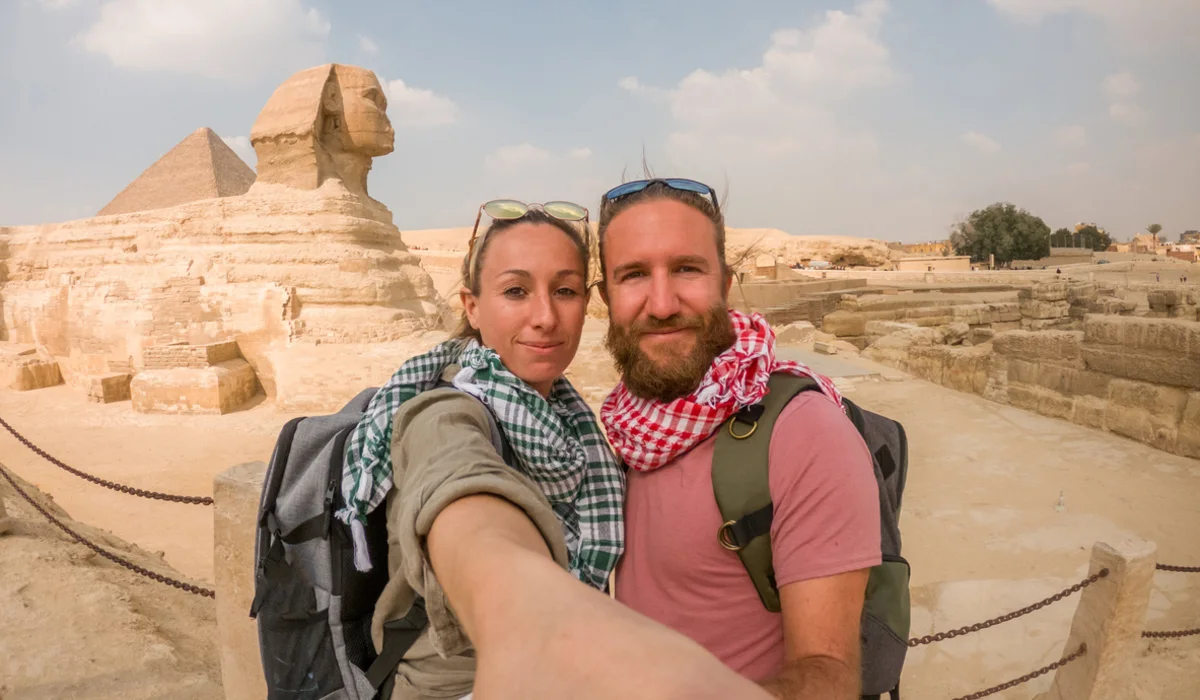
The Pyramids of Giza—Khufu, Khafre, and Menkaure—form Egypt’s iconic triad, with Khufu’s Great Pyramid towering 140 meters high. Guarding the site, the Great Sphinx stands as a symbol of Pharaoh Khafre. Early morning visits offer the most atmospheric experience before heat and crowds arrive.
Valley of the Kings and Queen Nefertari's Tomb
Luxor’s West Bank houses the Valley of the Kings, a necropolis of over 60 tombs from the 18th–20th dynasties (1539–1075 BC). Nearby, Queen Nefertari’s tomb in the Valley of the Queens—dubbed the “Sistine Chapel of Ancient Egypt”—is famed for its vivid wall paintings, discovered in 1904 and restored in the late 20th century. Due to preservation needs, daily visitors are limited, so advance booking is essential.
Karnak and Luxor Temples
The Karnak Temple Complex, the world’s largest religious structure, spans over 100 hectares and features the Great Hypostyle Hall with 134 towering columns. Nearby Luxor Temple, built around 1400 BCE for royal coronations, was linked to Karnak by the Avenue of Sphinxes, once used for grand religious processions.
Abu Simbel Temples
Abu Simbel’s twin temples showcase Egypt’s architectural genius, with Ramesses II’s 20-meter statues dominating the Great Temple façade. The smaller temple honors Queen Nefertari, uniquely depicting her equal in scale to the pharaoh. Twice yearly, sunlight aligns to illuminate the inner sanctuary in a stunning solar phenomenon.
Saqqara and Dahshur Pyramids
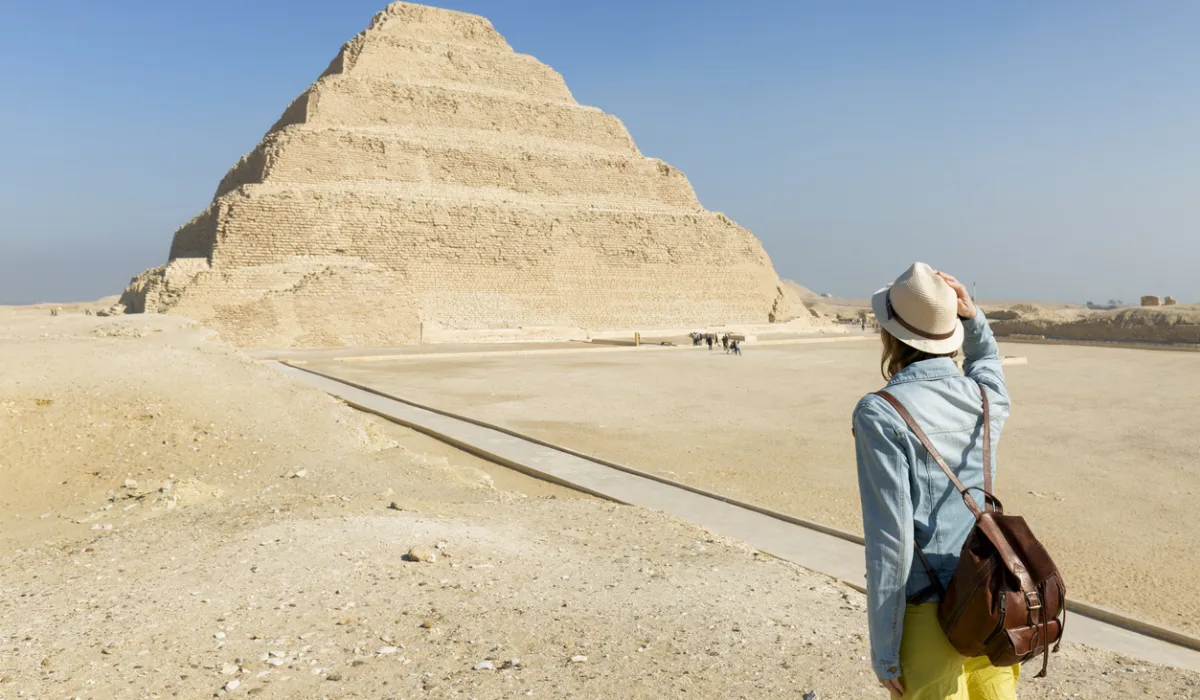
Saqqara’s Step Pyramid of Djoser, the world’s first stone complex, laid the foundation for pyramid building in the 27th century BC. Nearby at Dahshur, the Bent and Red Pyramids reveal key stages of engineering progress, with the Red Pyramid offering visitors access to its burial chambers through a 60-meter tunnel.
The Egypt of today extends far beyond its ancient monuments, revealing dynamic urban landscapes, rich cultural traditions, and pristine coastal environments. Understanding contemporary Egyptian society enriches any historical exploration, offering visitors authentic insights into this multifaceted nation.
Cairo's Dynamic Districts and Cultural Institutions
Cairo, Egypt’s cultural heart, blends ancient heritage with modern life. Highlights include the Egyptian Museum, Tahrir Square, and the new Grand Egyptian Museum. Visitors can stroll Zamalek’s leafy streets, explore Islamic Cairo’s medieval architecture, and shop at Khan El-Khalili’s vibrant bazaar.
Aswan's Peaceful Atmosphere and Nubian Heritage
Aswan, Southern Egypt’s tranquil jewel, offers rich Nubian culture, colorful villages, island-dotted Nile cruises, and the renowned Nubian Museum. Visitors can also explore The Unfinished Obelisk, an impressive ancient monument that reveals how massive obelisks were carved directly from bedrock. Sunset views from the Old Cataract Hotel further highlight Aswan’s timeless charm and peaceful beauty.
Alexandria's Cosmopolitan Mediterranean Character
Alexandria is Egypt's second city and its most Mediterranean — a place where Greek columns stand beside Arabic coffeehouses, where the ghost of Cleopatra lingers in the salt air off the sea, and where the pace of life feels noticeably different from the intensity of Cairo.
Founded by Alexander the Great in 331 BC, Alexandria served for centuries as the intellectual capital of the ancient world — home to the Great Library, the Pharos Lighthouse (one of the Seven Wonders of the Ancient World), and a scholarly tradition that shaped the course of Western civilization.
Today, Alexandria is a city of elegant contradictions — grand colonial architecture slightly faded by the sea air, a 26-kilometre corniche that curves along the Mediterranean, and a population of five million who regard their city with the particular pride of people who know their home was once the centre of everything.
Stanley Beach and the Corniche deserve a mention for any visitor who wants to understand Alexandria as it actually is — not as a museum, but as a living city. Walk the corniche in the late afternoon when the light over the Mediterranean turns the water a deep blue-green, and you will understand why every writer who has spent time here eventually writes about the light.
Where to Eat in Alexandria
Alexandria's food scene is significantly underrated — the city's position on the Mediterranean coast and its long cosmopolitan history have produced a culinary culture unlike anywhere else in Egypt.
Red Sea Coastal Resorts: Sharm El Sheikh and Hurghada
Egypt's Red Sea coastline stretches for over 1,200 kilometres and contains some of the finest coral reef ecosystems in the world — a fact that has made it one of the most popular diving destinations on earth and a year-round resort destination for European and Middle Eastern travelers alike.
The two main resort hubs — Hurghada on the western shore and Sharm El Sheikh at the southern tip of the Sinai Peninsula — are both exceptional, but they offer noticeably different experiences and suit different types of travelers.
Hurghada vs Sharm El Sheikh: The Key Differences
| Category | Hurghada | Sharm El Sheikh |
|---|---|---|
| Location | Red Sea coast, 6 hrs from Cairo by road | Southern Sinai, 1 hr flight from Cairo |
| Best for | Families, first-time Red Sea visitors | Diving enthusiasts, couples, nightlife |
| Diving quality | Good — Giftun Island reefs | World-class — Ras Mohammed, Blue Hole, Thistlegorm |
| Beach quality | Good sandy beaches, calm water | Stunning — some of Egypt's most beautiful coastline |
| Nightlife | Moderate — resort strip bars and clubs | Lively — Naama Bay has a well-established nightlife scene |
| Getting there | Flights + direct transfers from Luxor | Flights from Cairo, international flights direct |
| Family-friendly | ✅ Excellent — calm seas, shallow reefs | ✅ Good — slightly more geared toward couples/divers |
| Budget | Generally more affordable | Slightly higher prices overall |
| Desert activities | Quad biking, camel trekking, jeep safaris | Bedouin villages, Mount Sinai, St Catherine's Monastery |
Best Diving Spots in Egypt's Red Sea
Egypt's Red Sea is home to some of the most biodiverse coral reef systems in the world. Water visibility regularly exceeds 30 metres, water temperatures stay warm year-round, and the variety of marine life — from reef sharks and dolphins to Napoleon wrasse and nudibranchs — is extraordinary.
| Dive Site | Location | Best For | Depth |
|---|---|---|---|
| Ras Mohammed National Park | Sharm El Sheikh | Wall diving, pelagic fish, sharks | 5–40m |
| SS Thistlegorm | Near Sharm | World's best wreck dive — WWII cargo ship | 16–30m |
| The Blue Hole | Dahab | Advanced divers, dramatic wall | 5–130m+ |
| Giftun Island | Hurghada | Snorkelling, beginners, reef fish | 5–20m |
| Abu Nuhas Wrecks | Northern Red Sea | Multiple wreck dives in one location | 10–30m |
| Daedalus Reef | Offshore Red Sea | Hammerhead and oceanic whitetip sharks | 10–50m |
| Brothers Islands | Deep Red Sea | Big pelagics, hammerheads, thresher sharks | 15–40m+ |
For beginners and snorkelers:
Hurghada's house reefs and Giftun Island excursions are the most accessible and most suitable. Calm, shallow water, excellent visibility, and abundant reef life at depths reachable without scuba equipment.
For experienced divers:
Sharm El Sheikh and Dahab are in a different category entirely. The SS Thistlegorm is widely regarded as one of the ten best wreck dives in the world. Ras Mohammed National Park, where the Red Sea meets the Gulf of Aqaba, produces some of the most dramatic pelagic encounters available anywhere in the Mediterranean and Red Sea region.
Successful Egyptian travel requires thorough preparation and understanding of local systems. These fundamental insights ensure confident exploration of this historically rich destination.
Visa requirements and entry procedures
Most visitors to Egypt need a visa, obtainable online (processed in about 5 days) or on arrival for USD 25, valid for 30 days. Travelers staying under 15 days in Red Sea resorts like Sharm El Sheikh may enter with a free stamp.
Financial considerations and local customs
Egypt uses the Egyptian Pound (EGP), though US dollars are accepted for larger purchases. ATMs are widely available. Tipping, or baksheesh, is customary—10–15% in restaurants and small amounts (e.g., 5 EGP) for attendants.
Transportation networks and options
Egypt’s railways link major cities like Cairo, Alexandria, Luxor, and Aswan, with daytime routes showcasing Nile Valley views. Ride-sharing apps such as Uber and Careem provide safer transport in cities. For a unique journey, multi-day Nile cruises between Luxor and Aswan offer unforgettable experiences.
Cultural awareness and personal security
Egyptian social norms require respectful behavior, particularly regarding public affection displays. Home invitations call for shoe removal upon entry, with small gifts such as chocolates appreciated by hosts. Cultural etiquette prohibits pointing feet toward other individuals.
While Egypt maintains generally safe conditions for tourists, standard travel precautions apply—valuable items should remain concealed and situational awareness maintained.
Appropriate attire and essential items
Travelers to Egypt should wear modest, loose clothing covering shoulders and knees, with women carrying scarves for mosque visits. Essentials include sunscreen, sanitizer, filtered water bottles, small bills for tipping, and European-style two-prong adapters for outlets. Photography in Egypt is popular, but always ask permission before taking pictures of locals or inside religious sites.
Egyptian travel planning requires thoughtful consideration of both celebrated monuments and remarkable destinations that escape typical tourist circuits. Expert travelers understand that successful journeys must balance must-see attractions with authentic cultural encounters, which is exactly what well-designed Egypt Tour Packages aim to provide.
Classic week-long Egyptian expedition
Seven days in Egypt is enough time to experience the country's greatest highlights — Cairo and the Pyramids, the temples and tombs of Luxor, a sail on the Nile, and the peaceful riverine beauty of Aswan — without feeling rushed. The key is moving efficiently between cities (internal flights save significant time) and prioritising depth over breadth.
Key Planning Notes for This Itinerary
Flights:
- Book Cairo → Luxor and Aswan → Cairo internal flights as early as possible — EgyptAir operates multiple daily flights, and prices rise significantly close to departure
- Flying into Luxor rather than taking a train saves approximately 10 hours of travel time — worth the cost difference on a 7-day trip
The Abu Simbel decision:
- The 4am departure from Aswan is not for everyone, but it is the recommended option — the convoy system means most visitors arrive together and the site is at its most magical in the early morning light
- The alternative is a 45-minute flight from Aswan (more expensive, more flexible)
Nile cruise option:
- If time allows, replacing Days 5–6 with a 2-night Nile cruise between Luxor and Aswan is one of the great Egyptian experiences — drifting past temples, farmland, and desert cliffs with no traffic, no noise, and the river setting the pace
- Our Nile Cruise packages cover this route with a range of vessel types and durations
Hot air balloon:
- The sunrise balloon over the West Bank of Luxor must be booked at least 2–3 days in advance — contact your hotel or tour operator on arrival in Luxor
- Weather-dependent — if cancelled, most operators reschedule for the following morning at no extra cost
Remote destinations: Siwa Oasis and White Desert expeditions
Siwa Oasis is Egypt's most remote and most extraordinary destination — a hidden world of date palms, salt lakes, mud-brick fortresses, and ancient temples that sits 560 kilometres west of Cairo, close to the Libyan border, in the heart of the Western Desert. The Siwan people have their own language (Siwi, a Berber dialect), their own cultural traditions, and a relationship with their landscape that has remained largely unchanged for centuries.
Alexander the Great made a legendary pilgrimage to Siwa in 331 BC to consult the Oracle of Amun — one of the most celebrated oracular shrines of the ancient world. The journey tested even Alexander's legendary determination. It will test yours rather less, but the sense of arriving somewhere genuinely remote and genuinely extraordinary remains.
What to See and Do in Siwa Oasis
| Attraction | Description | Time Needed |
|---|---|---|
| Temple of the Oracle (Aghurmi) | Where Alexander consulted Amun — dramatically sited atop a rock outcrop | 1–1.5 hours |
| Temple of Amun (Umm Ubayd) | Second major temple, partially standing, beautiful at sunset | 45 minutes |
| Shali Fortress | Ancient mud-brick city at the centre of the oasis — collapsed but hauntingly beautiful | 1 hour |
| Cleopatra's Bath (Ain Guba) | Natural spring pool — refreshing swim, cold and surprisingly clear | 1 hour |
| Great Sand Sea | Vast dune field — sunrise or sunset 4WD safari is the definitive Siwa experience | Half or full day |
| Salt Lakes (Birket Siwa) | Buoyant salt lakes surrounded by desert — unique swimming experience | 2–3 hours |
| Mountain of the Dead (Gabal al-Mawta) | Hillside honeycomb of ancient rock tombs with well-preserved paintings | 1 hour |
| Fatnas Island | Palm-fringed island in the salt lake — the best sunset spot in Siwa | 2 hours |
Optimal timing strategies and crowd management
Egypt’s best weather spans October to April, with mild days and cool evenings. March/April and September/October are ideal for fewer crowds, though spring may bring khamsin sandstorms. December and January see peak tourism and higher costs, while October offers excellent light for photography. Visiting during Ramadan provides unique cultural experiences, though hours may be adjusted.

Q1. What Should First-Time Visitors to Egypt Know Before They Go?
Pack modest clothing, bring sunscreen and a water bottle with a filter, and be prepared for tipping. It's also advisable to learn basic Arabic greetings and respect local customs.
Q2. What Is the Best Way to Get Around Egypt?
In Cairo, use Uber for convenient and affordable rides. For intercity travel, consider overnight trains or buses. In smaller cities like Aswan and Luxor, apps like InDrive are useful for local transportation.
Q3. What Are the Most Important Ancient Sites to Visit in Egypt?
The Pyramids of Giza and the Sphinx are iconic, but don't miss the Valley of the Kings, Karnak Temple, and Abu Simbel. Less crowded but equally impressive sites include Saqqara and the temples of Dendara and Abydos.
Q4. Is Egypt Safe for Tourists in 2026?
While Egypt is generally safe for tourists, it's recommended to exercise standard precautions. Avoid displaying valuables publicly and stay aware of your surroundings. For some excursions, hiring a reputable local guide can enhance safety and cultural understanding.
Q5. What Is the Best Time of Year to Visit Egypt?
The most comfortable time to visit is between October and April when temperatures are milder. To avoid crowds, consider traveling during shoulder seasons (March/April or September/October). Keep in mind that December and January are peak tourist months with higher prices.


