

Is Summer a Good Time to Visit Egypt?
The honest answer: yes, if you go in prepared. No, if you expect to sightsee at midday.
Summer in Egypt runs from June through August, with temperatures at their peak in July and August. The heat is dry rather than humid in most inland areas — Cairo, Luxor, and Aswan receive almost no rainfall — which makes it more bearable than the numbers suggest. But it still demands respect.
The golden rule for summer sightseeing is simple: be at the sites by 7am and back in air conditioning by noon. Spend the middle of the day resting, swimming, or exploring museums and indoor attractions. Then head out again in the late afternoon as the heat begins to soften.
Follow this rhythm and summer in Egypt is extraordinary. Ignore it, and you will spend a large portion of your holiday feeling genuinely unwell.
There are also real advantages to visiting in summer that travel guides rarely mention. The Western tourists who crowd Luxor and the Pyramids in October and November are largely absent. You will have more space at the temples, shorter queues at the museums, and — in many cases — significantly better deals on accommodation and tours.

Best Places to Visit in Egypt in Summer
Not all of Egypt is equally well-suited to a summer visit. Here is an honest breakdown of where to go and what to expect at each destination.
Luxor is the crown jewel of ancient Egypt and one of the most extraordinary open-air museums in the world. In summer, temperatures average between 38 and 42 degrees during the day — serious heat, but manageable if you structure your time properly.
The Karnak Temple Complex is best visited at opening time — around 6 am in summer — when the light is golden, the air is bearable, and the scale of the place is easier to absorb without the crush of midday crowds. The same applies to the Valley of the Kings, where the tombs stay remarkably cool inside even when the temperature outside is extreme.
Luxor Temple, which sits on the banks of the Nile and is dramatically lit at night, is one of the best evening visits in Egypt — temperatures drop significantly after sunset and the atmosphere is completely unforgettable.
Summer tip: Book a hotel on the west bank with a pool. Spend mornings at the sites, early afternoons cooling off, and evenings at Luxor Temple or dining by the Nile.
Aswan is the hottest major destination in Egypt — temperatures regularly exceed 40 degrees in summer and can push past 45 at peak. But Aswan is also one of the most beautiful cities in the country, and its unique character makes it worth visiting even in the heat.
The Nile here is wider, slower, and more serene than anywhere else along its length. A felucca sailboat ride at dusk — when the temperature finally drops, and the light turns the river gold — is one of the great Egyptian experiences regardless of season.
The Philae Temple, reached by a short boat ride across the reservoir, is best visited in the early morning. The Unfinished Obelisk at the granite quarries is fascinating and largely shaded — a rare summer-friendly outdoor site.
Summer tip: Stay at a hotel directly on the Nile where you can cool off between visits. The Nubian villages across the water make for a memorable late-afternoon boat trip when the worst of the heat has passed.
Cairo in summer averages 36 degrees — hot, but more manageable than Luxor or Aswan. The city also has significant advantages in summer: the Egyptian Museum, the Grand Egyptian Museum, and the mosques and historic buildings of Islamic Cairo provide hours of air-conditioned or naturally cool exploration.
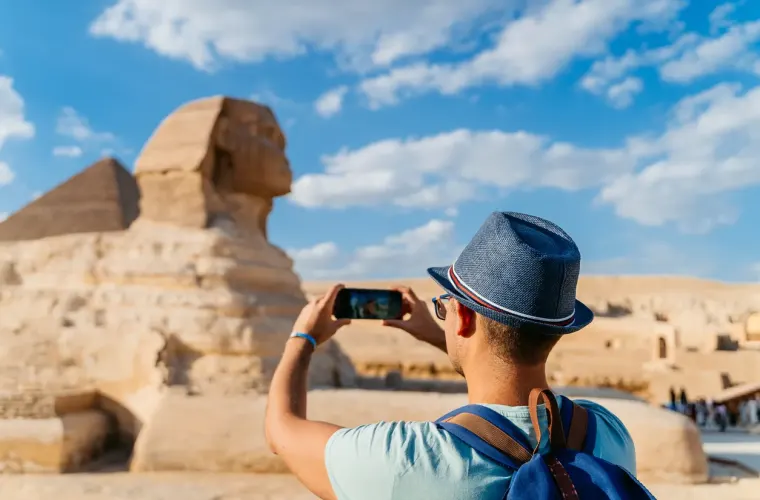
The Pyramids of Giza are best visited at sunrise — the light is spectacular, the temperature is bearable, and the site feels genuinely magical before the tour buses arrive. By 10am, it becomes a very different experience.
Khan el-Khalili bazaar is worth visiting in the evening, when the heat has lifted, and the market comes alive with locals as well as tourists. The narrow covered alleys also provide natural shade throughout the day.
Summer tip: The Grand Egyptian Museum is almost entirely air-conditioned and can easily fill a full day. In summer, this makes it one of Cairo's most valuable and practical attractions.

Red Sea — Hurghada and Sharm El-Sheikh
If heat on land is a concern, the Red Sea coast is the answer. Hurghada and Sharm El-Sheikh are purpose-built for summer — everything is designed around the water, and the sea temperature in July and August reaches a perfect 28 to 30 degrees.
The coral reefs along Egypt's Red Sea coastline are among the most biodiverse in the world. Summer visibility underwater is exceptional — often 20 to 30 metres — making it one of the best seasons for snorkelling and scuba diving. The reefs at Ras Mohammed National Park near Sharm are genuinely world-class.
Hotel prices at Red Sea resorts tend to be lower in summer than during the European peak winter season, and the beaches — while busy with domestic Egyptian tourists — are less crowded than the October through April period.
Summer tip: Combine three or four days at the Red Sea with your historical sightseeing in Luxor or Cairo. The contrast makes for one of the most varied holiday experiences available anywhere in the world.
Siwa is Egypt's most remote and most magical destination — a lush oasis in the Western Desert, far from the tourist trail, where ancient Berber culture has survived largely intact.
In summer, Siwa is extremely hot, but the natural freshwater springs that dot the oasis provide cool swimming at any time of day. The Great Sand Sea at dusk, when the dunes turn amber, and the temperature finally softens, is one of the most beautiful landscapes in Africa. Spend mornings at the ruins of the Oracle Temple and the ancient town of Shali, afternoons in the spring pools, and evenings watching a desert sky undimmed by light pollution.

How to Handle the Heat: Essential Summer Tips
Start early. This cannot be overstated. Set your alarm for 5:30 am. Be at the sites when they open. The Pyramids at sunrise, the Valley of the Kings at 7 am, Karnak before the tour groups arrive — these are entirely different experiences from the same sites at midday.
Hydrate constantly. Carry at least two litres of water whenever you are outside. Dehydration in Egyptian summer heat can set in faster than you expect, and the symptoms — headache, dizziness, fatigue — can ruin a full day if you do not catch them early.
Dress smart. Lightweight, loose, light-coloured clothing covers more skin and keeps you cooler than shorts and a t-shirt. A wide-brimmed hat and UV-blocking sunglasses are non-negotiable. High SPF sunscreen — minimum SPF 50 — applied frequently throughout the day.
Rest at midday. Every culture in this part of the world has built the midday rest into daily life for good reason. Use the 12 pm to 4 pm window for lunch, your hotel pool, indoor museums, or a genuine nap. You will feel dramatically better for it.
Embrace the evenings. Egyptian cities come alive after dark in summer. The souks, the restaurants, the Nile-side cafes — the best of Egyptian social life happens in the cooler hours. Stay up a little later and adjust to the rhythm of the place.

What to Pack for a Summer Trip to Egypt
Clothing: loose linen or cotton tops and trousers in light colours. A lightweight scarf covers your shoulders at religious sites, protects your neck from the sun, and doubles as makeshift shade. Comfortable closed walking shoes for historical sites. Sandals for evenings.
Sun protection: SPF 50+ sunscreen, UV sunglasses, and a wide-brimmed hat. Bring more sunscreen than you think you need — good quality sun protection is expensive in Egypt and harder to find outside major cities.
Health essentials: rehydration sachets, a basic first-aid kit, and antihistamines. Drink bottled water only — do not drink tap water anywhere in Egypt. Consult your doctor before travel about recommended vaccinations.
For the Red Sea: your own snorkel and mask if you plan to snorkel or dive regularly. Water shoes for rocky entry points. A rash vest for sun protection while in the water.

Essential Practical Information
Visa: Most nationalities can obtain a tourist visa on arrival at Egyptian airports or apply for an e-visa online before travel. Check your specific nationality's requirements before booking.
Currency: The Egyptian Pound (EGP) is the official currency. US dollars and Euros are widely accepted at hotels and tour operators. ATMs are readily available in cities and resort areas.
Getting around: Air-conditioned private transfers are strongly recommended in summer. Internal flights between Cairo, Luxor, and Aswan are affordable and save significant travel time in the heat.
Respect local culture: Egypt is a predominantly Muslim country. Dress modestly when visiting mosques, markets, and traditional neighbourhoods — shoulders and knees covered. During Ramadan, be mindful of eating and drinking in public during daylight hours.

Why Summer in Egypt Is Worth It
Egypt is one of those countries that genuinely changes you—standing inside the Valley of the Kings, looking at paintings that are three thousand years old and still vivid with colour. Watching the sun rise over the Pyramids from the desert, floating on the Nile at dusk, while the heat of the day finally releases its grip.
Summer makes none of that less powerful. If anything, the heat — ancient, absolute, the same heat the pharaohs and tomb builders lived under — makes it feel more real.
Come prepared. Start early. Rest at midday. Stay for the evenings.
Egypt in summer is waiting.

FAQs About Summer in Egypt
1. Is Egypt too hot to visit in summer?
It is very hot — but not too hot if you plan properly. The key is timing your outdoor sightseeing for early morning and late afternoon, resting during the midday heat, and staying well hydrated. Travellers who follow the local rhythm find summer entirely manageable and significantly less crowded than peak season.
2. What temperature is Egypt in July and August?
Cairo averages 36 degrees in July and August. Luxor averages 40 to 42 degrees. Aswan is the hottest, regularly reaching 43 to 45 degrees. The Red Sea coast is slightly cooler due to sea breezes, averaging 33 to 35 degrees. All regions experience minimal humidity as Egypt receives almost no summer rainfall.
3. Is the Red Sea warm enough to swim in during summer?
The Red Sea reaches 28 to 30 degrees in July and August — perfect swimming temperature. Underwater visibility is excellent in summer, often 20 to 30 metres, making it one of the best seasons for snorkelling and scuba diving. The coral reefs at Sharm El-Sheikh and Hurghada are world-class and at their most vibrant in summer.
4. Are the Pyramids and major sites less crowded in summer?
Yes — significantly. The majority of international tourists visit Egypt between October and April. Summer sees far fewer Western visitors, which means shorter queues, more space at the sites, and a more relaxed atmosphere. Domestic Egyptian tourism increases in summer but is concentrated mainly at Red Sea resorts rather than at historical sites.
5. Are Egypt holiday prices lower in summer?
Generally yes. Hotels in Cairo, Luxor, and Aswan frequently offer lower rates in summer due to reduced international demand. Tour packages can also be significantly cheaper than peak season equivalents. It is worth comparing prices carefully and booking directly where possible for the best value.