
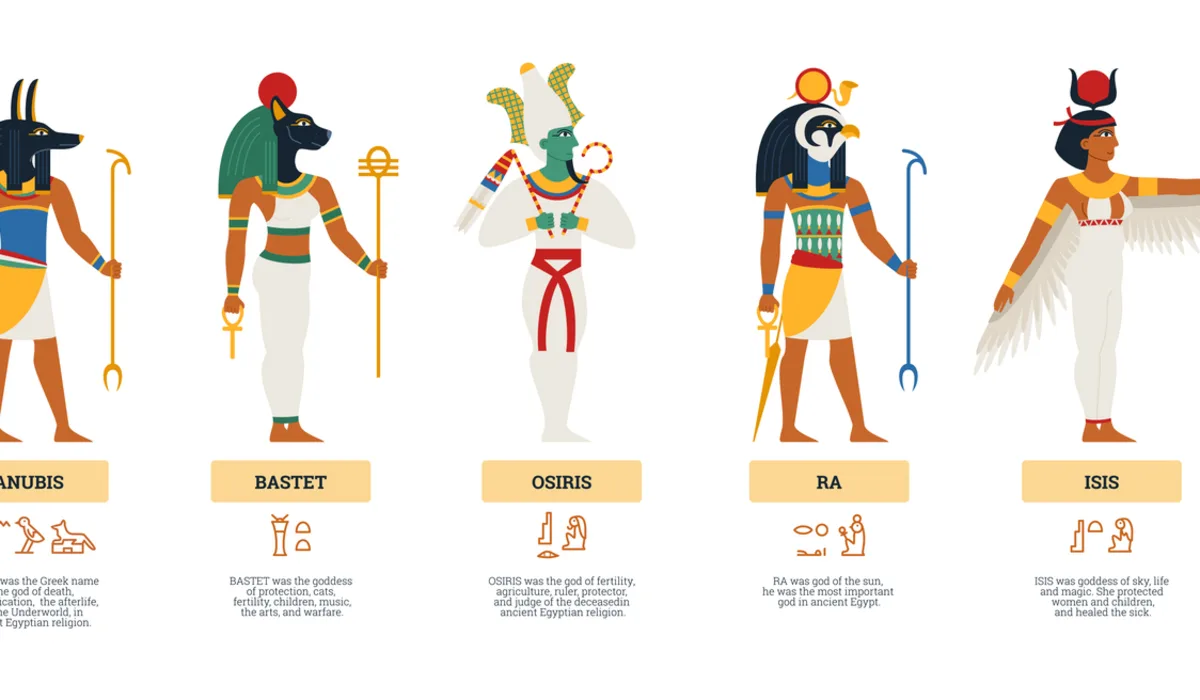
Ancient Egypt worshipped more than 1,500 named deities across three thousand years, though a much smaller group dominated religious life: Ra the sun god, Amun the hidden creator of Thebes, Osiris the ruler of the afterlife, Isis the great magician, Horus the falcon god of kingship, Set the bringer of chaos, Anubis the jackal-headed guardian of embalming, and Thoth the ibis-headed god of writing and judgement. Most Egyptian gods were shown with human bodies and animal heads, a visual shorthand for their powers rather than a belief that they were animals. Their worship continued unbroken until the 4th century AD, and ended formally when the temple of Isis at Philae was closed in the 6th century — the last working temple of the ancient Egyptian religion.
| Deity | Domain | Shown As | Main Cult Centre |
|---|---|---|---|
| Ra | The sun, creation, kingship | Falcon head with sun disc | Heliopolis |
| Amun | Hidden power, air, king of gods | Man with twin-plumed crown | Thebes (Karnak) |
| Osiris | Afterlife, resurrection, fertility | Mummified king, green skin | Abydos |
| Isis | Magic, motherhood, protection | Woman with throne headdress | Philae |
| Horus | Kingship, sky, vengeance | Falcon or falcon-headed man | Edfu |
| Set | Chaos, storms, the desert | Unidentified "Set animal" | Ombos, Avaris |
| Anubis | Embalming, cemeteries, the dead | Jackal or jackal-headed man | Cynopolis, Saqqara |
| Thoth | Writing, wisdom, the moon | Ibis head or baboon | Hermopolis |
| Hathor | Love, music, joy, motherhood | Cow horns with sun disc | Dendera |
| Ptah | Craftsmen, creation through speech | Mummiform man with sceptre | Memphis |
| Ma'at | Truth, cosmic order, justice | Woman with ostrich feather | Nationwide |
| Sobek | The Nile, crocodiles, military power | Crocodile head | Kom Ombo, Fayoum |
This is the question visitors ask most often in temples, and the answer reveals how Egyptian religion actually worked.
Egyptians did not believe their gods were animals. The animal head was a symbolic statement about the deity's nature, chosen because the creature displayed a quality the god embodied. A falcon soars higher than anything else in the sky, so Horus, god of the heavens and of kingship, wears a falcon's head. Jackals scavenged around desert cemeteries, so the god who protected the dead took a jackal's form — turning a threat into a guardian. The ibis probes the mud with a long curved beak, a bird associated with careful searching, and so became the emblem of the god of knowledge.
Gods could also appear in fully human form, fully animal form, or merge with one another. Amun and Ra combined into Amun-Ra; Ra and Horus into Ra-Horakhty. This flexibility was not confusion — Egyptians saw divine power as something that could be expressed in many overlapping ways at once.
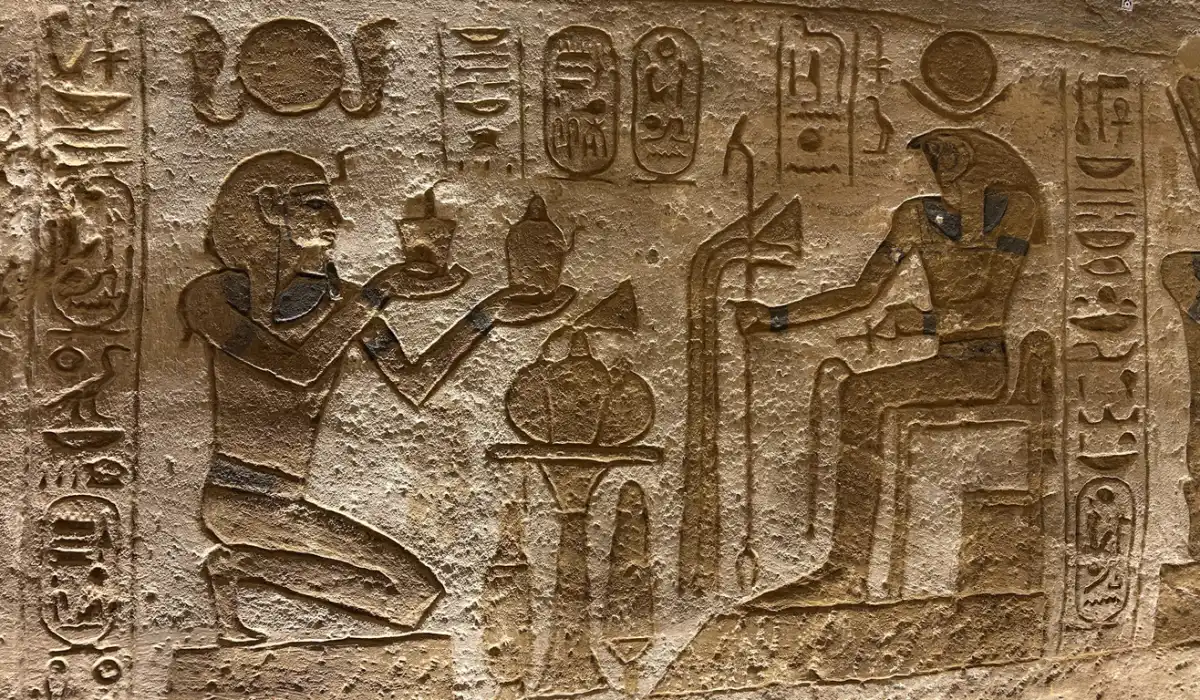
Ra was the sun god and, for much of Egyptian history, the supreme deity. He sailed across the sky each day in a solar barque and travelled through the underworld each night, fighting off the serpent Apophis before being reborn at dawn. That nightly battle made sunrise a genuine relief rather than a routine.
From the Old Kingdom onwards, pharaohs called themselves "Son of Ra," and the great sun temples of Heliopolis anchored his worship. When Thebes rose to power in the New Kingdom, its local god Amun fused with Ra to become Amun-Ra, king of the gods — the deity for whom the enormous temple complex at Karnak was built and expanded for more than 1,500 years.
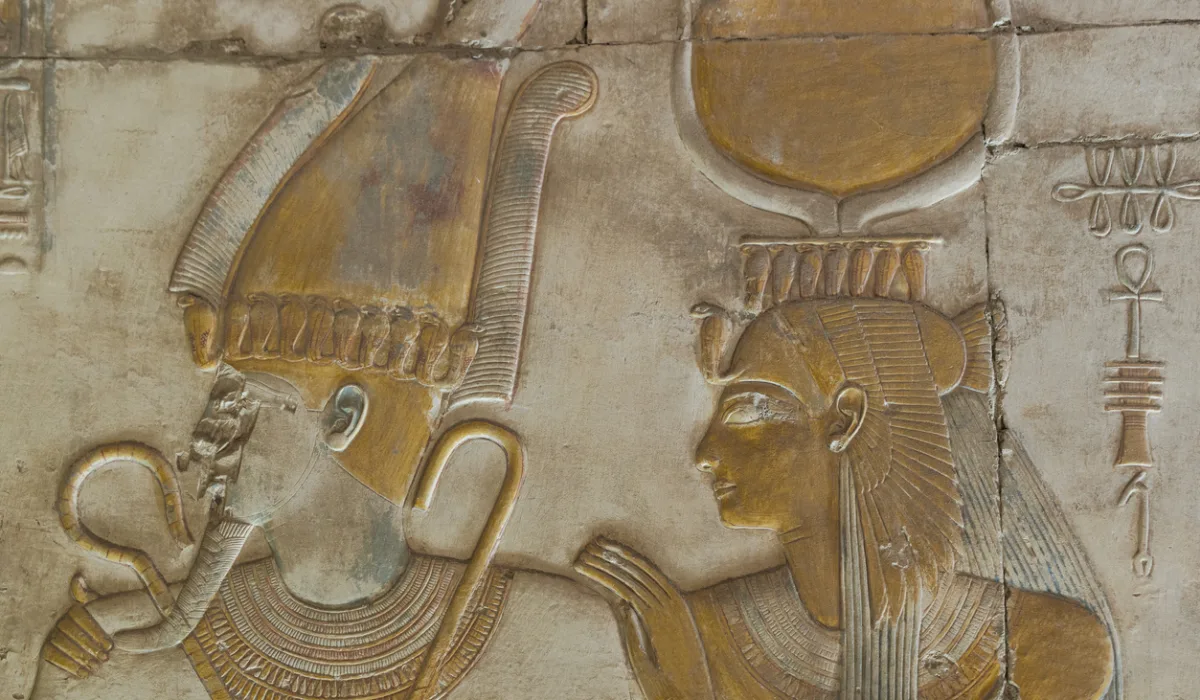
The Osiris myth is the central story of Egyptian religion and the reason Egyptians believed in life after death.
Osiris ruled Egypt as a just king until his jealous brother Set murdered him, sealed him in a chest and later cut his body into pieces scattered across the country. His wife Isis searched Egypt, recovered the pieces and used her magic to restore him long enough to conceive their son Horus. Osiris could not return to the world of the living, so he became ruler of the Duat, the realm of the dead. Horus grew up in secret in the Delta marshes, challenged Set for the throne, and won.
The myth carried three messages that shaped Egyptian life. Death could be overcome. The rightful king always triumphs over chaos, which legitimised every pharaoh as the living Horus. And the annual flooding of the Nile, which brought black silt and new crops, echoed the resurrection of Osiris the god of fertility and rebirth. His cult centre at Abydos became Egypt's greatest pilgrimage site, and many Egyptians hoped to be buried there or at least to have a memorial stone erected nearby.
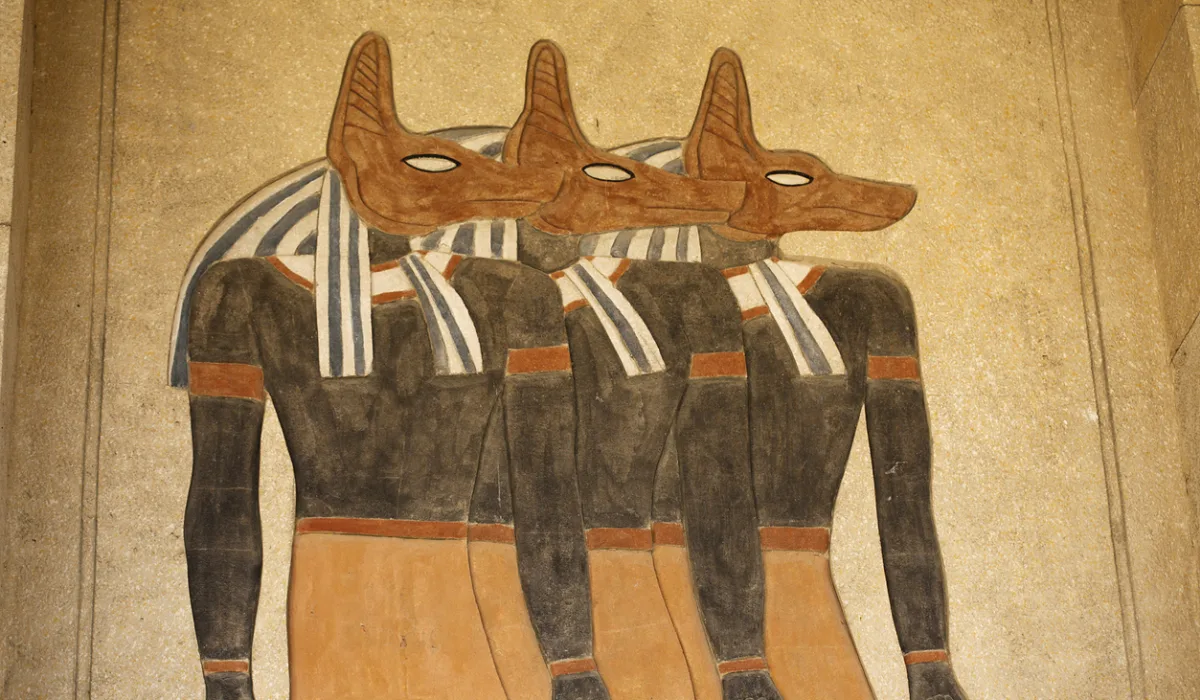
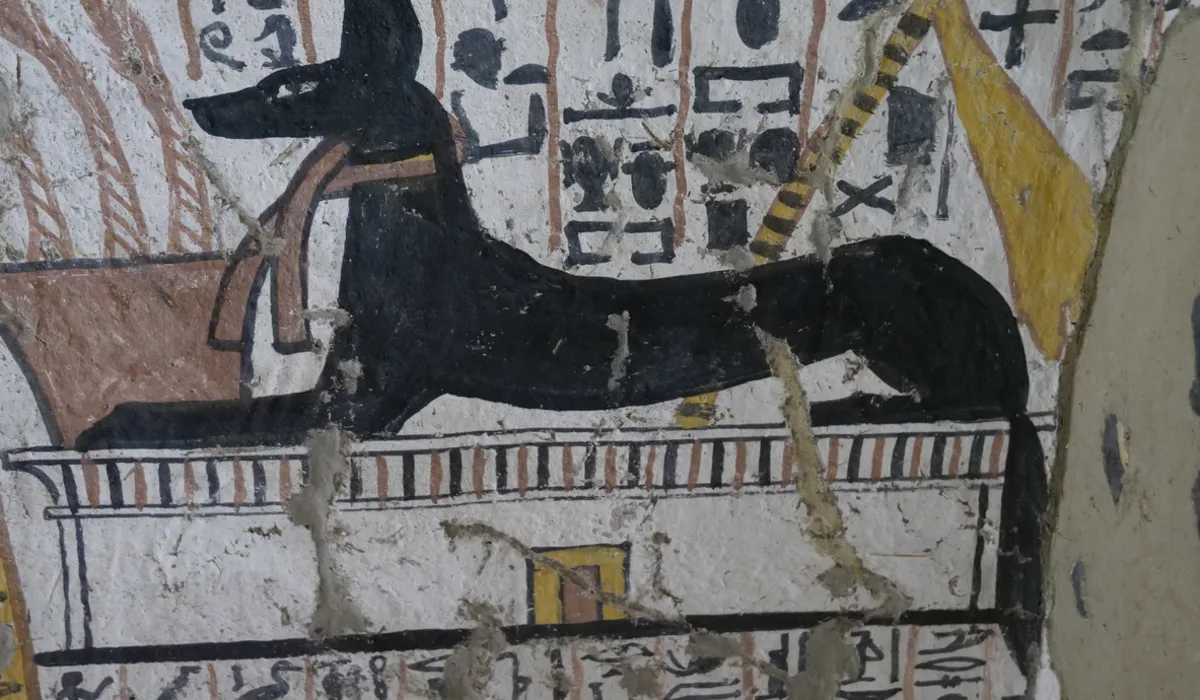
Anubis is the jackal-headed god who presided over embalming, protected cemeteries, and guided the dead into the afterlife. He is one of Egypt's oldest deities, mentioned in the Pyramid Texts of the Old Kingdom, and originally served as the chief god of the dead before Osiris rose to prominence and absorbed the role.
His duties were both practical and symbolic. Anubis was believed to have performed the first mummification, on the body of Osiris himself, which made him the patron of every embalmer who followed. Priests conducting funerary rites sometimes wore jackal masks to act as him. In the Hall of Judgement he steadies the scales during the weighing of the heart, and his titles include "He Who Is Upon His Mountain," referring to the jackal watching over the desert necropolis from above.
You will recognise him instantly in Tutankhamun's collection: the black recumbent jackal shrine that guarded the entrance to the tomb's treasury is among the most striking objects to survive from ancient Egypt.
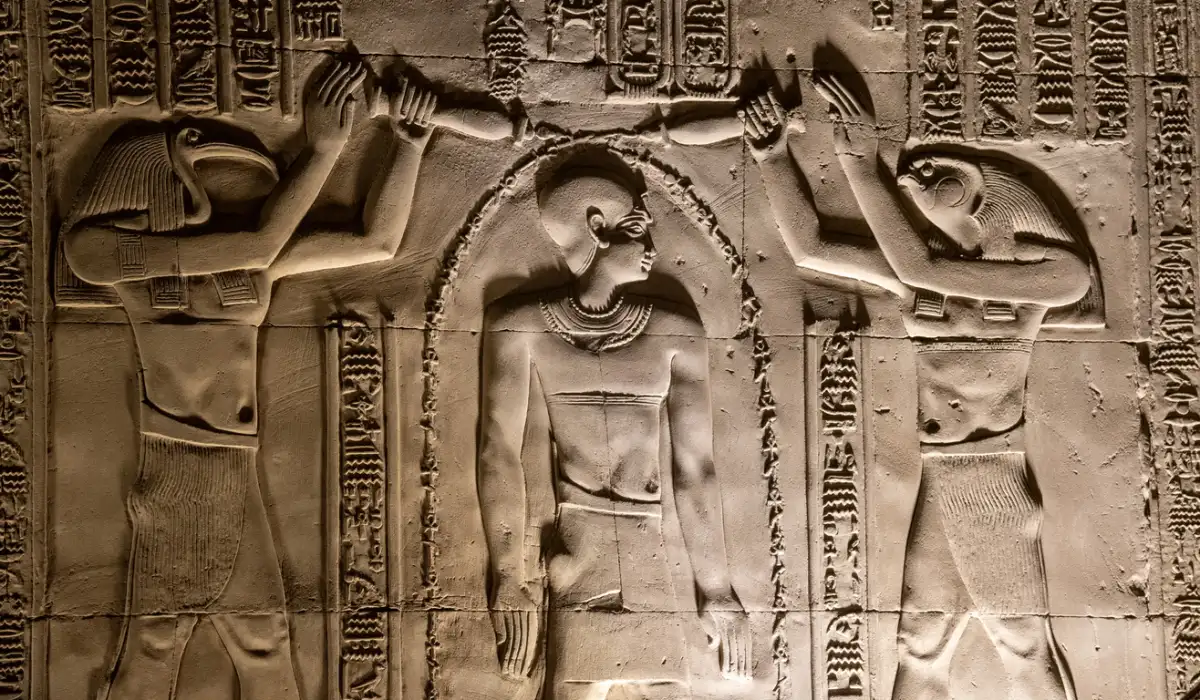
Thoth is the ibis-headed god of writing, wisdom, mathematics, magic, and the moon — credited by the Egyptians with inventing hieroglyphs themselves. They called their script medu netjer, "the words of the god," in reference to him.
He also appears as a baboon, an animal Egyptians associated with alert intelligence. As divine scribe, Thoth recorded the outcome of the weighing of the heart, kept the register of years allotted to each pharaoh, and settled disputes among the gods — including the long conflict between Horus and Set. His main cult centre was Hermopolis in Middle Egypt, where the nearby catacombs of Tuna el-Gebel hold the mummified remains of millions of ibises left as votive offerings.
The Greeks identified him with their own Hermes, and the later body of mystical writing known as the Hermetic tradition grew out of that association, carrying the god of Thoth's reputation for hidden knowledge deep into medieval European thought.
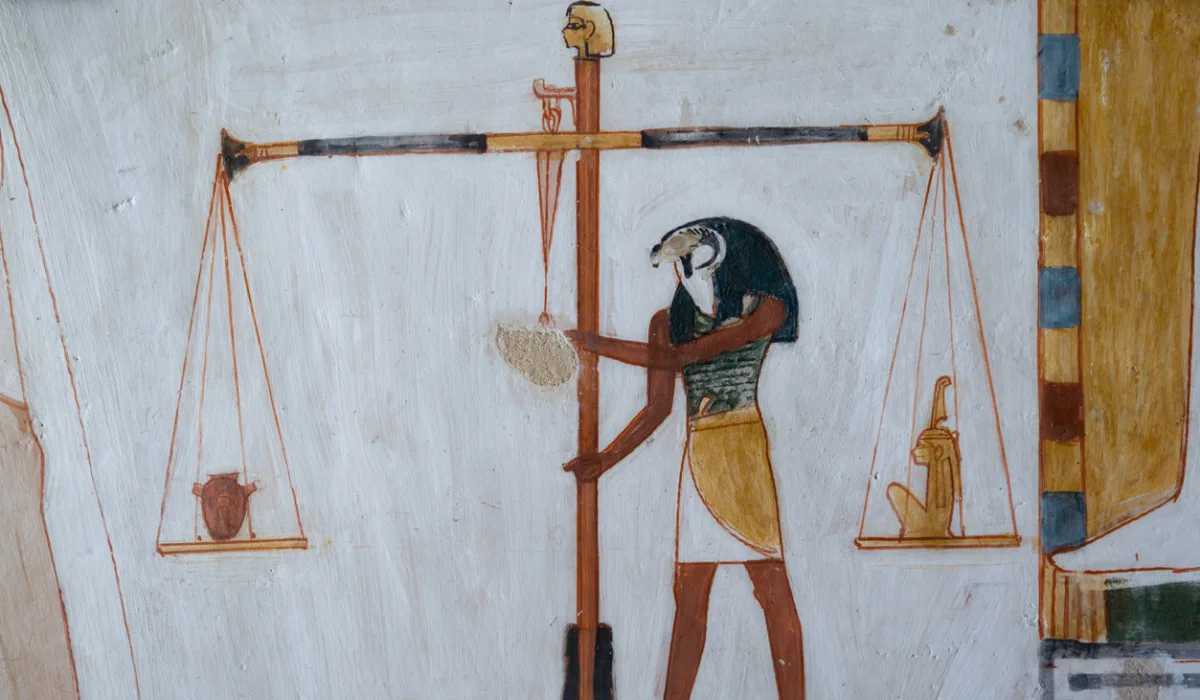
Every Egyptian expected to face this ceremony, and it is painted on tomb walls and papyri across the country.
The deceased was led into the Hall of Two Truths, where the heart — believed to hold the record of a person's conduct — was placed on one pan of a great scale. On the other sat the ostrich feather of Ma'at, the goddess of truth and cosmic order. Anubis adjusted the balance. Thoth stood by with palette and reed, writing down the result.
If the heart balanced against the feather, the deceased was declared "true of voice" and passed into the fields of the afterlife with Osiris. If it was heavy with wrongdoing, it was fed to Ammit, a creature part crocodile, part lion and part hippopotamus — and the person ceased to exist entirely. That second death, rather than punishment, was what Egyptians genuinely feared.

Egypt's goddesses were as powerful as its gods and often more widely loved.
- Isis — the great magician and devoted mother, whose worship eventually spread across the Roman Empire as far as Britain.
- Hathor — goddess of love, music, dance and joy, welcomed the dead into the west and was celebrated with festivals of drinking and singing at Dendera.
- Ma'at — less a personality than a principle, representing truth and the correct order of the universe that every pharaoh swore to uphold.
- Sekhmet — the lioness of war and plague, whose fury could destroy armies and whose priests were also physicians and healers.
- Bastet — the cat goddess of home, fertility and protection, honoured at Bubastis with what Greek writers described as Egypt's rowdiest festival.
- Nut — the sky goddess whose star-covered body arches over the earth on countless tomb ceilings.
- Taweret — the hippopotamus goddess who protected women in childbirth, found in ordinary homes rather than grand temples.
Not in the way modern visitors expect. Egypt's great temples were not congregational buildings — the inner sanctuaries were sealed to everyone except priests and the king, who performed daily rituals of washing, clothing and feeding the god's statue.
Ordinary people met their gods at the boundaries. They gathered at temple gateways, left offerings at chapels along the outer walls, and turned out in huge numbers for the festivals when statues were carried in procession between temples. At home, families kept small shrines to household protectors such as Bes and Taweret, wore amulets of the Eye of Horus, and consulted local oracles about work, illness and disputes.
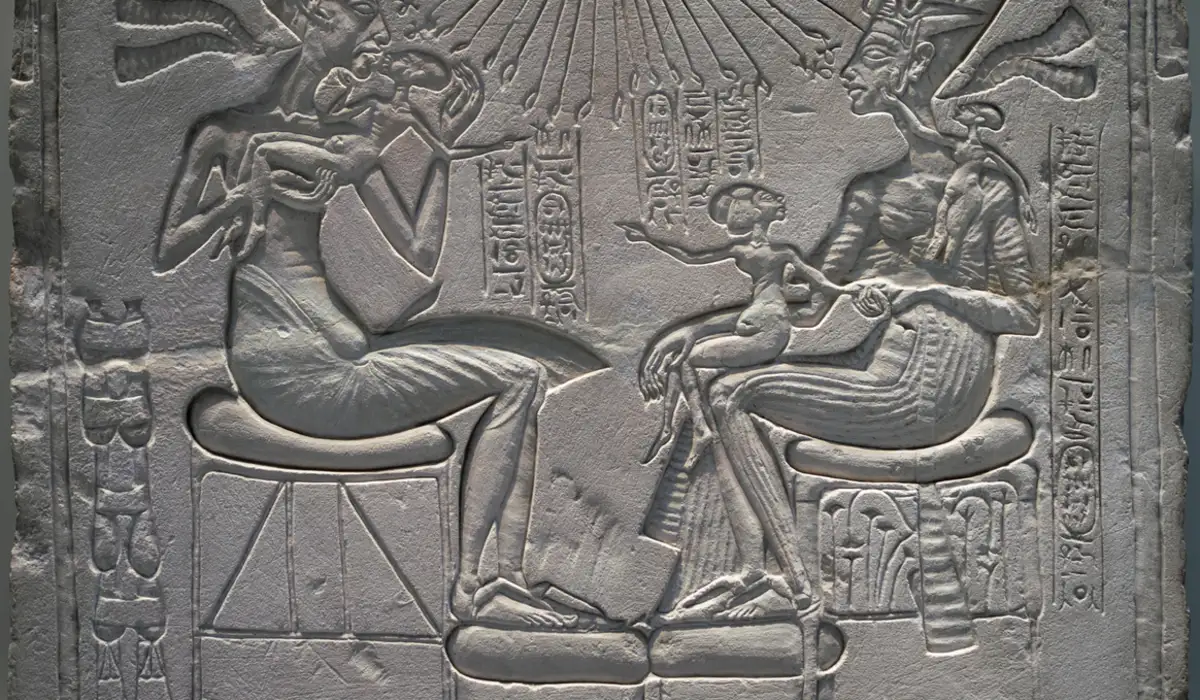
Around 1353 BC, the pharaoh Akhenaten did something no ruler before or after attempted: he closed the temples, cut funding to the priesthoods and declared that only the Aten, the visible disc of the sun, was to be worshipped. He moved the capital to a new city in the desert at Amarna and had the name of Amun chiselled off monuments across Egypt.
It did not survive him. Within a few years of his death, his son Tutankhamun restored the old gods, reopened the temples and moved the court back to Thebes — the change recorded on his Restoration Stela. Later kings removed Akhenaten from the official king lists entirely, and Amarna was abandoned. The episode remains the most extraordinary experiment in the history of Egyptian religion.
Gradually, then completely. Christianity spread rapidly in Egypt from the 2nd and 3rd centuries AD, and temple revenues collapsed after the Roman Empire adopted the new faith. Traditional worship survived longest in the far south, on the island of Philae near Aswan, where the temple of Isis continued to operate for well over a century after most others had closed. It was finally shut on the orders of the emperor Justinian in the 6th century AD, closing a religious tradition more than three thousand years old.

Almost everywhere along the Nile — these are the temples where each deity was actually worshipped:
- Karnak Temple, Luxor — the vast home of Amun-Ra, the largest religious complex ever built.
- Abydos — the cult centre of Osiris, with the finest painted reliefs in Egypt at the Temple of Seti I.
- Philae Temple, Aswan — the island sanctuary of Isis and the last temple of the old religion to close.
- Edfu Temple — the best-preserved temple in Egypt, dedicated to Horus and guarded by two black granite falcons.
- Kom Ombo — a rare double temple shared between Sobek the crocodile god and Horus the Elder, with a museum of mummified crocodiles.
- Dendera Temple — Hathor's temple, famous for its astronomical ceiling and richly coloured columns.
- The Valley of the Kings — underworld texts and judgement scenes painted across royal tomb walls.
- The Grand Egyptian Museum, Giza — Tutankhamun's full collection, including the Anubis shrine, alongside statues of nearly every major deity.
Visiting these sites with an Egyptologist guide makes the difference between admiring carvings and reading them — the reliefs are narrative scenes, and once you can identify the gods by their crowns and emblems, the walls begin to tell stories.
1.How many Egyptian gods were there?
Scholars have identified more than 1,500 named deities across three thousand years of Egyptian history, though only a few dozen were worshipped widely. Many were purely local, tied to a single town, region or household concern.
2.Who was the most important Egyptian god?
It changed with the political centre of power. Ra dominated the Old Kingdom, Amun-Ra became king of the gods in the New Kingdom when Thebes ruled Egypt, and Ptah held that position at Memphis. Osiris and Isis were the most personally significant to ordinary Egyptians because of their promise of life after death.
3. Who is the god Anubis?
Anubis is the jackal-headed god of embalming, mummification and cemeteries, who guided the dead into the afterlife and supervised the weighing of the heart. He was Egypt's chief god of the dead before Osiris took that role.
4. Is Anubis evil?
No. The confusion comes from his dark appearance and association with death, but Anubis was a protective deity — a guardian of the dead and the patron of embalmers, not a punisher. The devourer at the judgement was Ammit, a separate creature.
5. What was Osiris the god of?
Osiris was the god of the afterlife, resurrection and fertility, and the ruler of the underworld. His murder by Set and revival by Isis formed the central myth of Egyptian religion and the model for every Egyptian's hope of surviving death.
6. What is Thoth the god of?
Thoth was the god of writing, wisdom, magic, mathematics and the moon. Egyptians credited him with inventing hieroglyphs, and he served as scribe of the gods, recording the verdict at the weighing of the heart.
7. Why is Thoth shown as an ibis?
The ibis wades through mud probing carefully with its long curved beak, a habit Egyptians linked with patient searching and knowledge. Thoth also appears as a baboon, an animal they associated with sharp intelligence.
8. Did Egyptians believe in one god or many?
Many, but with a distinctive twist. Deities merged, shared attributes and could be seen as aspects of one another, so the boundaries between them were fluid. The single exception was Akhenaten's short-lived worship of the Aten alone in the 14th century BC.
9. Are Egyptian gods still worshipped?
Not as a continuous living tradition. Worship ended with the closure of the temple of Isis at Philae in the 6th century AD. Small modern revivalist groups exist, but they are reconstructions rather than an unbroken line.
10. Which temple is best for seeing Egyptian gods?
Edfu is the most complete and easiest to read, since it survives almost intact with its roof and reliefs in place. Karnak is the most impressive in scale, and Abydos has the finest surviving painted colour.