

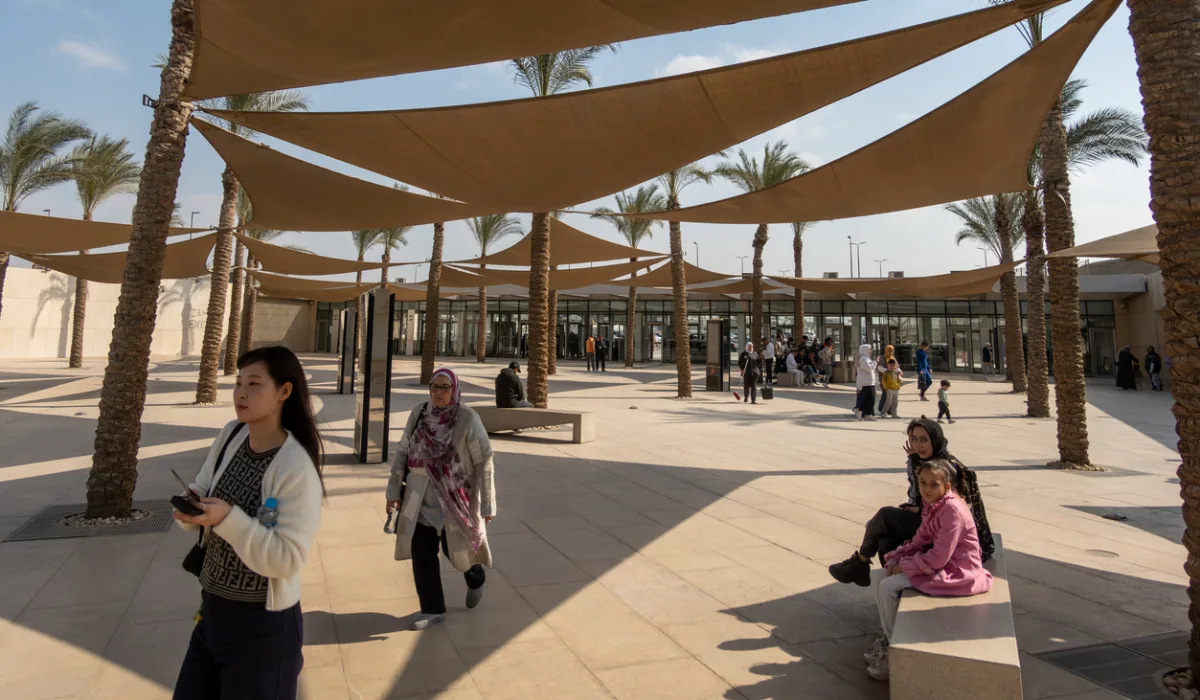
The Grand Egyptian Museum is fully open — and it is extraordinary. But with 500,000 square metres of space, over 100,000 artefacts, and thousands of visitors arriving every day, a visit without a plan can quickly become exhausting.
These tips come from experience. Follow them, and your visit will be significantly better than most people's.
Looking for a fully guided experience? Our Egypt Tour Packages include private Egyptologist guides, private transport, and everything pre-arranged so you can simply enjoy the museum.
Quick Reference: Everything You Need at a Glance
| Category | Details |
|---|---|
| Location | Al Remaya Square, Giza — 2km from the Pyramids |
| Hours | Daily 9:00 am–6:00pm / Sat & Wed until 9:00 pm |
| International ticket | Adults 1,200 EGP (~$24) / Children 600 EGP (~$12) |
| Guided tour | 1,700 EGP (~$34) — hourly 10 am–4pm |
| Recommended time | 3–4 hours minimum |
| Booking | visit-gem.com — credit card only on-site |

Tip 1: Book Your Tickets Online — Do Not Leave This to Chance
Tickets are sold exclusively through visit-gem.com. The museum accepts no third-party bookings. On-site, only credit cards are accepted — no cash.
The museum regularly reaches capacity on weekends and Egyptian public holidays. Arriving without a pre-booked ticket risks being turned away, especially on Saturdays and Wednesdays.
How far ahead to book:
- Weekdays: 3–5 days in advance
- Weekends and public holidays: at least 1 week ahead
- School holiday periods: 2 weeks minimum
When you book your ticket, book your guided tour slot at the same time. Both sell out from the same peak-hour window, and it saves a second login later.
Tip 2: Arrive at 9 am — or after 4pm
This single tip will improve your visit more than anything else on this list.
The Tutankhamun galleries — the most visited section in the museum — are at their most crowded between 11 am and 3 pm as tour groups arrive in waves. At 9am, when the museum opens, you can walk through those same galleries in space and quiet, and actually stand in front of objects without being nudged from behind.
After 4pm works just as well. Day-tour groups leave in the early afternoon, and the museum empties noticeably. On Saturdays and Wednesdays, when the galleries stay open until 9 pm, a late-afternoon arrival gives you an evening in the museum that feels almost private.
The window to avoid: 11 am–3 pm on Fridays and Saturdays. This is peak hour. Everything takes longer, feels more crowded, and is less enjoyable.
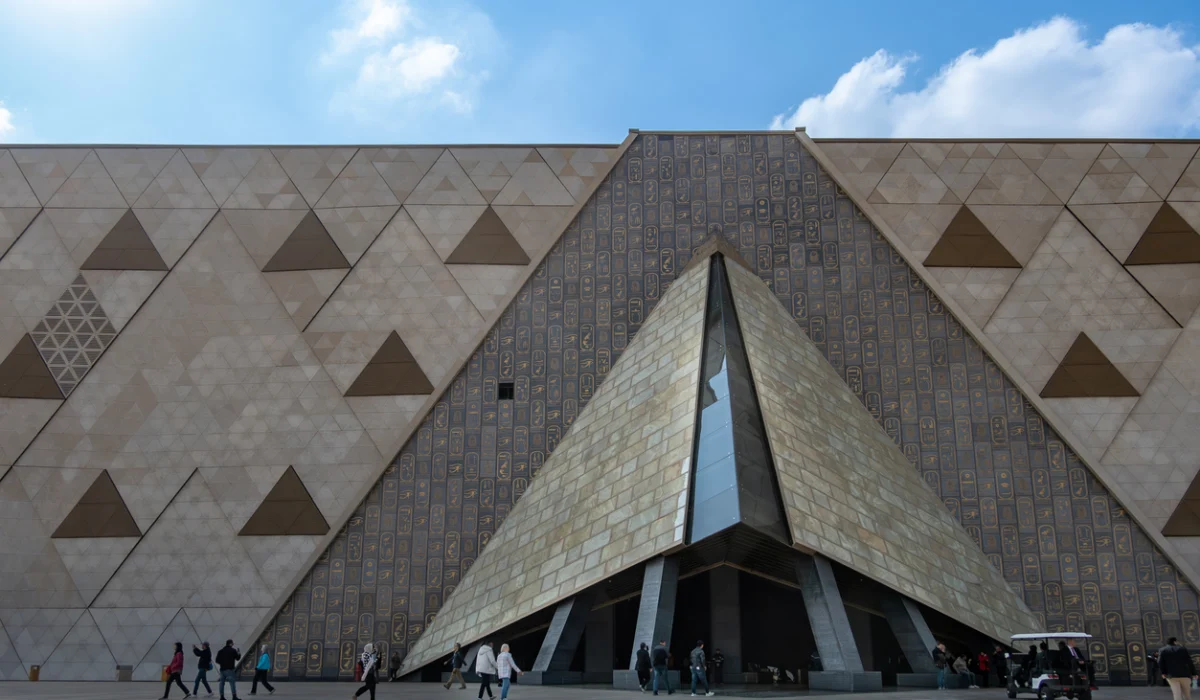
Tip 3: Go Straight to the Tutankhamun Galleries First
Do not stop in the Grand Hall first. Do not climb the Grand Staircase first. Walk straight to Gallery 8 — the Tutankhamun galleries — the moment you enter.
Here is why: the 5,398 objects from Tutankhamun's tomb, including the golden burial mask, are displayed together for the first time since their discovery in 1922. This is the most significant and most visited gallery in the museum. Every tour group goes here, and they go here early.
If you visit the Grand Hall and Grand Staircase first and then join the crowd in the Tutankhamun galleries at 10:30 am, you will spend your time managing the crowd rather than experiencing the collection.
Go at 9 am. Go straight there. You will have approximately 45–60 minutes before it fills up, which is exactly enough time to do it properly.
What not to miss inside the Tutankhamun galleries:
- The golden burial mask — 11kg of solid gold with lapis lazuli and turquoise inlay, displayed with specialist lighting that reveals detail never visible before
- The three nested golden coffins
- The royal chariot and golden throne
- The childhood toys — a quiet, humanising reminder that this was a boy who died at 19
- The canopic shrine and alabaster jars
Allow at least 60 minutes here. This is not a room to rush.
Tip 4: Plan Your Gallery Route Before You Arrive
The museum has 12 main galleries covering 5,000 years of Egyptian history. Walking all of them thoroughly in one visit is not realistic — and trying to do so leads to a tired, blurred experience.
Decide in advance what your priorities are.
For a 3-hour visit — focus on these:
- Gallery 8: Tutankhamun — non-negotiable
- Gallery 2: Old Kingdom — the seated Khafre statue and pyramid-age masterpieces
- Gallery 7: New Kingdom II — Akhenaten and Nefertiti, the Amarna revolution
- Gallery 9: Ramesside Period — Ramesses II collection
For a 4–5 hour visit — add these:
- Gallery 6: New Kingdom I — Hatshepsut and Thutmose III artefacts
- The Grand Staircase — 59 artefacts across six floors, ending with a Pyramids view from the top
- Gallery 11: Greco-Roman — Fayum portraits and the transition out of pharaonic Egypt
If you are visiting with children — add:
- The Children's Museum — 5,000 square metres of interactive, age-appropriate learning for ages 6–12. Allow at least 90 minutes.
The interactive digital stream stations placed between galleries are worth using — they provide context between sections and give you a place to sit and rest. Do not skip them in the rush to see the next gallery.
Tip 5: Do Not Skip the Khufu Ships Museum
This is the most commonly missed highlight at the Grand Egyptian Museum — and the one most visitors regret missing when they find out what it contains.
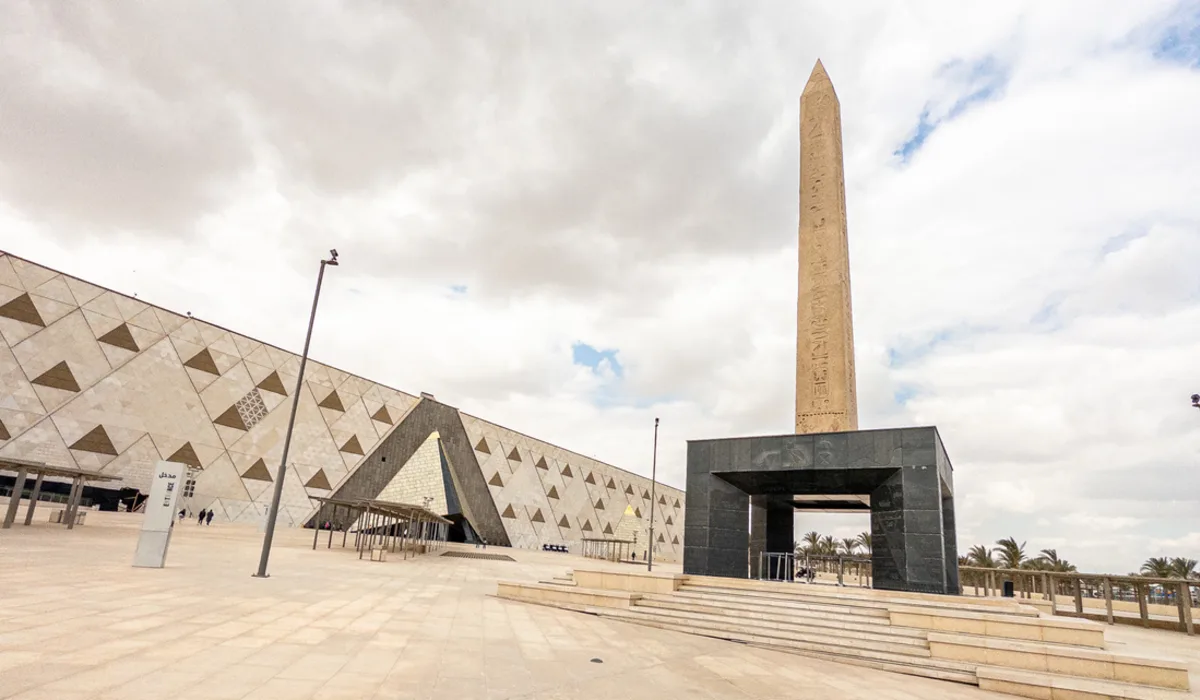
The Khufu Ships Museum, adjacent to the main building, houses two cedar boats that are 4,600 years old. They were buried beside the Great Pyramid of Khufu to carry him through the afterlife. They were built without a single nail — held together entirely by rope and the precise fitting of cedar planks. The first measures 43.4 metres. Both are among the oldest surviving wooden objects on earth.
Walking around them in the climate-controlled gallery, understanding what they are and how long they have existed, is one of the most affecting experiences in Egypt. It requires a short walk from the main building — ask at the information desk for directions.
Tip: Visit the Khufu Ships Museum before 3 pm while your energy is still high. Allow 45 minutes. Do not let it become an afterthought at the end of the day.
Tip 6: Book the Egyptologist-Guided Tour
The 90-minute guided tour with a qualified Egyptologist costs 1,700 EGP (~$34) and runs daily at 10 am, 11 am, 12pm, 1 pm, 2pm, 3 pm, and 4pm.
Without a guide, the risk is spending time in front of objects that are visually impressive but contextually unclear — and leaving without a real sense of what you witnessed. A good Egyptologist tells you which artefacts matter and why, connects individual objects to the broader story of Egyptian civilisation, and answers the questions you did not know you had.
Practical booking advice:
- Book alongside your entrance ticket at visit-gem.com
- The 10 am tour fills first — book 11 am or 12pm instead
- Use your first hour independently in the Tutankhamun galleries before joining the tour
For a private Egyptologist who accompanies you through the entire museum at your own pace, our Egypt Tour Packages include this as standard — it transforms the experience completely.
Tip 7: Combine the Museum With the Pyramids on the Same Day
The Grand Egyptian Museum and the Great Pyramids of Giza are two kilometres apart. Combining both on the same day is not just practical — it is the recommended approach. Together, they tell a complete story that neither can tell alone.
A practical one-day itinerary:
| Time | Activity |
|---|---|
| 9:00 am | Arrive at the museum — go straight to Tutankhamun |
| 9:00–10:00am | Tutankhamun galleries |
| 10:00–11:30am | Grand Hall, Grand Staircase, priority galleries |
| 11:30am–12:30pm | Khufu Ships Museum |
| 12:30–1:30pm | Lunch at Zooba inside the museum |
| 1:30–2:00pm | Museum shop |
| 2:00–5:30pm | Pyramids of Giza and the Sphinx |
| 5:30pm | Sunset at the Pyramids plateau |
Our Cairo day tours are built around exactly this combination — private transport between the two sites, a private guide for both, and hotel pickup included.
Tip 8: Eat and Rest Inside the Museum
Many visitors leave for lunch and lose 60–90 minutes they could have spent inside. The dining options at the Grand Egyptian Museum are good — use them.
Zooba serves Egyptian street food: ful, ta'ameya, and fresh juices. It is one of Cairo's most respected food brands. The museum location delivers the same quality you would get at their city restaurants, for a fraction of what tourist restaurants near the Pyramids charge.
Ladurée offers French pastries and excellent coffee — ideal for a mid-morning or mid-afternoon break. 30 NORTH is a coffee bar good for a quick drink between sections.
When to eat: Between 1 pm and 2 pm. This is peak hour in the galleries, so using this time to eat and rest means you lose nothing. You will return to noticeably less crowded rooms.
The interactive digital stations between galleries double as rest stops — comfortable seating, contextual information, and a moment to sit before the next section. Use them deliberately rather than rushing past.
Tip 9: Use the Technology — It Is Genuinely Good
The museum's technology is worth engaging with rather than ignoring.
At the entrance: Digital screens let you take photographs with artefacts appearing beside you in augmented reality, sent directly to your email. It takes two minutes, and children love it.
Inside the galleries: Microsoft HoloLens headsets at selected points transform artefacts into holograms and overlay ancient scenes onto the gallery space around you. It sounds gimmicky. It is not — it adds genuine interpretive value, particularly for visitors without an Egyptology background.
Before you arrive: Download the Grand Egyptian Museum app. It provides maps, audio guides, and artefact information that are particularly useful in the larger galleries where the information panels are spread far apart. Having the app means you are never standing in front of an object wondering what it is or why it matters.

Tip 10: Visit the Museum Shop Before You Leave
The Grand Egyptian Museum's shop is one of the best museum shops in the Middle East and significantly better than anything near the Pyramids or in Khan el-Khalili for officially licensed reproductions.
What is worth buying:
- Artefact replicas — officially licensed, high-quality reproductions of famous objects at various price points. The scarab amulets, golden mask miniatures, and cartouche jewellery are the most popular.
- Exhibition catalogues — illustrated books on the Tutankhamun collection and major galleries. They are the best possible record of what you saw and make exceptional gifts.
- Egyptian-inspired items — designed by Egyptian artisans in collaboration with the museum. Distinctive, authenticated, and unavailable anywhere else.
Prices are fixed — no negotiation, but also no pressure and no doubt about authenticity. For replica pieces, especially, the quality here is guaranteed in a way it cannot be at a market stall.
The One Thing Most Visitors Get Wrong
They try to see everything.
The Grand Egyptian Museum is designed for multiple visits. The people who enjoy it most are not the ones who race through all 12 galleries in three hours. They are the ones who decide in advance what they want to see, go there with intention, and give themselves enough time to actually feel what they are looking at.
Plan your priorities before you arrive. Go to Tutankhamun first. Do not skip the Khufu Ships. Eat inside. Use the technology. Give yourself more time than you think you need.
Follow those six things and your visit will be exceptional.
Frequently Asked Questions
1. Is the Grand Egyptian Museum fully open?
Yes — the museum opened in November 2025 and is now fully operational. All galleries are open including the complete Tutankhamun collection and the Khufu Ships Museum. There are no restricted areas or "coming soon" sections. The full museum is open daily and tickets are available at visit-gem.com.
2. Is the Grand Egyptian Museum worth visiting?
Without question. The complete Tutankhamun collection displayed together for the first time since 1922, the 4,600-year-old Khufu Ships, the Grand Staircase view over the Pyramids, and the building's extraordinary location make it an experience available nowhere else on earth. Most visitors describe it as the highlight of their Egypt trip.
3. Can I visit the Grand Egyptian Museum and the Pyramids on the same day?
Yes — and it is the recommended approach. The two sites are two kilometres apart. Visit the museum in the morning and the Pyramids in the afternoon. Our Cairo day tours are specifically designed around this combination with private transport and a guide for both sites.
4. What is the difference between the Grand Egyptian Museum and the Egyptian Museum in Tahrir Square?
The Egyptian Museum in Tahrir Square opened in 1902 and houses 120,000 artefacts in a historic building with a traditional curatorial approach. The Grand Egyptian Museum is purpose-built, technologically advanced, and significantly larger, using chronological storytelling and interactive displays throughout. The Grand Egyptian Museum now holds the complete Tutankhamun collection, previously split between both institutions. Read our full comparison: Egyptian Museum vs Grand Egyptian Museum.
5. How much does it cost?
International adults pay 1,200 EGP (~$24). Children and students pay 600 EGP (~$12). Children under 4 and people with disabilities enter free. The 90-minute Egyptologist guided tour costs an additional 1,700 EGP (~$34) and runs hourly from 10am to 4pm. Book at visit-gem.com — credit card only on-site, no cash.
6. What should I wear and bring?
Comfortable walking shoes — essential, as the site is large. A light layer for the air-conditioned galleries. Water and sunscreen for the outdoor walk to the Khufu Ships Museum. A portable phone charger if you plan to use the museum app and digital features throughout your visit. No specific dress code applies.
7. How do I get there from central Cairo?
Uber or Careem from central Cairo costs $10–$20 and takes around 45 minutes. A pre-booked hotel transfer costs $20–$40. The Cairo Metro to Giza Station plus a short taxi is the most budget-friendly option. Our Egypt Tour Packages include private hotel pickup as standard — no logistics to manage on the day.


