
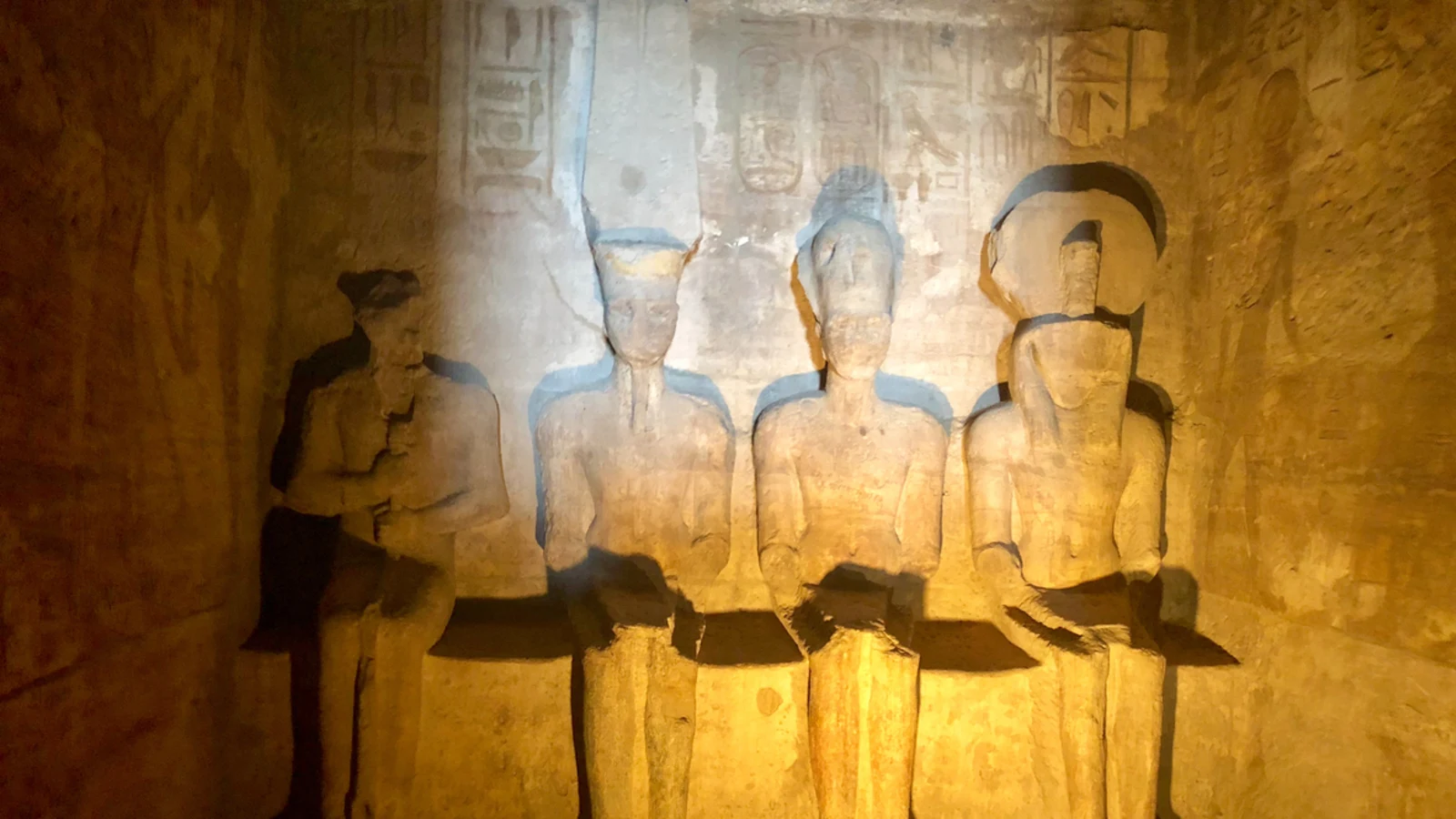
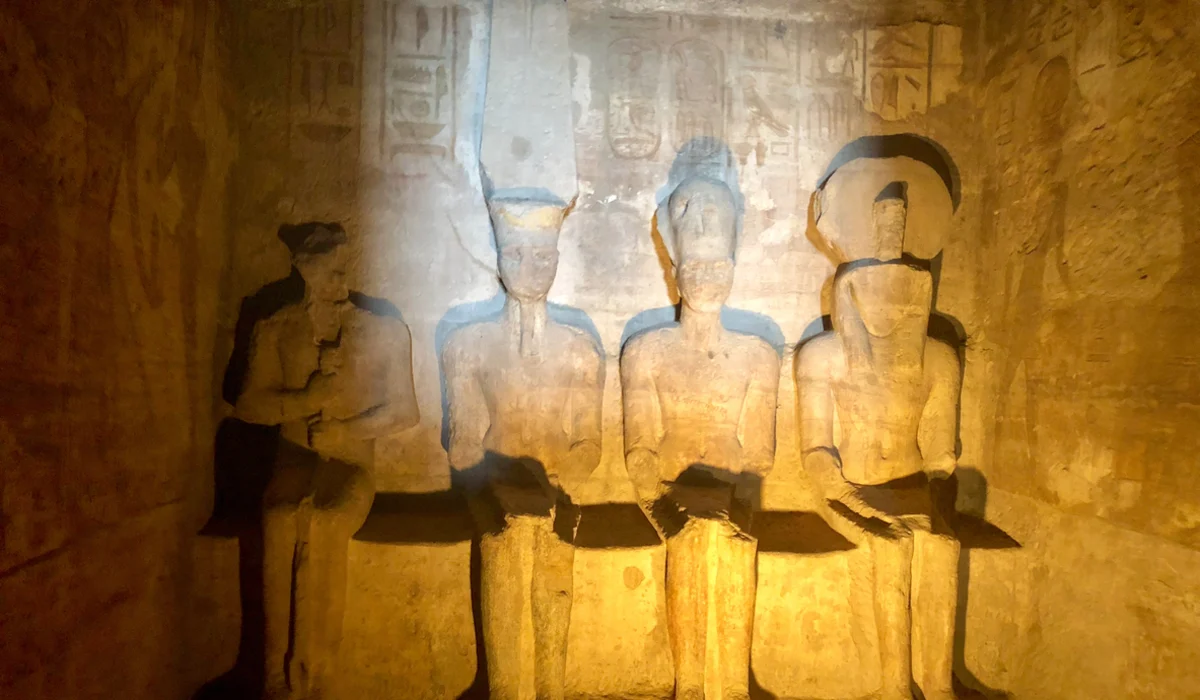
The Abu Simbel Sun Festival is the morning, twice a year, when the rising sun shines straight through the Great Temple of Ramesses II and lights up the statues in its innermost sanctuary. It happens on February 22 and October 22, at sunrise, and lasts only about 20 minutes. Thousands of visitors and locals gather before dawn to watch a piece of ancient engineering that still works more than 3,000 years after it was built. The next one is on Monday, February 22, 2027. This guide explains what you will see, when to arrive, how to get there and how to make the most of the day.
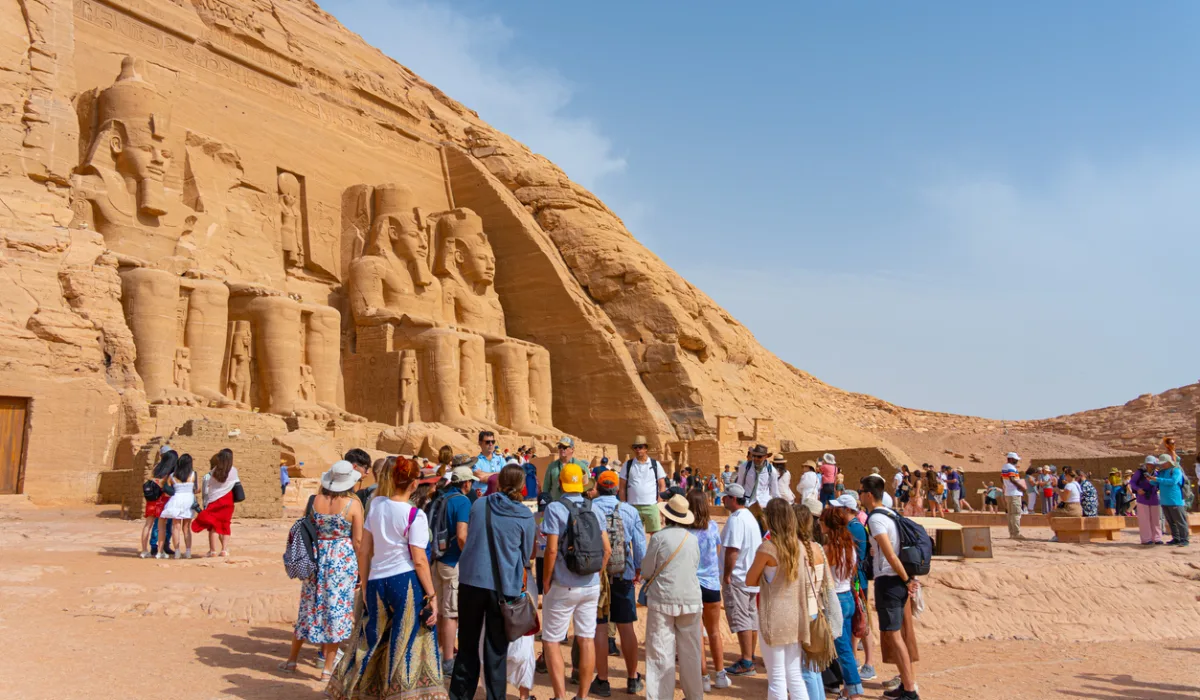
As the sun clears the horizon over Lake Nasser, a narrow beam of light enters the temple door and travels about 60 meters (200 feet) through the halls to the sanctuary at the very back. There, four seated statues sit side by side: the sun god Ra-Horakhty, the god Amun-Ra, Ramesses II himself as a god, and Ptah, a god linked with the underworld. The light falls on three of them, while Ptah stays in shadow, just as the ancient builders intended. The glow slowly moves across the statues and fades after around 20 minutes, and the room returns to darkness until the next festival.
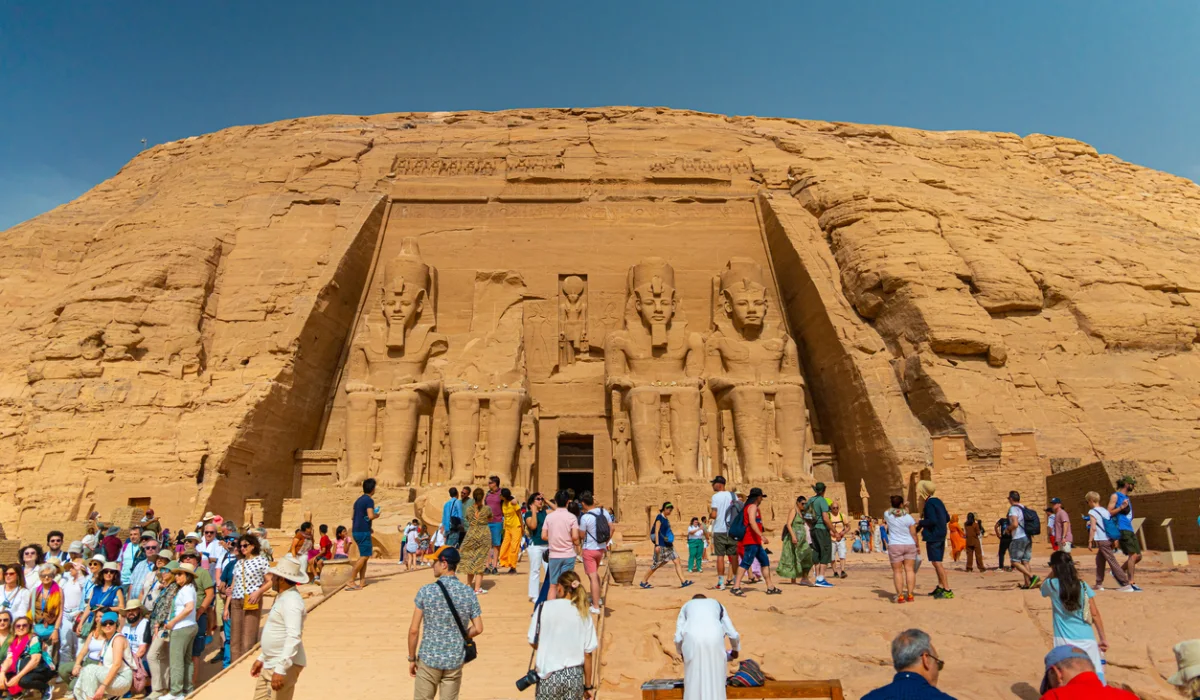
Many Egyptologists link the two dates to Ramesses II's birthday and his coronation, although there is no single confirmed explanation. What is certain is that the temple was carefully angled so the sun would reach the sanctuary on these mornings. In the 1960s, the rising waters of the new Aswan High Dam threatened to flood the site, so UNESCO led an international effort to cut the temples into blocks and rebuild them on higher ground between 1964 and 1968. The engineers kept the alignment almost perfect, but the dates moved by one day, from the original February 21 and October 21 to February 22 and October 22.
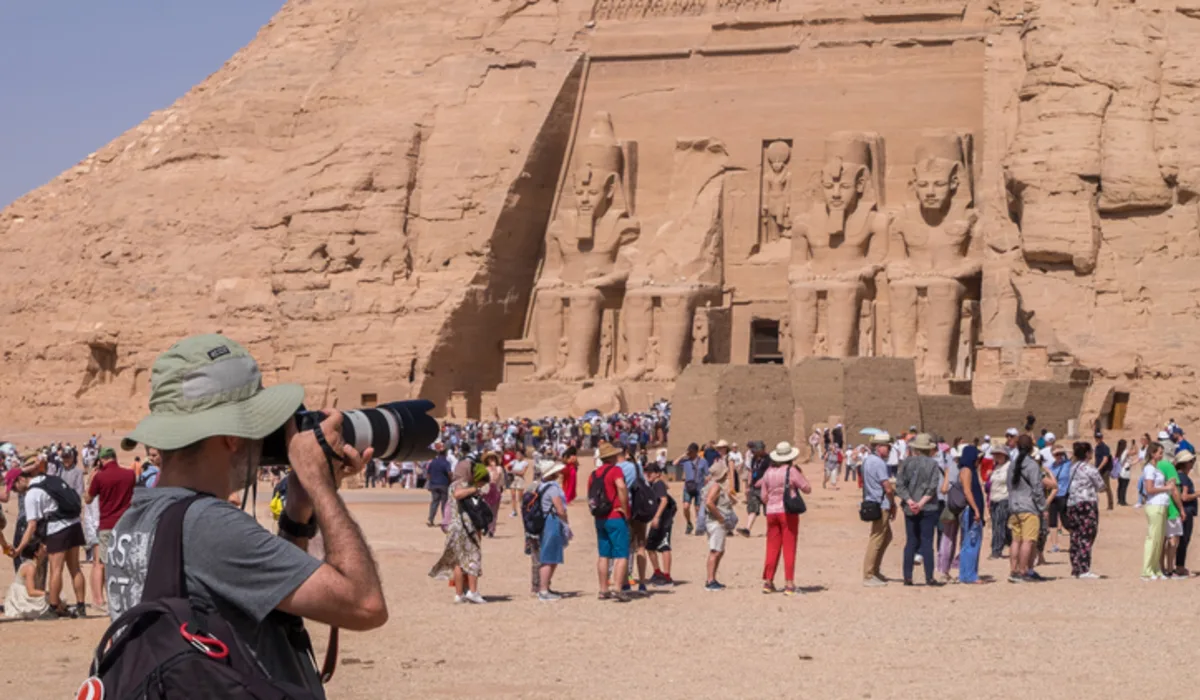
The next dates are Monday, February 22, 2027, and Friday, October 22, 2027. The light enters at sunrise, which means around 6:20 a.m. in February and close to 7:00 a.m. in October, when Egypt is still on summer time. In February 2026, the sanctuary was lit from 6:22 to 6:44 a.m., and in October 2026 from 6:55 to 7:17 a.m. The gates open in the middle of the night on festival days, and many people start queuing by 2 a.m. to secure a place inside. The day before and the day after the festival also give a partial alignment, with far smaller crowds.
Abu Simbel lies about 280 km (175 miles) south of Aswan, close to the Sudanese border. Most visitors drive, leaving Aswan around midnight or 1 a.m. on festival day to arrive before the gates open; the road trip takes about 3 to 3.5 hours each way. Short flights from Aswan to Abu Simbel take about 45 minutes, though early-morning seats on festival days sell out fast. The most relaxed option is to stay overnight in Abu Simbel village the night before, which lets you walk to the temple in the dark instead of spending the night on the road. Book hotels and transport months ahead, as everything fills up around the festival.
On the two festival days, Egypt's Ministry of Tourism and Antiquities sets a special ticket price: in 2026 it was EGP 1,200 (about $25) for foreign adults, compared with EGP 750 on a normal day. Buying online through the official Egymonuments portal adds a small service fee. Expect big crowds: thousands of people attend, and only a limited number fit inside the narrow sanctuary at one time. Inside, the crowd moves forward slowly, so your time directly in front of the statues may be short. A large screen outside the temple shows the alignment live for everyone waiting on the forecourt.
The Abu Simbel Sun Festival is a true celebration, not just an astronomy event. Before and after sunrise, Nubian and Egyptian folk troupes perform music and dance on the temple forecourt and in the village, with drums, colorful costumes and plenty of local families joining in. In October 2026, Egypt's cultural authority ran a week of performances leading up to the festival. Food stalls and handicraft sellers line the streets, and the mood stays festive well into the day, making it a great chance to experience Nubian culture up close.
Arrive as early as you can: the closer you are to the front of the queue, the better your view inside. Bring a light jacket, because desert nights are cool, especially in February, and the temperature climbs quickly after sunrise. Pack water, snacks, a power bank and a small flashlight for the walk in the dark. Flash photography is not allowed inside, so set your phone to night mode instead. Keep your passport and ticket handy for security checks. After the sanctuary visit, take time to explore the Small Temple of Nefertari next door, which many visitors rush past.
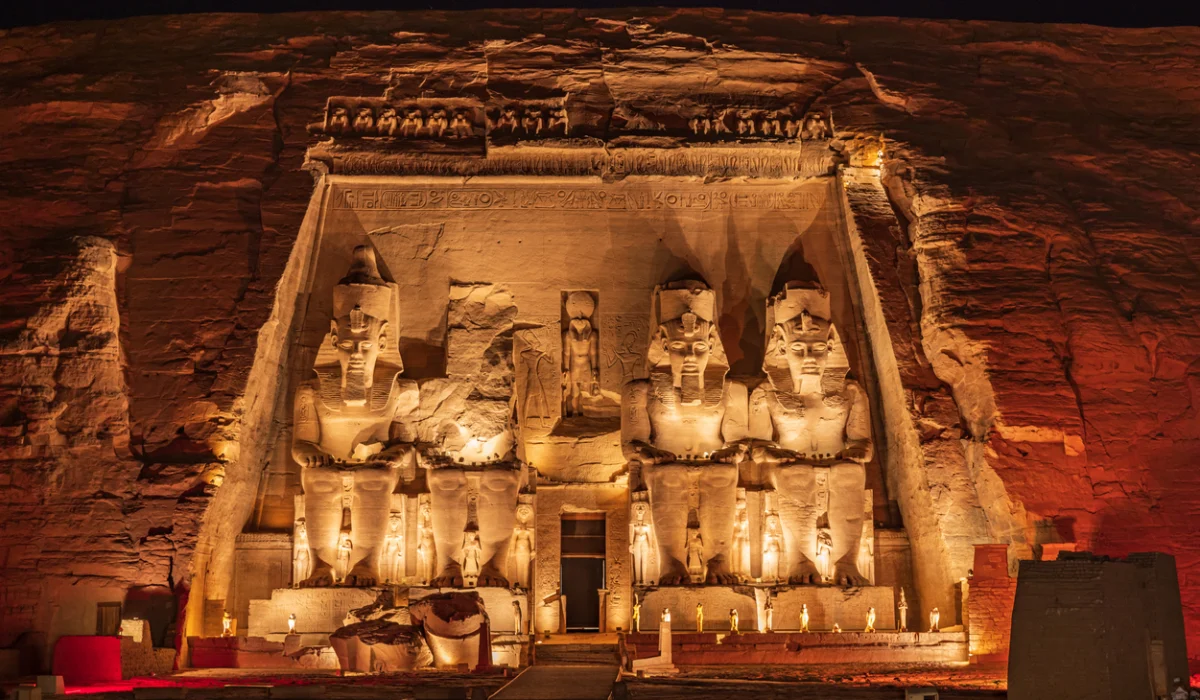
Absolutely. The two temples, with their four giant statues of Ramesses II carved into the cliff, are among the most impressive sights in Egypt on any day of the year. Without the festival crowds you can take your time in the halls, read the carved battle scenes and enjoy the Small Temple in peace. The site is open daily from early morning until late afternoon, and an evening sound and light show tells the temples' story. If you can only travel near the festival, aim for February 21 or 23, or October 21 or 23, for a partial alignment with fewer people.
Timing a trip to the festival takes careful planning, from hotels in Aswan to transport in the middle of the night. Our Egypt tour packages combine Cairo, Luxor, Aswan and Abu Simbel with Nile cruises, private transfers and expert Egyptologist guides. Browse the itineraries and ask our team about dates that match the February or October alignment.
1. When is the Abu Simbel Sun Festival?
Every year on February 22 and October 22. The next dates are February 22, 2027, and October 22, 2027.
2.What time does the sun enter the temple?
At sunrise, around 6:20 a.m. in February and close to 7:00 a.m. in October. The light stays on the statues for about 20 minutes.
3.Which statues are lit by the sun?
Three of the four: Ra-Horakhty, Amun-Ra and the deified Ramesses II. Ptah, a god of the underworld, stays in shadow.
4.Why did the festival dates change?
The temple was moved to higher ground between 1964 and 1968 to save it from Lake Nasser, and the alignment shifted by one day, from the 21st to the 22nd.
5. How much does a festival ticket cost?
In 2026, a festival-day ticket cost EGP 1,200 (about $25) for foreign adults, compared with EGP 750 on a normal day.
6. How do I get to Abu Simbel for sunrise?
Most visitors drive from Aswan overnight, about 3 to 3.5 hours each way, or stay in Abu Simbel the night before. Flights from Aswan take about 45 minutes.
7. Is it worth going on the day before or after?
Yes. On the 21st and 23rd the light still reaches the sanctuary, and the crowds are much smaller.


